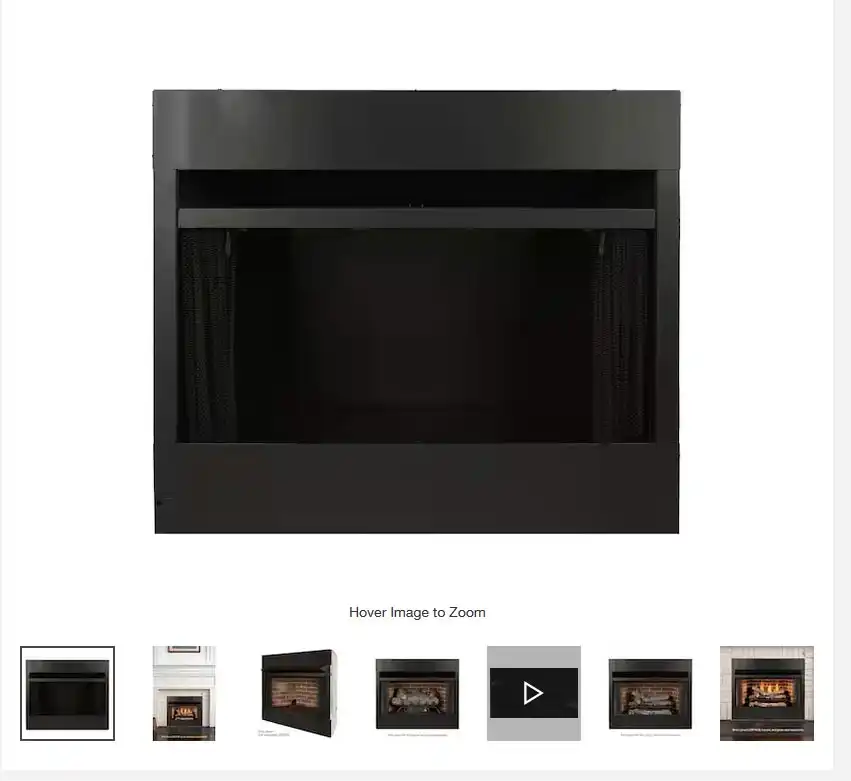
Last fall a couple in Bonnie Brae called me about their unused fireplace opening. It was just a cold masonry hole in the wall, and they wanted real flames in it. I walked them through the Pleasant Hearth 36-inch vent-free firebox, and that's what we put in. By that evening they were sitting in front of a gas log set with a finished, framed-out look instead of bare brick. The whole job took one day. They went from a dead fireplace to a warm one before dinner, and that's pretty typical for this product.
 Last fall a couple in Bonnie Brae called me about their unused fireplace opening. It was just a cold masonry hole in the wall, and they wanted real flames in it. I walked them through the Pleasant Hearth 36-inch vent-free firebox, and that's what we put in. By that evening they were sitting in front of a gas log set with a finished, framed-out look instead of bare brick. The whole job took one day. They went from a dead fireplace to a warm one before dinner, and that's pretty typical for this product.
I've installed a lot of these fireboxes around Denver, so this page is the long version of the conversation I usually have on a first visit. I'll cover what the unit is, what it costs, how we install it, the Denver code stuff nobody warns you about, and the questions homeowners ask me most.
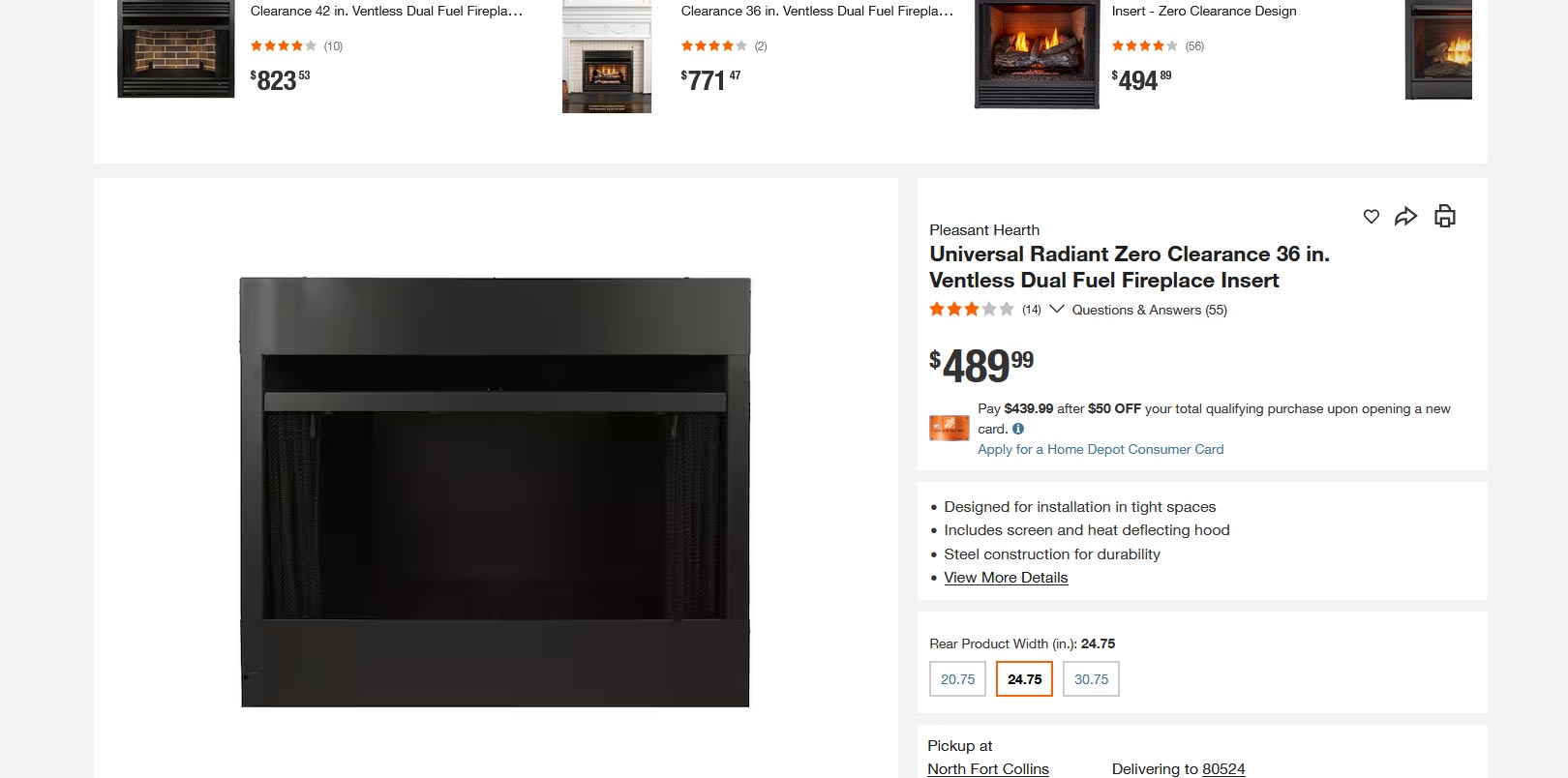
Pleasant Hearth Vent-Free Firebox: Product Overview and Key Features
The Pleasant Hearth vent-free firebox (model PHZC36F) is the steel shell that turns a rough opening into a finished gas fireplace in your Denver home. Drop it into an existing masonry cavity or new framing, and it gives you the right dimensions, the right clearances, and a clean black box ready for gas logs. No more staring at a raw, unfinished hole.
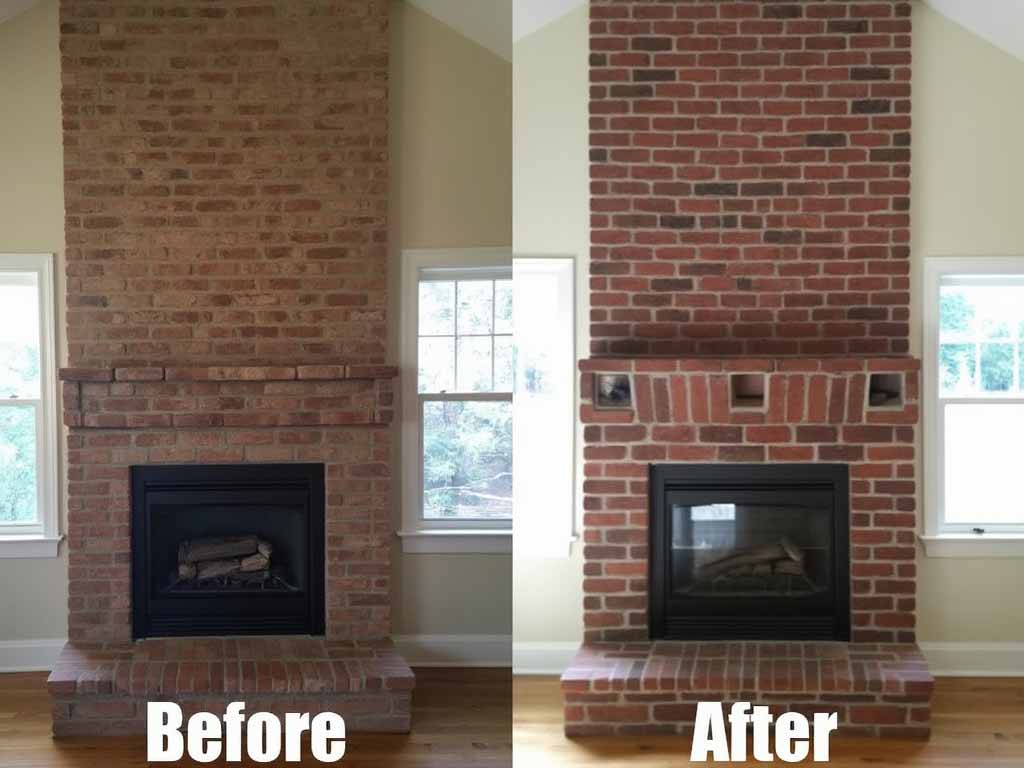
The flush-face design is the part I lean on most. The front sits flat against the wall, so you can run stone, tile, or brick right up to the edge and it looks built-in. I've finished these with Colorado flagstone, granite slabs, marble, and plain brick facing, and every one of them ends up looking like it was always meant to be there.
 The flush-face design is the part I lean on most. The front sits flat against the wall, so you can run stone, tile, or brick right up to the edge and it looks built-in. I've finished these with Colorado flagstone, granite slabs, marble, and plain brick facing, and every one of them ends up looking like it was always meant to be there.
People hear "firebox" and picture something complicated. It's really just a properly-sized steel box that does two jobs: it holds the gas logs at the right clearances, and it gives your finish material a clean edge to die into. Get the box right and the rest of the project goes smooth.
- Adam, Owner, Adam Chimney Sweep
Technical Specifications
| Specification | Details |
|---|---|
| Model Number | PHZC36F |
| Front Opening Width | 39.875 inches |
| Front Opening Height | 34.125 inches |
| Product Depth | 24.125 inches |
| Rear Width | 24.75 inches |
| Rear Height | 34.125 inches |
| Product Weight | 75 pounds |
| Material | Steel construction |
| Interior Finish | Matte black |
| Fuel Compatibility | Dual fuel (Natural Gas & LP) |
| Vent Type | Vent-free operation |
| Installation Type | Zero clearance, recessed |
| Warranty | 1-year limited |
| Certification | CSA Certified |
What’s Included
| Component | Purpose |
|---|---|
| Firebox Insert | Main enclosure unit |
| Draw Screen | Airflow control and safety barrier |
| Hood Assembly | Upper heat deflection and finishing |
| Mounting Hardware | Installation fasteners |
| Installation Guide | Step-by-step instructions |
| Warranty Card | Coverage documentation |
One thing worth saying up front: the firebox does not come with gas logs. The box and the log set are two separate purchases, and that trips people up when they shop online. I'll cover log sets below so you know what to budget.
Zero-Clearance Design Benefits for Denver Homes
Zero clearance means the firebox can sit right against wood framing without an air gap around it. That sounds like a small detail, but it's the reason we can get a gas fireplace into spots where a traditional firebox would never fit. Denver's housing stock is all over the map, from 1920s bungalows to brand-new infill builds, and tight spaces are the rule, not the exception.
Here are real jobs where the zero-clearance design saved the project:
Tight Basement Conversions: Lots of Denver basements are finished but shallow. I put one of these into a Harvey Park rec room where we only had 25 inches of depth to work with. A standard firebox would have been a non-starter.
Between-Stud Installations: The 24.75-inch rear width slides into standard 24-inch stud spacing. On new builds and remodels that means a flush install with no extra framing surgery.
Under-Stair Applications: I've tucked these under staircases in two-story homes to make little reading nooks. You can't do that with a conventional fireplace and its clearance rules.
Seeing a gas insert go in helps it click. Here's a Denver job from start to finish, including the remote setup most folks ask about:
Available Sizes and Selection Guide
Pleasant Hearth makes this firebox in three sizes so you can match it to your opening and the heat you want:
| Size | Front Width | Front Height | Best Applications |
|---|---|---|---|
| 32-inch | ~35.875 inches | 30.125 inches | Smaller rooms, apartment conversions, tight spaces |
| 36-inch | 39.875 inches | 34.125 inches | Standard living rooms, master bedrooms, and most applications |
| 42-inch | ~45.875 inches | 38.125 inches | Large great rooms, open-concept spaces, statement installations |
The 36-inch model covers about 80% of the installs I do. It throws enough visual weight to anchor a standard living room of 250 to 400 square feet, and it fits the opening sizes you find in homes built from the 1960s on up. It takes most 30-inch and 36-inch vent-free gas log sets, so you've got room to pick a look you like.
Compatible Gas Log Sets and Finishing Options
This firebox takes any vent-free gas log set sized for the opening, which for the 36-inch box usually means a 30-inch or 36-inch set. I pair it with Pleasant Hearth's own vent-free logs a lot. Those run roughly $280 to $650 depending on the log style and the burner inside.
Popular Configurations I’ve Installed:
Traditional Oak Logs: The go-to for Denver's craftsman and traditional homes. The bark texture and coloring read as real wood from across the room.
Contemporary River Rock or Stone Sets: These suit the cleaner lines you see in Stapleton and Lowry. River rock gives you glow and movement without the log look.
Birch or Driftwood Styles: Lighter logs that play well with mountain-modern design. They're a nice fit for foothills homes and newer Denver builds.
If you want the interior to read as old-school masonry, Pleasant Hearth sells firebrick panels separately, usually around $120 to $180. They snap in against the matte black steel and give you that brick-firebox look. I recommend them when someone's running traditional logs and wants the full classic effect.
The log set is where your fireplace gets its personality, so don't rush it. I tell people to think about the room first. Oak logs in a craftsman bungalow, river rock in a modern open plan. The firebox is the same box either way, but the logs are what your eye lands on every night.
- Adam, Owner, Adam Chimney Sweep
Installation Requirements and Denver Code Compliance
Critical Denver-Specific Considerations
Permit Requirements: Denver wants a permit for any gas appliance install, vent-free logs and fireboxes included. We pull the permit for you. That usually runs $85 to $120 depending on how involved the job is.
Altitude Derating: At Denver's 5,280 feet there's less oxygen in the air, so gas appliances have to be derated, meaning the input gets dialed down to match. That changes the burner orifice size and the max BTU. A pro install gets the altitude adjustment right, which keeps the unit safe and keeps your warranty intact.
Vent-Free Regulations: Colorado allows vent-free gas appliances in homes as long as they have an oxygen depletion sensor, or ODS. That sensor cuts the gas if oxygen in the room drops too low. Every Pleasant Hearth-compatible log set ships with one.
Room Size Requirements: Vent-free units need a minimum room volume based on their BTU input. For a typical 30,000 to 40,000 BTU setup, Denver code wants at least 600 cubic feet of connected space. A normal living room clears that easily, but a small closed-off bedroom might not.
Finishing Material Options and Installation
| Material Type | Advantages | Typical Cost Range | Installation Notes |
|---|---|---|---|
| Natural Stone (Flagstone, Ledgestone) | Authentic Colorado aesthetic, heat-resistant | $15-35 per sq ft | Requires an appropriate adhesive rated for heat exposure |
| Granite Slab | Modern appearance, seamless finish | $40-80 per sq ft installed | Professional fabrication recommended for precise cuts |
| Marble | Classic elegance, variety of colors | $35-70 per sq ft installed | More heat-sensitive than granite, it needs proper clearances |
| Brick Veneer | Traditional look, easy DIY installation | $6-12 per sq ft | Thin brick specifically designed for interior applications |
| Tile (Porcelain/Ceramic) | Versatile designs, cost-effective | $8-25 per sq ft | Must use heat-resistant thinset and grout |
Because the face is flush, these materials go straight onto the firebox face and you get a clean transition from wall to opening. I usually leave a 1/8-inch to 1/4-inch reveal around the edge. It gives the opening a crisp line and soaks up any small dimensional wiggle during finishing.
Mantel Pairing and Custom Installations
Mantels aren't included, but this firebox plays nice with just about any mantel style. The thing you have to respect is clearance from the opening to anything combustible above it.
Denver Code Requirements:
- Minimum 6 inches from the top of the opening to the combustible mantel shelf
- An additional 1/8 inch clearance for each inch the mantel projects from the wall
- Example: A mantel projecting 12 inches requires a minimum of 7.5 inches of clearance minimum
I've set these under reclaimed barn beams in mountain-style homes and under sleek floating shelves in contemporary rooms. The matte black interior works either way, traditional or modern.
Popular Mantel Configurations:
| Mantel Style | Typical Cost | Best Applications |
|---|---|---|
| Solid Wood Beam (6×6 or 6×8) | $200-500 | Craftsman, mountain, rustic designs |
| Custom Wood Mantel Shelf | $350-800 | Traditional, transitional styles |
| Stone or Cast Stone Mantel | $800-2,500 | Formal, elegant installations |
| Modern Floating Shelf | $150-400 | Contemporary, minimalist designs |
Professional Installation Process and Pricing
A typical Pleasant Hearth firebox install in Denver runs over two days. Here's exactly how it goes.
Day 1, Preparation and Installation:
- Verify opening dimensions and clearances
- Prepare framing or masonry opening as needed
- Position and secure the firebox insert
- Install the gas supply line and connect it to the firebox location
- Complete rough inspection with city inspector
Day 2, Gas Log Installation and Finishing:
- Install the selected vent-free gas log set
- Connect to the gas supply with proper altitude adjustments
- Test operation and safety features
- Final inspection and approval
- Homeowner operation training
Installation Cost Breakdown:
| Component | Price Range |
|---|---|
| Pleasant Hearth 36″ Firebox | $580-720 |
| Vent-Free Gas Log Set | $280-650 |
| Gas Line Extension/Installation | $350-800 |
| Permits and Inspections | $85-150 |
| Professional Labor | $800-1,400 |
| Total Installation | $2,095-3,720 |
Finishing material is the wild card on price. A basic brick surround might add $400 to $600 in materials and labor, while custom stonework can climb to $2,000 to $4,000 on a premium job. I always price the finish separately so you can see exactly where the money's going.
The number that surprises folks isn't the firebox, it's the gas line. If your supply is close, the run is cheap. If we have to fish a new line across the house, that's where the bid moves. So the first thing I do on a quote is find your gas, because that tells me most of what the job will cost.
- Adam, Owner, Adam Chimney Sweep
Why Denver Homeowners Choose Vent-Free Systems
Vent-free gas units earn their keep in Denver for a few specific reasons:
Installation Flexibility: No chimney, no vent pipe. That's huge for homes with no existing fireplace or where running a vent just isn't practical.
High Efficiency: Just about all of the fuel energy turns into heat because nothing goes up a flue. During a Denver cold snap, that matters.
Lower Installation Cost: Skipping the vent pipe saves $1,200 to $2,500 versus a direct-vent system.
Zone Heating: You heat the room you're actually in, which trims your bills on milder days when firing up the whole furnace is overkill.
Quick Installation: Most of these wrap in 1 to 2 days. Vented systems with chimney or pipe work usually take 3 to 5.
Common Problems and Warning Signs to Watch For
Vent-free systems are simple and reliable, but they're not zero-maintenance. After more than two decades on Denver roofs and in Denver living rooms, here are the things I tell every homeowner to keep an eye on:
- A strong gas smell that doesn't fade when the unit lights. A faint whiff for the first minute is normal. A lingering smell is not. Shut it off and call us.
- Soot or black streaking on the logs or the wall above the opening. That points to incomplete combustion, often from logs that got bumped out of position or a burner that needs adjusting for our altitude.
- Yellow, lazy, sooty flames instead of a clean burn. Vent-free logs are designed to look yellow, but heavy black tips and floating soot mean something's off.
- The pilot or burner won't stay lit. Nine times out of ten that's the oxygen depletion sensor doing its job or a thermocouple that's worn out. Don't bypass the safety. Get it serviced.
- Condensation or a musty smell after long runs. That's your cue to crack a window and shorten the burn time.
- A carbon monoxide detector that chirps or alarms. Treat every CO alarm as real until proven otherwise. Get fresh air and call for service.
Catch any of these early and it's usually a quick, cheap fix. Ignore them and a small issue can turn into a bigger one. If you're not sure, a quick chimney and appliance inspection sorts it out fast.
Important Usage Considerations
Vent-free appliances run great in Denver homes when you use them the right way. A few guidelines:
Run-Time Recommendations: I tell clients to keep continuous runs to 4 to 6 hours, then let the room get some fresh air. That keeps your indoor air good and keeps moisture from building up.
Room Ventilation: Crack a window a bit during long burns, or just let your home's normal air exchange do the work. Denver's dry air actually helps here. We don't get the condensation headaches that humid regions deal with.
Detector Requirements: Put carbon monoxide detectors on every level and near every sleeping area. The unit has its own safety features, but a detector is your backup, and backups are worth having.
Not for Sale in California or Canada: Those places ban vent-free appliances under different rules. Colorado allows them when they're installed and maintained correctly.
Frequently Asked Questions
Does a vent-free firebox really not need a chimney?
Correct. The whole point of vent-free is that the unit burns clean enough to stay in the room without a flue. That's what lets us put one in a basement, an interior wall, or under a staircase where there's no chimney for miles.
Is it safe to sleep with a vent-free fireplace running?
I don't recommend running any unattended fire while you sleep, vent-free included. Use it while you're up and in the room, shut it down before bed, and keep CO detectors near your sleeping areas. Used that way, it's a safe, comfortable heat source.
How much heat does the 36-inch unit actually put out?
Paired with a typical 30,000 to 40,000 BTU log set, it'll warm a standard 250 to 400 square foot Denver living room nicely as supplemental heat. It's built for zone heating, not for replacing your furnace across the whole house.
Can I install the firebox myself and just hire out the gas?
Some handy folks set the box themselves, but Denver requires a permit and inspection on the gas work, plus the altitude derating has to be dialed in correctly. That's the part I'd never skip. Get the gas connection and altitude adjustment done by a pro so it's safe and your warranty stays good.
How often does it need servicing?
Once a year is the right rhythm. We check the gas connections, clean the firebox, look over the safety system, and adjust the burner if it needs it. Plan on swapping the glowing embers every 3 to 5 years to keep that fresh look.
Warranty and Long-Term Performance
The 1-year limited warranty covers defects in materials and workmanship. Honestly, these fireboxes almost never come back on warranty. It's plain steel with very little that can go wrong. The CSA certification means the unit meets recognized safety standards for how it's built and how it runs.
Upkeep is light. An annual look at the gas connections, a cleaning of the firebox interior, and swapping the gas log embers every 3 to 5 years keeps it looking and working like the day we installed it. Our annual inspection service starts at $199 and folds in those checks along with safety-system verification and a burner adjustment if it's needed. You can read more on our chimney inspection in Denver page, and for anything that needs fixing we handle that through chimney repair in Denver too.
Getting Started with Your Installation
If you're thinking about adding a gas fireplace to your Denver home, whether you're filling an old fireplace opening, building a new feature into a remodel, or working it into new construction, the Pleasant Hearth 36-inch vent-free firebox gives you a solid, professional starting point.
If you want to dig into the safety side of vent-free appliances, the standards group CSIA is a good, no-nonsense source on chimney and venting safety. And if you'd rather just talk it through with someone who's installed dozens of these around town, that's what we're here for.
Contact us at (720) 207-9232 to set up a consultation. We'll look at your space, talk through the design you have in mind, walk you through gas log options, give you real pricing for your exact install, and handle every permit and inspection Denver's building department asks for. You can also reach out through our contact page to get on the schedule.