A brick fireplace can stand for decades and still reach a point where it needs real work. Mortar crumbles, the hearth sags, and the surround starts to pull away from the wall. This is one of those jobs. What follows is a close look at a recent chimney and fireplace repair, a cracked, propped-up hearth we tore down and rebuilt into a solid, stone-capped feature. If you are weighing whether your own fireplace can be saved or needs replacing, this walkthrough shows what a proper repair actually involves.
What was wrong: a failing hearth held up by a post
The first photo says most of it. The arched cast-iron firebox doors were still in good shape, but the brick hearth below them had failed. The front slab was cracked and dropping, and someone had wedged a wooden post underneath to keep it from collapsing onto the floor. That is a temporary prop, not a repair, and a clear sign the masonry underneath had given out.
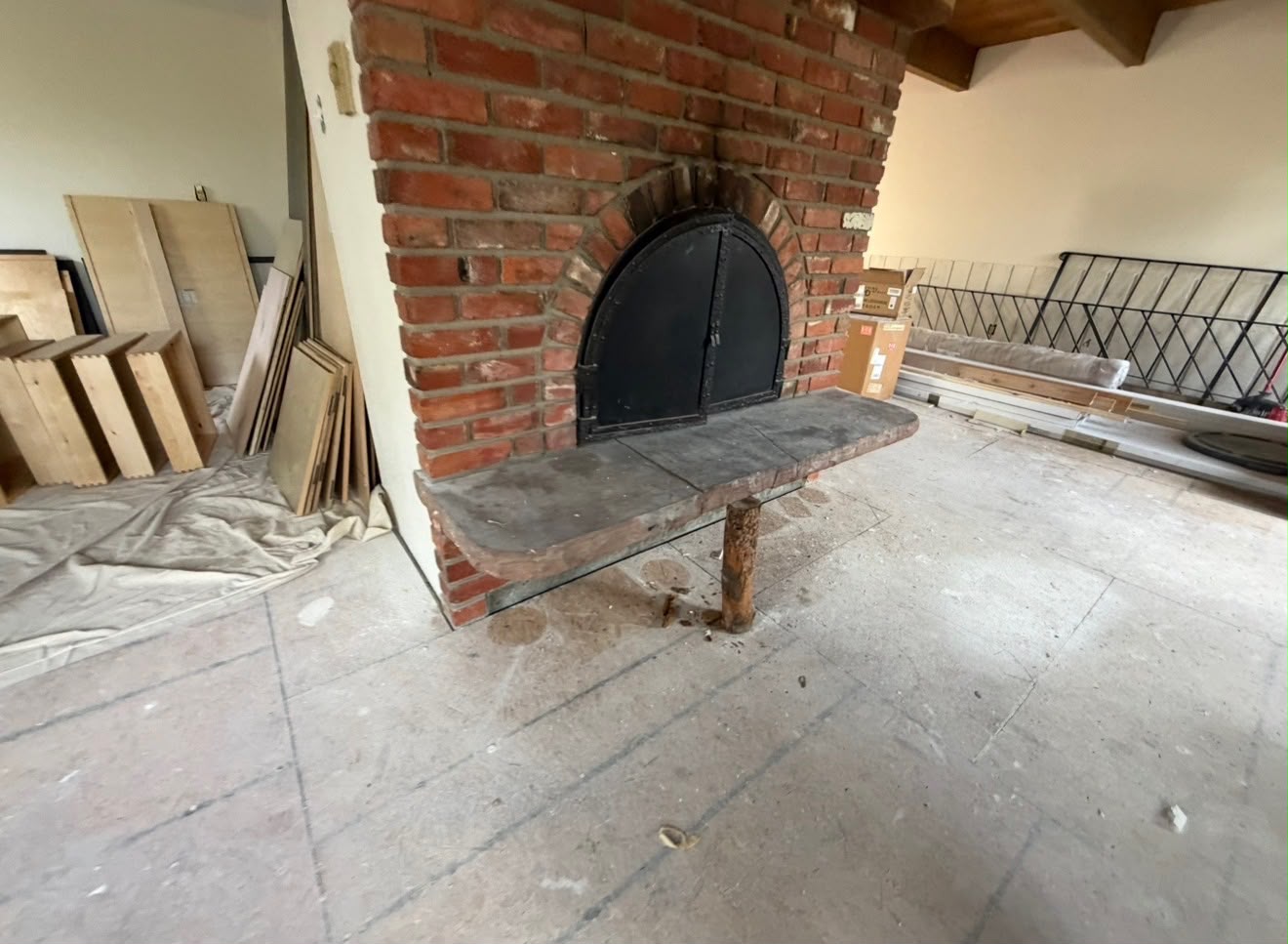
A few things were going on at once: deteriorated mortar joints, a hearth base that no longer carried the load evenly, and a stone cap that had shifted out of level. Left alone, this kind of damage spreads. The crack widens, water and debris work into the joints, and what starts as a cosmetic problem turns structural.
When a homeowner is propping up a hearth with a two by four, that is the fireplace telling you it is done waiting. The repair is almost always cheaper than the damage you get from ignoring it another winter.
Adam, Owner, Adam Chimney Sweep
The repair, step by step
Rebuilding a hearth like this is methodical work. You cannot just patch the crack, because the base has to be sound before anything sits on top of it. Here is the sequence we followed:
- Protect and prep the room. Floors were covered, the work area was sheeted off, and the loose, failing brick was removed down to a stable base.
- Rebuild the hearth base. New brick was laid up in fresh mortar, with the courses leveled and tied back to the existing structure so the load is carried properly.
- Repoint the surround. Open and crumbling joints in the brick face around the firebox were raked out and refilled. This brick tuckpointing work tightens the whole assembly back up.
- Reset the stone cap. The capstone was set level and bedded in mortar so the top surface is flat, sealed, and ready for use.
- Pour and finish the floor. A fresh concrete slab was poured around the base, giving the fireplace a clean, level footing instead of the broken surface it sat on before.
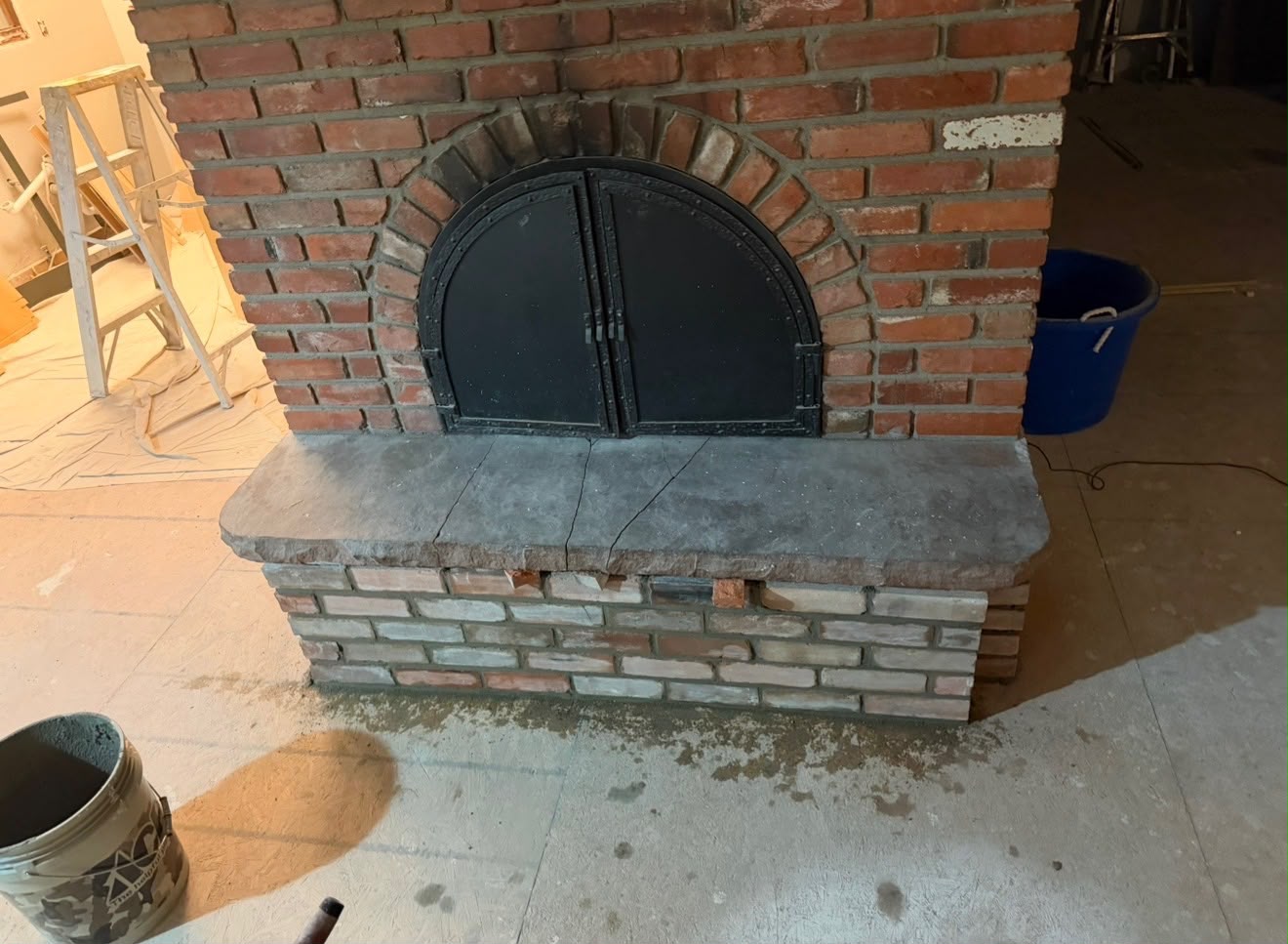
The difference shows up fast. The wooden post is gone, the front face is plumb, and the hearth carries its own weight again. The wet, dark color in the close-up below is fresh mortar and a newly poured slab still curing, and that color lightens as it dries.
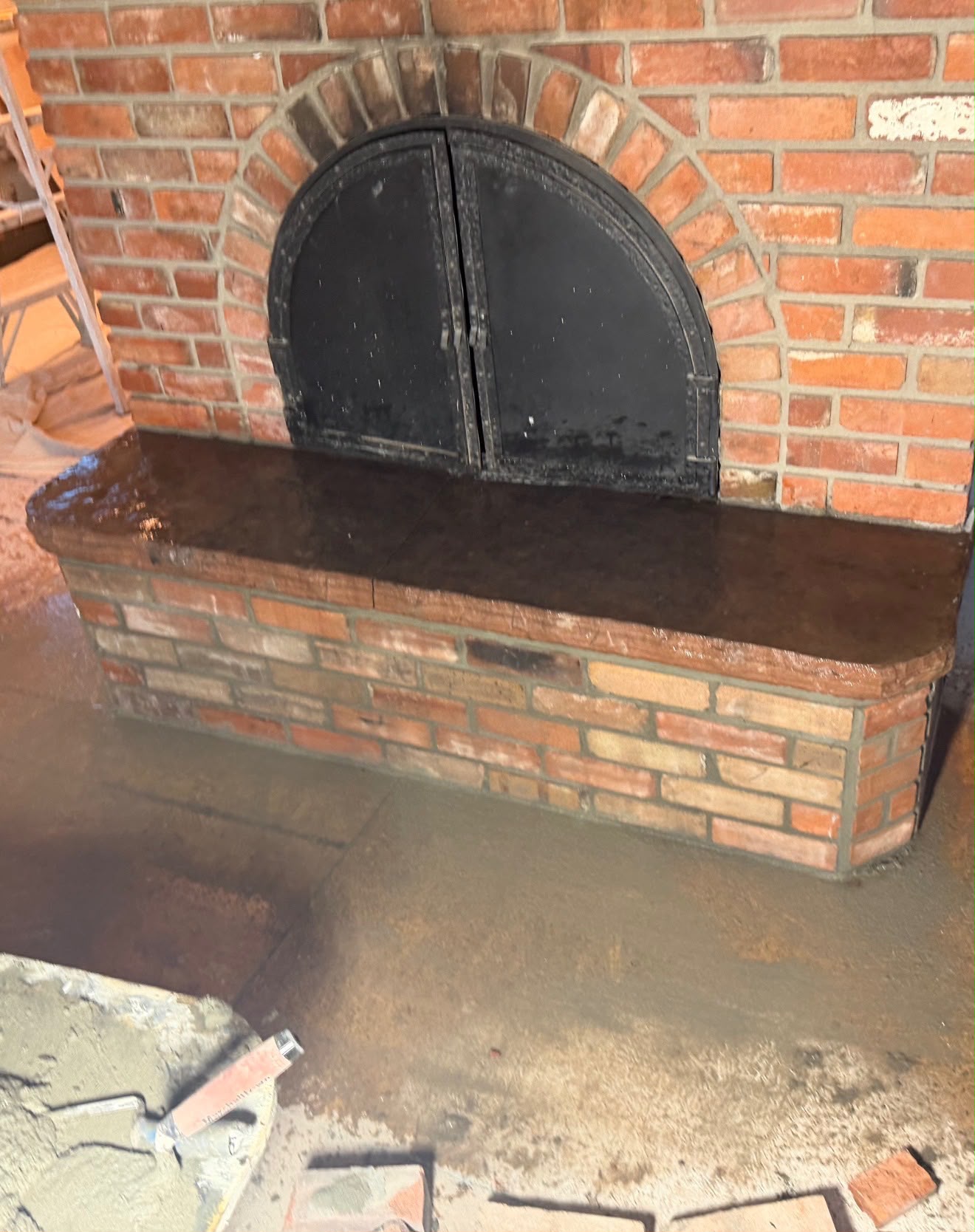
The finished fireplace
With the base rebuilt, the surround repointed, and the floor poured, the fireplace went from a safety concern to the anchor of the room. The arched firebox doors, the original character of the piece, were kept and now sit in masonry that can support them. When the firebox itself is cracked or burned out, that is the stage where a firebox repair gets handled.
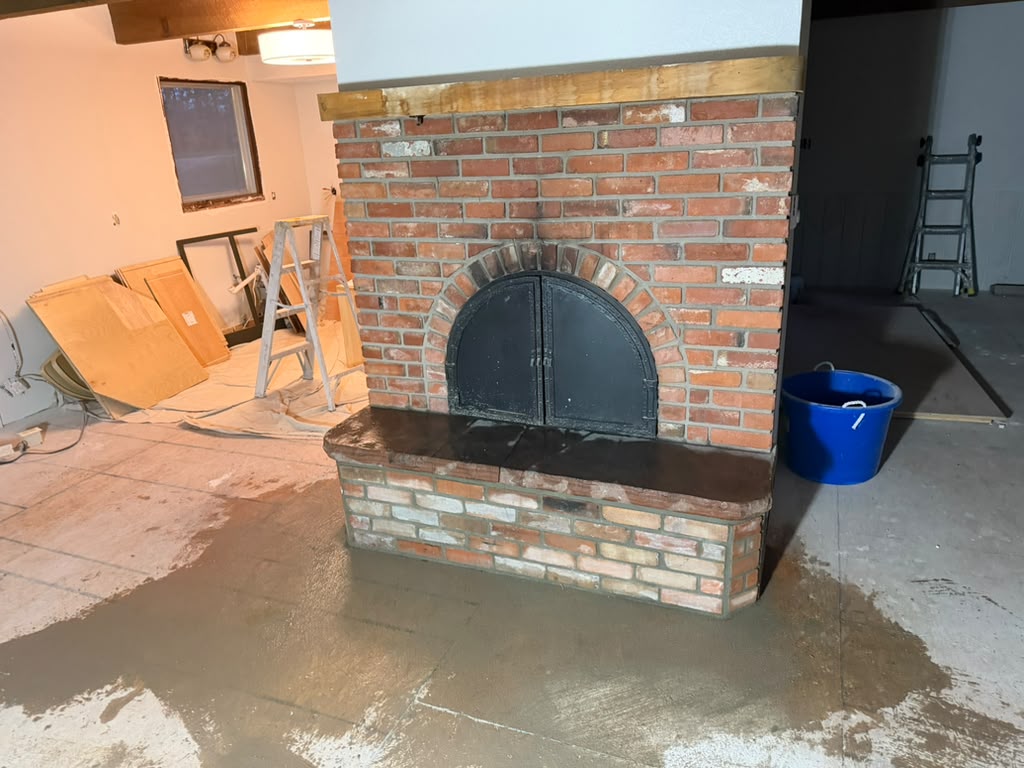
Keeping original features like cast-iron doors or antique brick is usually the goal. A good repair works around what is worth saving instead of stripping it out.
Signs your fireplace needs repair
You do not have to wait for a sagging hearth to act. Watch for these warning signs:
- Cracks in the hearth, firebox, or surrounding brick, especially ones that grow over a season
- Crumbling or missing mortar between bricks (you can sometimes scrape it out with a finger)
- A hearth or capstone that has shifted out of level
- White, chalky staining (efflorescence) on the brick, which points to moisture getting in
- A smoky smell or poor draft, which can signal a flue or chimney issue behind the visible damage
- Loose or spalling brick faces that flake off in pieces
Any one of these is worth a look. Two or more usually means the repair is overdue, and a quick chimney inspection will tell you how far it has gone.
Repair or replace? How to decide
Not every fireplace needs a full teardown. The right call depends on what is actually failing.
| Situation | Best fix |
|---|---|
| Crumbling mortar joints, sound brick | Repointing |
| Cracked or sagging hearth base | Hearth rebuild (like this job) |
| Damaged firebox, intact structure | Firebox or refractory repair |
| Shifted or stained capstone | Reset and reseal the cap |
| Widespread structural failure, leaning chimney | Partial or full chimney rebuild |
Most of the fireplaces we get called out to do not need replacing. They need someone to rebuild the part that failed and leave the good masonry alone. Full replacement is the exception, not the rule.
Adam, Owner, Adam Chimney Sweep
The point is to match the work to the problem. Over-building wastes money, and under-building leaves you back where you started.
Frequently asked questions
How long does a fireplace hearth rebuild take?
A focused hearth rebuild and repoint like this one typically runs one to three working days, plus curing time for fresh mortar and concrete. Larger structural rebuilds take longer.
Can a cracked brick fireplace be repaired, or does it need to be replaced?
Most cracked brick fireplaces can be repaired. Cracking from failed mortar or a settling hearth is fixable with repointing and a rebuild of the affected section. Full replacement is only necessary when the core structure is unsound.
Why does fresh masonry look so dark and wet?
New mortar and poured concrete hold moisture as they cure. The dark color is normal and lightens over the following days and weeks as the material dries and reaches full strength.
Is it safe to use a fireplace with a cracked hearth?
It is risky. A cracked or sagging hearth can fail under load, and gaps in the masonry let heat and embers reach materials they should not. Have it inspected before lighting another fire.
The takeaway
A failing fireplace usually starts small, a hairline crack or a soft mortar joint, and ends with a post holding up the hearth. The fix is straightforward when it is done in the right order: stabilize the base, rebuild what failed, repoint the surround, and finish clean. Done well, a chimney and fireplace repair preserves the original character of the piece and adds decades to its life.
If your fireplace is showing any of the warning signs above, get it looked at before the next heating season. Call Adam Chimney Sweep at (720) 207-9232 or request a free quote to schedule an assessment.