Your fireplace is probably wasting most of its heat
Here's something that surprises almost every Denver homeowner I talk to: a traditional open fireplace can send more heat up the chimney than it ever puts into the room. On a cold Front Range night that feels backwards, but it's just physics. The good news is you can claw a lot of that heat back without spending a single dollar. No gadgets, no inserts, no service call, just better habits and a few minutes of know-how.
After fifteen years of cleaning and repairing chimneys from Aurora to Boulder, I've watched families fight with a fireplace that looks beautiful and heats nothing. Nine times out of ten it's the firewood, the technique, or a dirty flue, and every one of those is free to fix. Here's exactly how I'd do it in my own home.
Most folks think a roaring fire means a warm room. It doesn't. A lazy, smoky fire sends your heat and your money straight up the flue. The fix is free, it's just technique.
- Adam, Owner, Adam Chimney Sweep
First, understand where the heat goes
Before you can keep heat in the room, it helps to know how it escapes. An open fireplace loses heat three ways, and knowing them tells you which free fixes matter most:
- Up the flue with the smoke. Hot air rises, and a wide-open damper is an open door to the sky.
- As wasted energy in wet or green wood. Damp wood spends its heat boiling off water instead of warming your living room.
- Through room air pulled into the fire. Your fire needs air, and if it can't get it from outside, it pulls warm air from the rest of your house and dumps it up the chimney.
Every tip below targets one of those three leaks. Stack a few together and a cold fireplace turns into a genuinely warm one.
1. Build a top-down fire
This is the single biggest free upgrade, and it costs nothing but a change in how you stack. Instead of paper and kindling on the bottom with logs piled on top, you flip it: big logs on the bottom, smaller ones above, kindling near the top, and a knot of newspaper at the very top. Then you light it from the top down.
- Lay two or three of your largest split logs on the grate, parallel, with a small gap between them.
- Stack a layer of medium splits crosswise on top.
- Add a layer of finger-thick kindling, crosswise again.
- Top it with a few twists of newspaper or a natural firestarter.
- Light the top and leave the damper wide open until it's roaring, then settle it back.
A top-down fire burns cleaner, lights more reliably, and makes far less smoke in the first ten minutes, which is exactly when most chimneys leak smoke into the room. It also builds a hot coal bed faster, and a hot coal bed is what actually heats your house.
2. Burn only dry, seasoned wood
If you do nothing else on this list, do this one. Wet wood is the number one reason a fireplace runs cold and a chimney clogs with creosote. Properly seasoned wood has been split and stacked off the ground, under cover, for at least six months, and in our dry Colorado climate it can be ready a little faster. For the full rundown on species and drying times, read our guide to the best firewood for Colorado.
Here's how to tell dry wood from wet without any tools:
- It's lighter than it looks, because the water weight is gone.
- The ends are checked and cracked, like a dry riverbed.
- Knock two pieces together and you hear a sharp crack, not a dull thud.
- It catches and burns quietly. If it hisses, sizzles, or bubbles at the ends, it's still wet.
I tell every customer the same thing about firewood: if it hisses, it's wet, and wet wood is the number one reason a fireplace runs cold. Dry wood you split last spring will outheat anything you buy off a gas station pallet.
- Adam, Owner, Adam Chimney Sweep
3. Work your damper like a throttle
Your damper isn't just open or closed. Once the fire is established and burning hot, you can ease the damper toward partly closed to slow how fast hot air rushes up the flue. The trick is balance: close it too far and you'll smell smoke or see it curl into the room, which means you've gone too far and need to open it back up. Leave it wide open and you're heating the sky.
Watch the smoke at the top of the firebox. As long as it's being pulled cleanly up and out, you can keep nudging the damper down a little at a time. You'll find a sweet spot where the fire stays bright but the heat lingers in the room longer. And when the fire is fully out and the ashes are cold, close the damper completely so your heated house air stops escaping.
4. Crack a window (yes, really)
This one feels wrong, but it works, especially in newer, tightly sealed Colorado homes. Your fire needs combustion air. If the house is sealed up tight, the fire starves and pulls smoke back down the chimney, or it steals warm air from your furnace-heated rooms. Cracking a window an inch near the fireplace gives the fire its own air supply so it stops robbing the rest of the house. You lose a sliver of heat at that window and keep far more in the room.
5. Close off the room and reverse your ceiling fan
Heat from a fireplace is local, so help it pool where you're sitting:
- Close doors to rooms you aren't using so the fire isn't trying to heat the whole house.
- Set your ceiling fan to run clockwise on low. That pushes the warm air that collects at the ceiling back down along the walls and into the room.
- Pull your seating closer. Radiant heat falls off fast with distance, so a few feet makes a real difference.
6. Move the grate back and bank the coals
Push your grate toward the back wall of the firebox. The back wall and the masonry around it soak up heat and radiate it into the room long after the flames die down. Rake your hot coals into a tight pile rather than spreading them out, and add logs to the back of that bed. A deep, banked coal bed is the closest a wood fire gets to a steady furnace.
7. Keep the glass and the flue clean
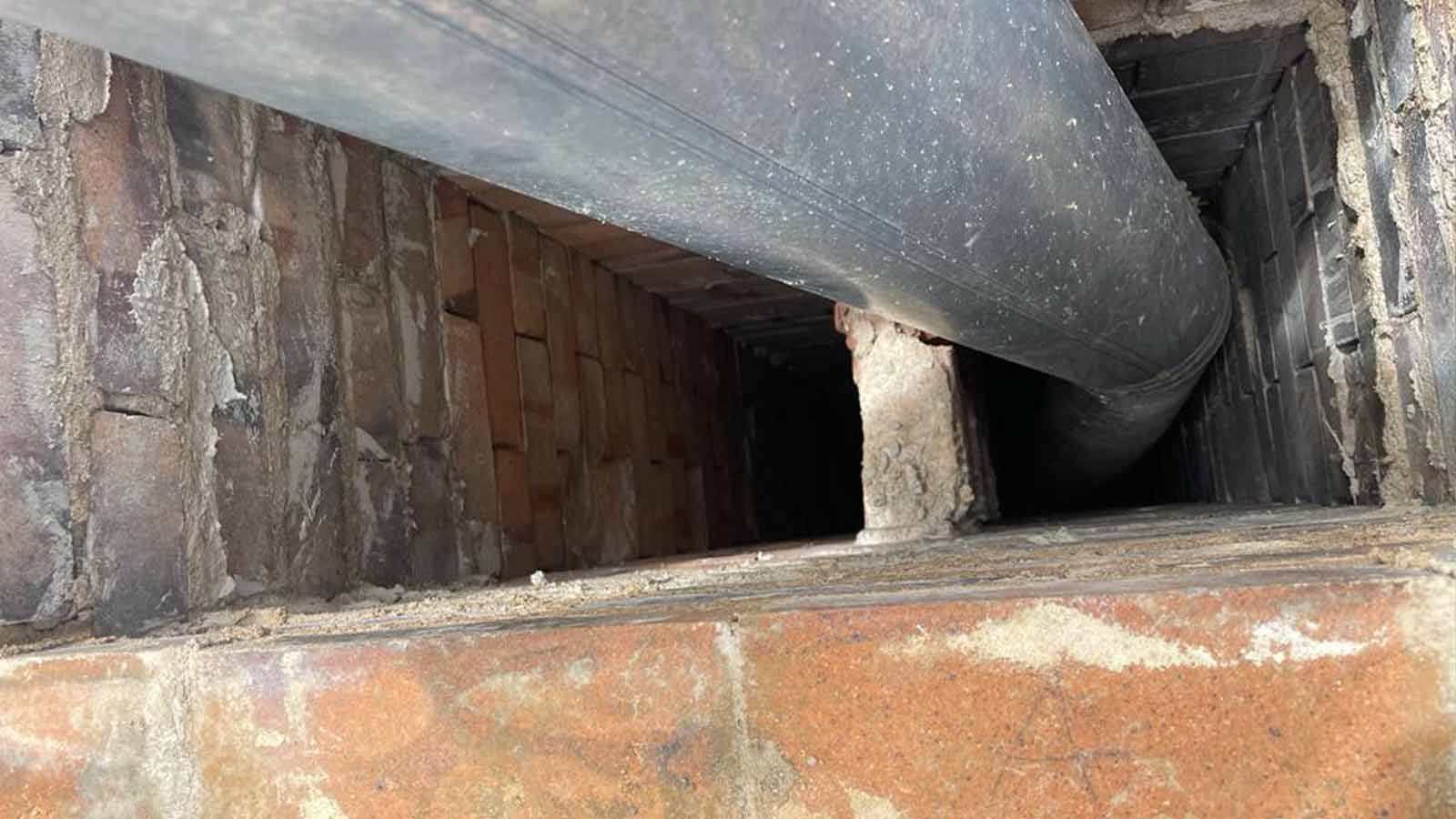
A sooty glass door blocks radiant heat, and a dirty flue chokes your draft so the fire can never burn hot. Wipe the glass with a damp cloth dipped in cool ash when it's cold. And keep up with sweeping, because a clean chimney drafts better and burns hotter than a dirty one. If it's been more than a year, book a professional chimney sweep and cleaning. For more on burning efficiently and cleanly, the EPA's Burn Wise program is a solid free resource.
You don't need to spend a dollar to get more out of your fireplace. You need dry wood, a clean flue, and a little patience. Spend the money you saved on a real inspection instead.
- Adam, Owner, Adam Chimney Sweep
What free tricks can't fix
Habits and technique solve most cold-fireplace complaints, but not all of them. If your fireplace smokes no matter what you do, the problem is usually draft, flue size, or a chimney that's too short, and you can read our breakdown of why a fireplace won't draft. If you want real, measurable heat output, a fireplace insert or a fireplace fan is the next step up, and those are worth a conversation. None of that means you wasted your time here. Free technique is always the first move, and often the only one you need.
Frequently asked questions
Why does my fireplace make the room colder?
An open fireplace pulls warm room air into the fire and sends it up the chimney. If the fire is small or the wood is wet, it can pull out more warm air than it puts back as heat. Burning hotter with dry wood, cracking a nearby window, and closing the damper when the fire is out all stop that cold-air drain.
Does closing the damper a little really keep more heat in?
Yes, once the fire is burning hot and cleanly. Easing the damper toward closed slows how fast hot air escapes up the flue, so more heat lingers in the room. Just watch for any smoke coming into the room, which is your signal to open it back up.
How can I tell if my wood is dry enough to burn?
Dry, seasoned wood is light for its size, cracked at the ends, and knocks together with a sharp crack. If it hisses or bubbles when it burns, it's still wet and it's costing you heat. In Colorado, wood split and stacked off the ground under cover is usually ready in about six months.
Try these free fixes on your next fire, and while you're at it, give your chimney a quick once-over with our free DIY chimney checkup. If your fireplace still won't heat or you smell smoke in the room, reach out for a free quote and we'll take a look.