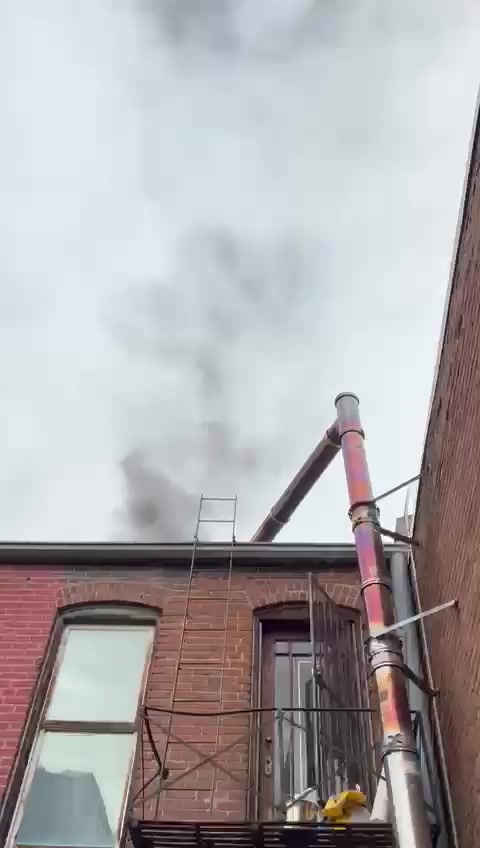
We got called to an older brick building where the fireplace had turned on its owner. Instead of the smoke going up the flue and out the top, it was rolling back into the building every time they lit a fire. That is a draft problem, and draft is invisible, so you cannot fix it by guessing. We have chased smoking chimneys on brick buildings around Denver since 2001, and the honest answer is you have to make the air show you what it is doing. We brought a smoke test, watched where the smoke went and where it would not go, found the choke point, cleared it, and re-tested until the column pulled straight up.
| Service | Smoking chimney diagnosis, smoke testing, and a controlled blowout and sweep to restore draft |
|---|---|
| Property type | Older multi-unit brick building with a masonry flue |
| Location | Denver metro / Front Range |
| Scope | Smoke test the flue, find the blockage, clear the heavy buildup, and re-test to confirm the draft is back |
| Equipment | Smoke testing gear, blowout and sweep tools, brushes and rods sized to the flue, and a draft check |
| Result | The smoke pulled straight up and out, the draft came back, and nothing was leaking into the units |
Why a brick building backs smoke into the room
When smoke rolls back into a building, people want to blame the fire or the wood, but it is almost always the draft. A flue works because hot air wants to rise, and that rising column pulls the smoke up and out behind it. If anything chokes the path, the column slows, the pull weakens, and the smoke takes the easy way out, which is back into the room. Older brick buildings make this worse for a few reasons. The masonry runs cold and sits a long time between fires, so the flue is slow to warm up and start pulling. The flues are often tall and shared inside one chimney stack, and decades of use leave buildup that nobody can see from the firebox. So the first thing we tell an owner is simple. The problem is real, the cause is hidden, and we are going to make the air prove where it is going.
Making the invisible draft visible with a smoke test
You cannot fix what you cannot see, and draft is air, so we make it visible. We ran a smoke test, which fills the flue with a dense visible smoke so we can watch it move the way the air actually moves. Then we read it. We watched where the smoke went and, just as important, where it would not go. Smoke that climbs the flue and exits clean at the top tells one story. Smoke that stalls, backs up, or refuses to climb tells another, and it points us right at the choke. On a multi-unit brick building the smoke test does a second job. It shows whether the chimney is sound, because if there were a blockage forcing it sideways or a breach in the masonry, the smoke would push into a neighboring unit or a wall cavity where it does not belong. Watching it stay where it should told us the structure was holding and the trouble was a flue that was choked, not a chimney that was broken.
Draft is invisible, so I do not guess at it. I put smoke in the flue and let the air show me where it goes and where it will not, and on a brick building that tells me everything.
- Adam, Owner, Adam Chimney Sweep
Reading the soot and smoke for the real cause
A smoke test is only as good as the person reading it, and the smoke and soot tell on the flue if you know what you are watching for. The way the smoke discharged out the top, sluggish and heavy with soot instead of climbing clean, pointed straight at the answer. This was not a cold flue that just needed a warm-up fire, and it was not a structural breach leaking smoke into the building. It was a heavy buildup choking the flue and strangling the cross-section the smoke needs to climb. A masonry flue has a fixed size, and every year of burning narrows it with creosote and soot until the opening that should carry a full column of smoke is down to a fraction of that. Once you cut the cross-section down far enough, no fire can pull through it, and the smoke does the only thing it can, which is come back at you. That buildup was the whole problem, and buildup is something we can clear.
Clearing it with a controlled blowout and sweep
Once we knew the flue was choked, we opened it back up. We cleared the buildup with a controlled blowout and a full sweep, working the length of the flue with brushes and rods sized to the masonry so we scrubbed the walls without battering them. The blowout breaks the heavy choke loose and the sweep carries it out, and on an older brick flue you keep it controlled because the goal is to clean the passage, not to hammer aging mortar joints. Section by section, the soot and creosote that had been strangling the column came down and out, and the cross-section opened back up to the full size it was built to carry. That is the actual fix. You are not adding anything or rebuilding anything. You are giving the smoke back the room it needs to climb. When the flue was clear top to bottom and the cross-section was wide open again, the path the smoke had been fighting was finally clear.
When that second test pulled straight up and out, that was the proof. A choked flue spills smoke at you, and a clear one climbs clean. I do not leave until I see it climb.
- Adam, Owner, Adam Chimney Sweep
Re-testing to confirm the draft is back
Clearing a flue is not the end of the job. Knowing it pulls is the end of the job, so we ran the smoke test again on the same flue we had just opened up. This time the smoke did exactly what it is supposed to do. It pulled straight up and out the top, climbing clean instead of stalling and backing up the way it had before. The draft was restored. We watched the full path from the firebox to the top to be sure the column was drawing all the way through with nothing left to fight, and we confirmed the smoke was exiting at the top and not creeping into any unit or wall it had no business being in. That before-and-after on the same flue is the proof. The first test showed us a choked flue spilling smoke back into the building, and the second test, after the blowout and sweep, showed a flue pulling the way it was built to. Then we walked the owner through what we found and what we cleared so they knew exactly what had been wrong and why it was fixed.
A smoking chimney on a brick building is rarely a mystery once you make the air show you what it is doing, and most of the time the fix is clearing a flue that years of buildup have choked down. If you run an older brick property and the smoke is coming back at you, we handle that on buildings of every size through our commercial chimney services, and when the smoke test turns up a real breach or failing masonry instead of just buildup, our chimney repair work puts the structure back right. Family owned and working the Front Range since 2001. Call us for a free quote and we will tell you straight what your flue actually needs.