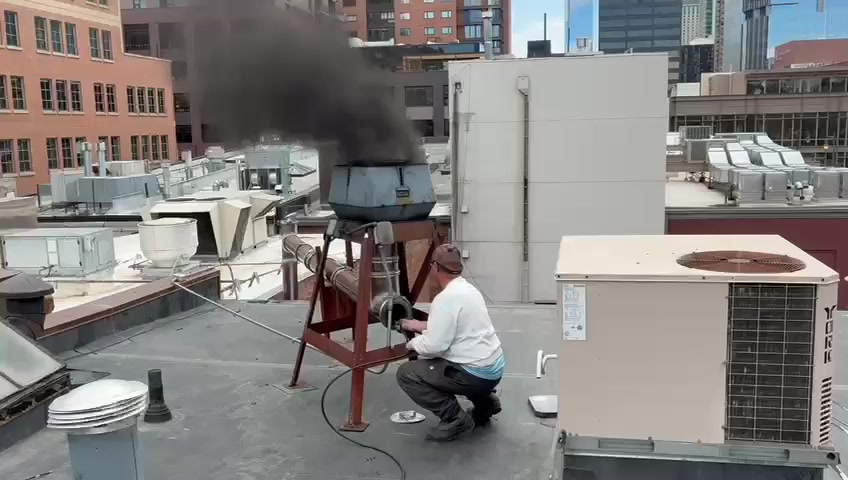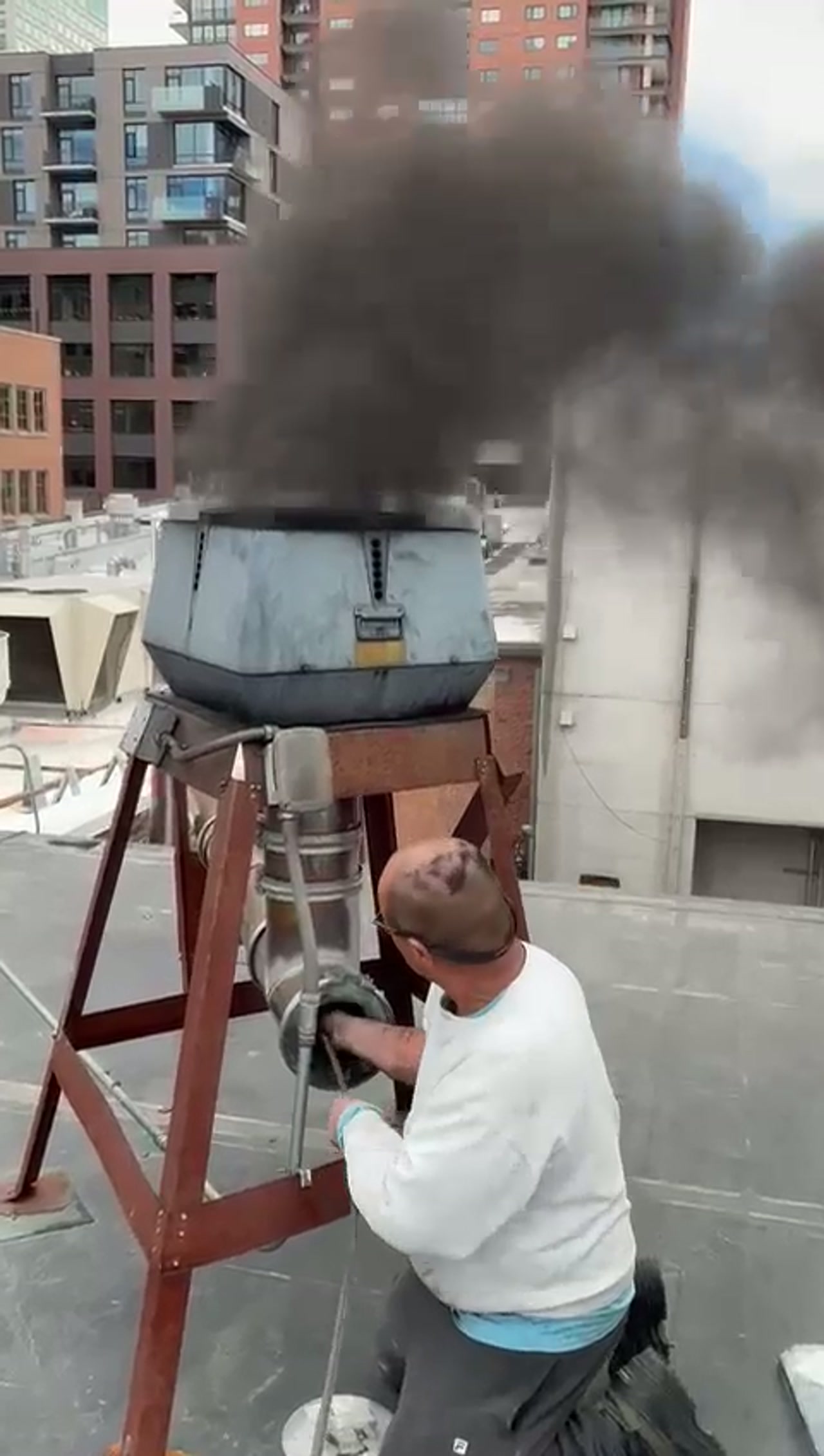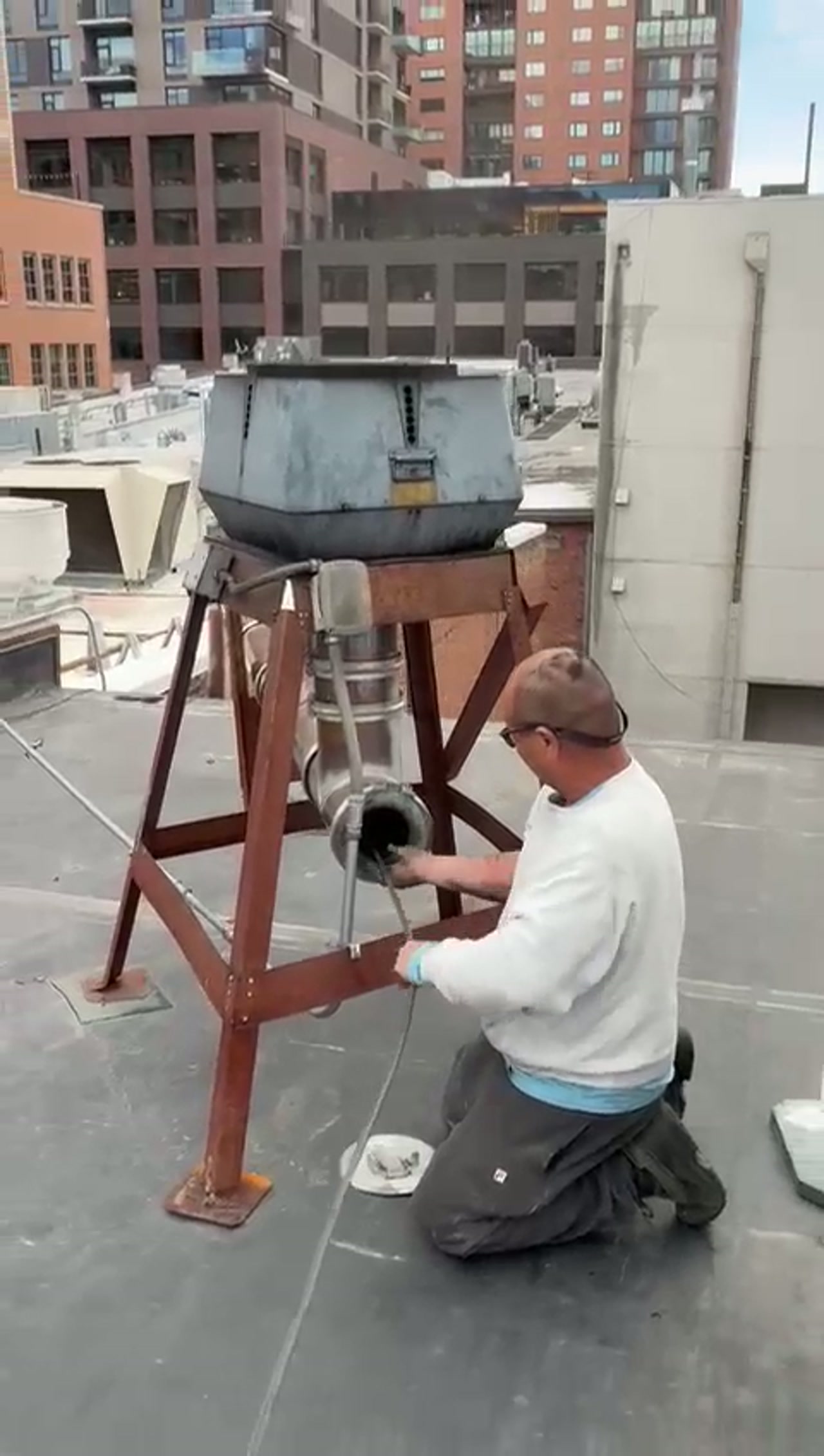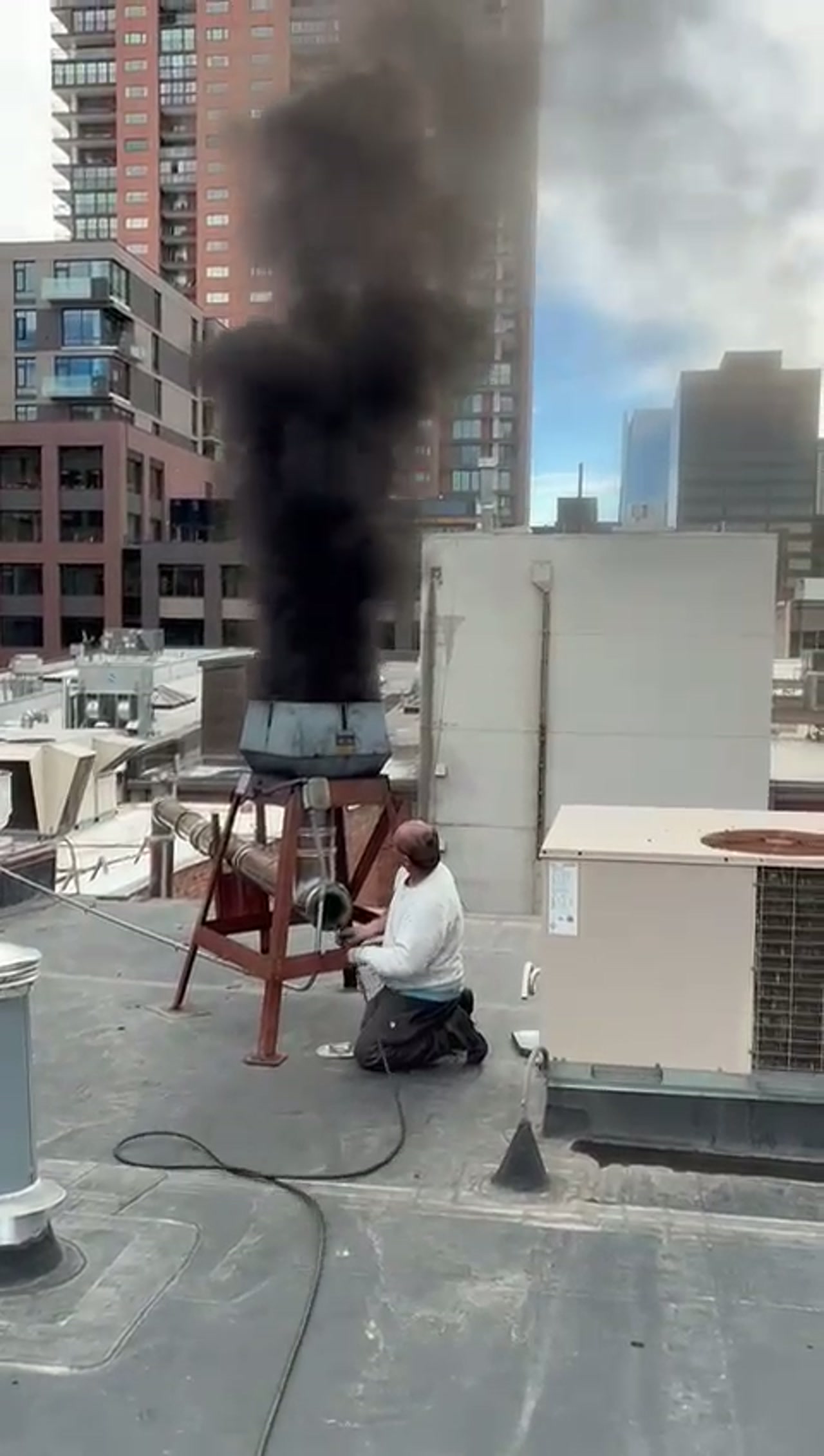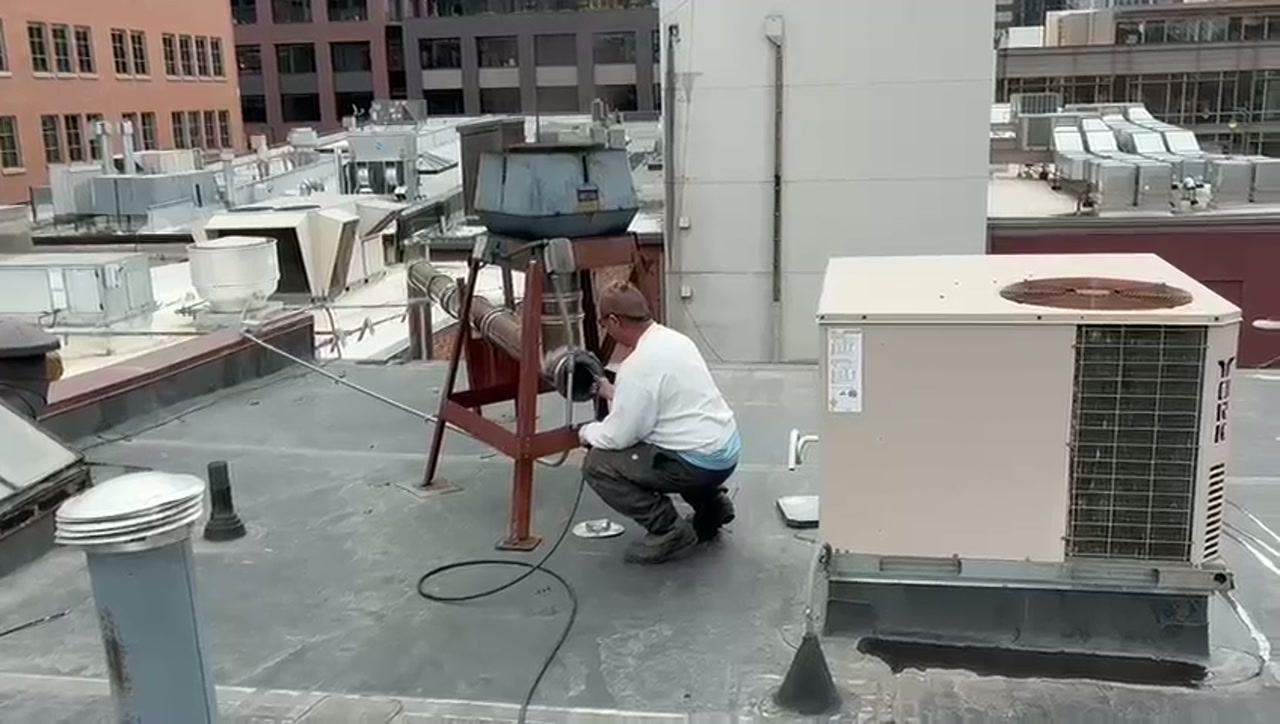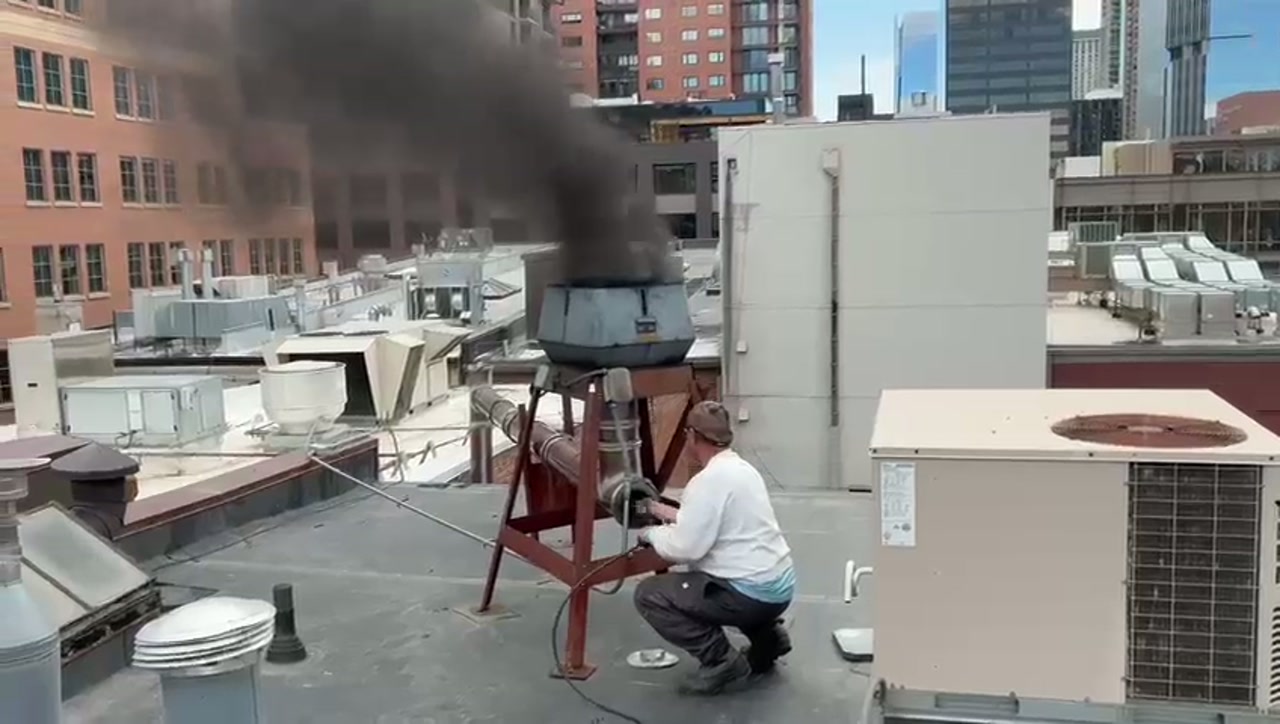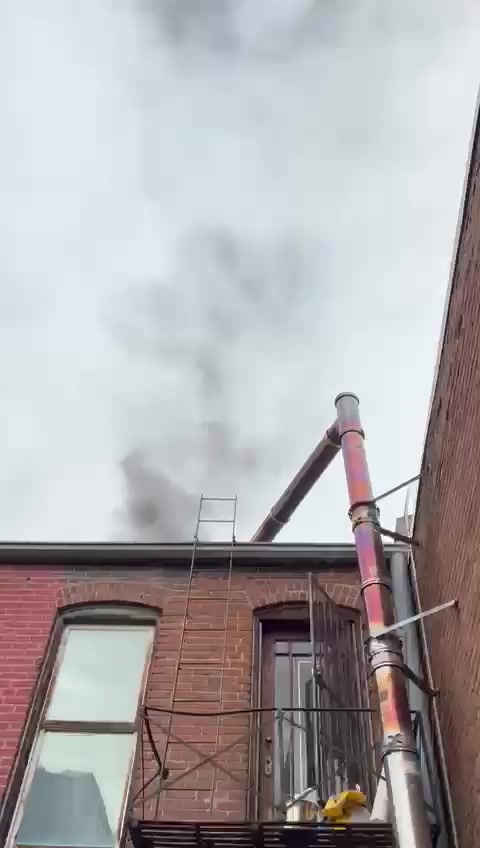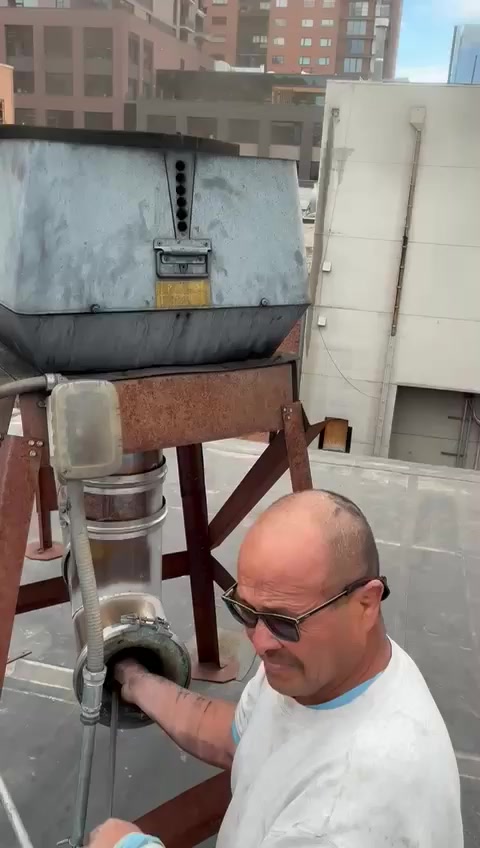
We got called out to a restaurant where the rooftop flue serving the pizza oven had stopped pulling the way it should. A wood-fired pizza oven runs hot all day, and the flue had built a thick, choking layer of soot that was strangling the draft for the oven below. When a busy commercial flue loads up like that, the kitchen feels it first. Slow venting, a heavy smell, and an oven that has to fight to breathe. This was not a light home dusting. It was heavy buildup that had glazed onto the walls over a long stretch of hard running. So we read it, set up containment, and power-swept it from the roof down to clean metal.
| Service | Commercial pizza oven flue cleaning. |
|---|---|
| Property type | Restaurant with a rooftop wood-fired pizza oven flue. |
| Location | Denver metro / Front Range |
| Scope | Read the buildup, contain the work area, power-sweep the flue from the roof down to clean metal walls and a fully open cross-section. |
| Equipment | Rotary power-sweep heads sized to the flue, rooftop containment and vacuum capture, fall-safe rooftop access. |
| Result | Soot pulled down and out instead of into the kitchen, an open flue that drafts the way the oven needs, and a documented before and after. |
Reading the buildup before we touched it
The first thing we did was read what was actually in the flue, because heavy commercial soot and glaze come off very differently than a light home dusting. A residential flue usually carries a soft, powdery layer that brushes loose without much fight. This one was different. It had a thick, packed crust on the walls, the kind that builds when a flue runs hard and hot for long hours and the soot bakes onto the metal as glaze. If we had walked up and started scrubbing like it was a home chimney, we would have polished the surface and moved very little of it. So we looked at the texture, the thickness, and how hard it had set before we picked a single tool. That reading tells us what head to run, how aggressive to get, and how long the flue is going to take. On commercial work, getting that call right at the start is most of the job. Guess wrong and you either leave buildup behind or you go too hard.
Containment first, because this is a roof and a working building
Before any soot moved, we set up containment. On a commercial roof that matters for two reasons. One, you do not want a cloud of loosened soot drifting across the roof, into rooftop intakes, or back down into the building through the very flue you are cleaning. Two, the people below are still working while we are up top, and they should never know we were there except that the draft got better. So we sealed the work area, set our vacuum capture to pull at the flue, and made sure the path for the soot was down and out into our equipment, not sideways into the air. Commercial roof work also means access and safety come first. We got our footing set, kept our gear staged and tied off, and treated the roof like the job site it is. None of that shows up in the finished flue, but it is the difference between a clean job and a mess somebody else has to deal with later.
We do not treat a commercial flue like a big house chimney. The buildup is different, the access is different, and the building below is counting on that draft, so we read it first and clean it right.
- Adam, Owner, Adam Chimney Sweep
Power-sweeping from the roof, pulling soot down and out
With the flue read and containment set, we power-swept it from the rooftop. We ran rotary sweep heads sized to the flue and matched to the buildup we found, working the glaze and packed soot off the walls in a controlled way rather than hammering at it. The whole point of working from the top down, with the vacuum pulling at the base of our setup, is that the soot comes down and out into our containment instead of falling into the building below. That is what keeps a commercial cleaning from turning into an indoor cleanup. We worked the full length of the flue, not just the easy reach near the top, because a flue that is clean for the first few feet and choked further down still will not draft right. We kept checking the walls as we went, watching the buildup give way and the metal start to show, so we knew we were actually removing material and not just chasing it around.
Down to clean metal and an open cross-section
We took the flue down to clean metal walls and a fully open cross-section, because that is the only finish that actually fixes the draft. A flue is a sized passage. An engineer figured out how much open area it needs to vent the equipment below, and every layer of soot and glaze on the walls shrinks that opening and chokes the pull. Scrape off a little and leave the rest, and the building is still fighting a narrowed flue. So we did not stop at looking better. We kept working until the walls were bare metal and the cross-section was back to full, the way it was built to be. That is when a flue drafts the way it is supposed to, pulling cleanly and steadily instead of laboring against its own buildup. We checked the opening top to bottom to confirm it was clear and even the whole way down, with no soft spots or stubborn rings of glaze still narrowing the path.
Clean metal and a full open cross-section is the whole job. That is when a flue drafts the way the engineer built it to, and that is the only finish we hand back.
- Adam, Owner, Adam Chimney Sweep
Access, safety, and documentation that match the work
On a commercial job, access, safety, and documentation matter as much as the cleaning itself. Getting onto a commercial roof and working there safely is part of the work, not a side note, and we treat it that way every time. We also document what we found and what we did, because the people who own and run a building need a record. They need to see the before, the after, and what condition the flue was in, so they can plan maintenance and show that the system was serviced. A clean flue you cannot prove you cleaned does not help a building manager much. So we close the loop with documentation that matches the job. That record is also how we set the right interval for the next cleaning, because a flue that loaded up this heavily will load again, and knowing how fast it built helps everyone stay ahead of it instead of waiting for the draft to choke off a second time.
This is the kind of work our commercial chimney services are built for. A rooftop flue that has choked down on its own soot is a draft problem and a safety problem, and clearing it takes reading the buildup, working safely on the roof, and sweeping it down to clean metal so it pulls the way it should. Whether you run one building or several, regular chimney sweeping and cleaning keeps your flues open and your equipment breathing, and it keeps small buildup from turning into a strangled draft. If your rooftop flue is venting slow or you just want it checked before it gets that far, reach out and we will come take a look and give you a free quote.