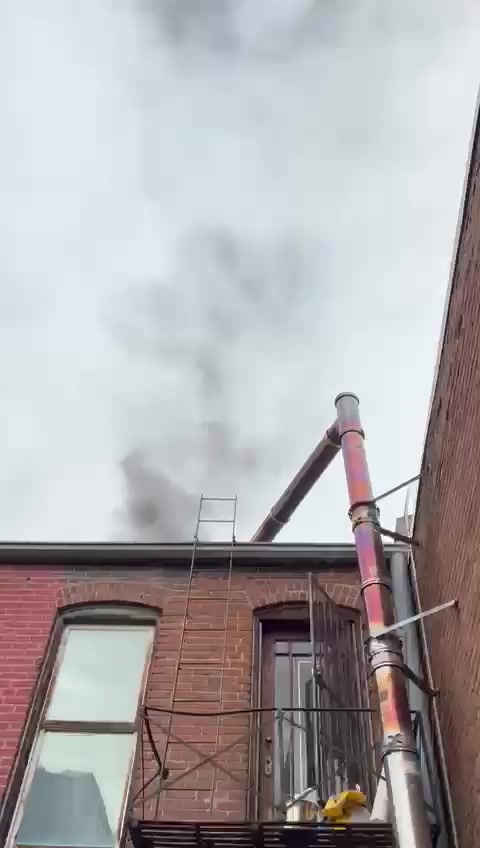
A homeowner wanted to put a wood stove to work but had no way to vent it through the roof. That meant a brand new Class A chimney pipe, run from the appliance up through a shingle roof and capped against the weather. We have been doing this kind of work around Denver since 2001, and we treat a roof penetration with the respect it deserves. Cut it wrong and you get leaks. Flash it wrong and you get leaks two winters later when nobody remembers the install. We located the line, squared the opening, wove in the flashing, ran the pipe, set the cap, and checked the draft before we called it done.
| Service | New Class A chimney pipe and rain cap installation through a shingle roof |
|---|---|
| Property type | Single family residence with an asphalt shingle roof |
| Location | Denver metro / Front Range |
| Scope | Roof opening, woven flashing base, galvanized pipe, galvanized rain cap, and a final draft check |
| Equipment | Class A insulated chimney pipe, galvanized rain cap, step and base flashing, high temperature sealant |
| Result | A watertight, code minded chimney that drafts clean and sheds Colorado snow without leaking |
Finding the line and squaring the opening
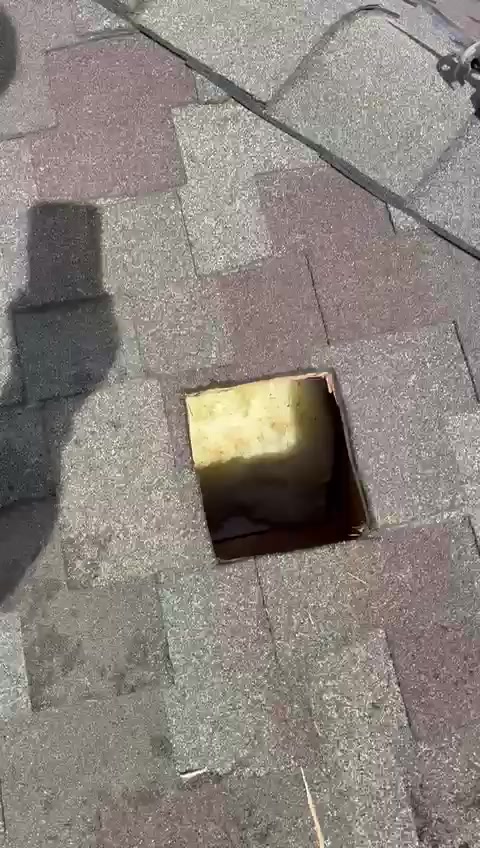
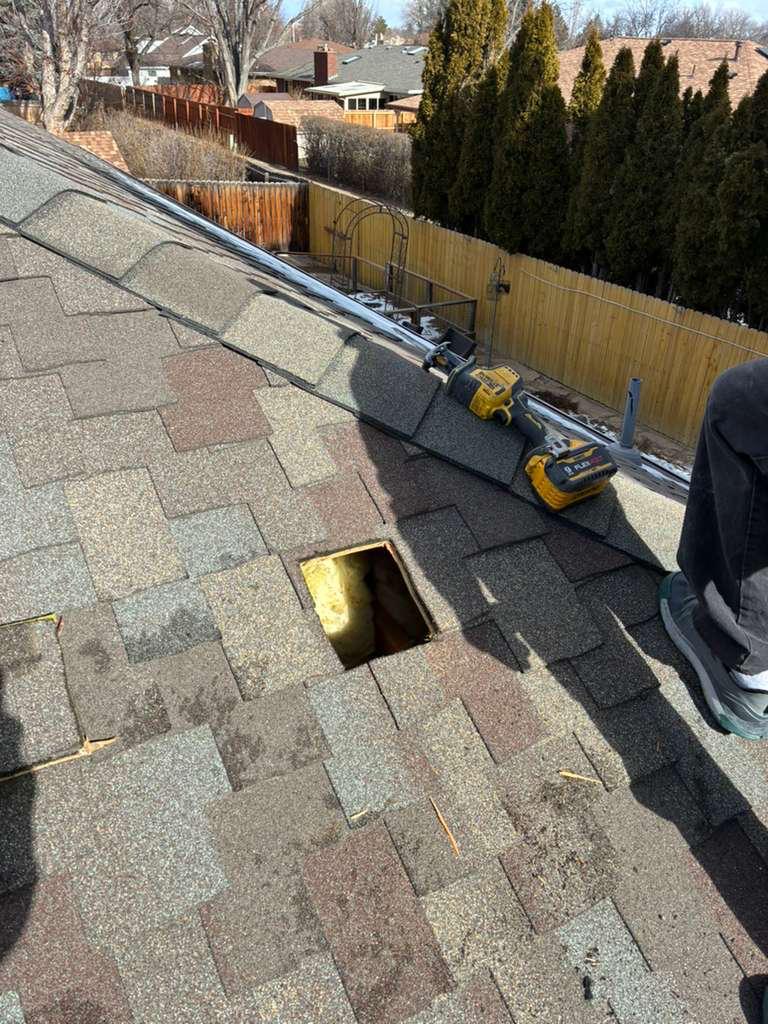
Before anyone touches the roof, the chimney has to go straight up. A wood burning appliance does not draft well if the pipe wanders, and every offset is another joint that can collect creosote. We started inside, set the appliance connector, and dropped a plumb line up through the attic so the pipe path cleared the rafters and any framing in the way. Then we marked the roof deck from below and from above so the cut lined up on both sides. Cutting a roof is the part you cannot take back, so we measured it twice and kept the opening square to the pipe, not square to the roof slope. A clean, squared hole gives the flashing a flat, predictable surface to seat against. A ragged or oversized hole leaves gaps that no amount of sealant will fix later, so we took our time and got it right the first pass.
Setting the flashing base into the shingle courses
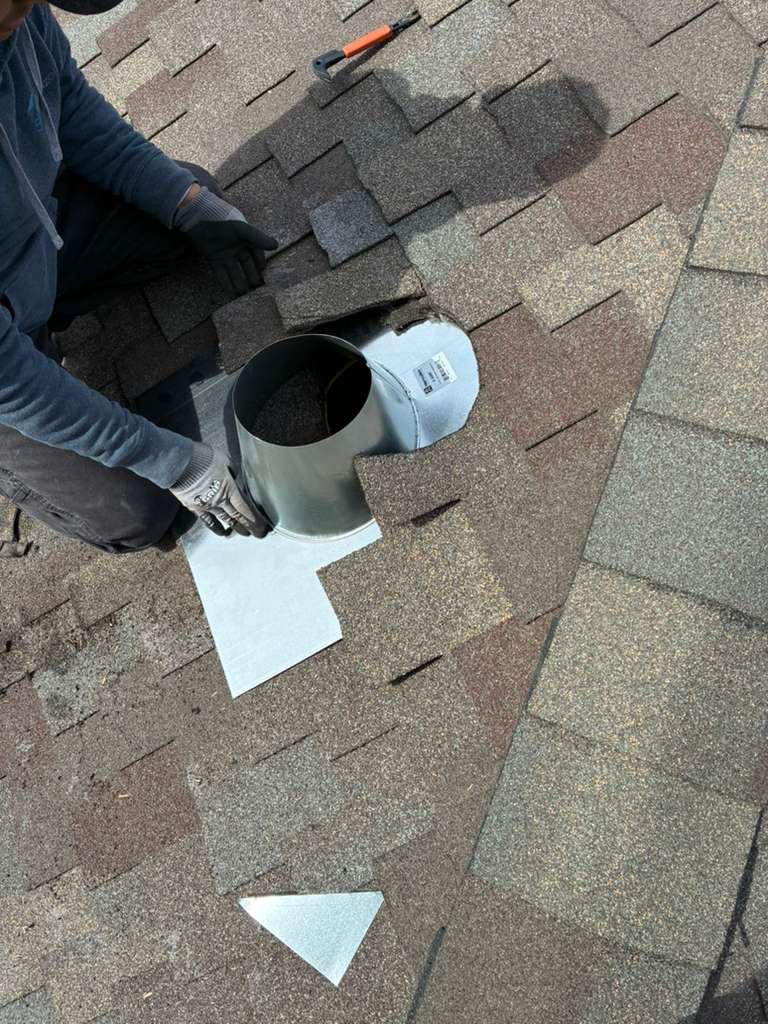
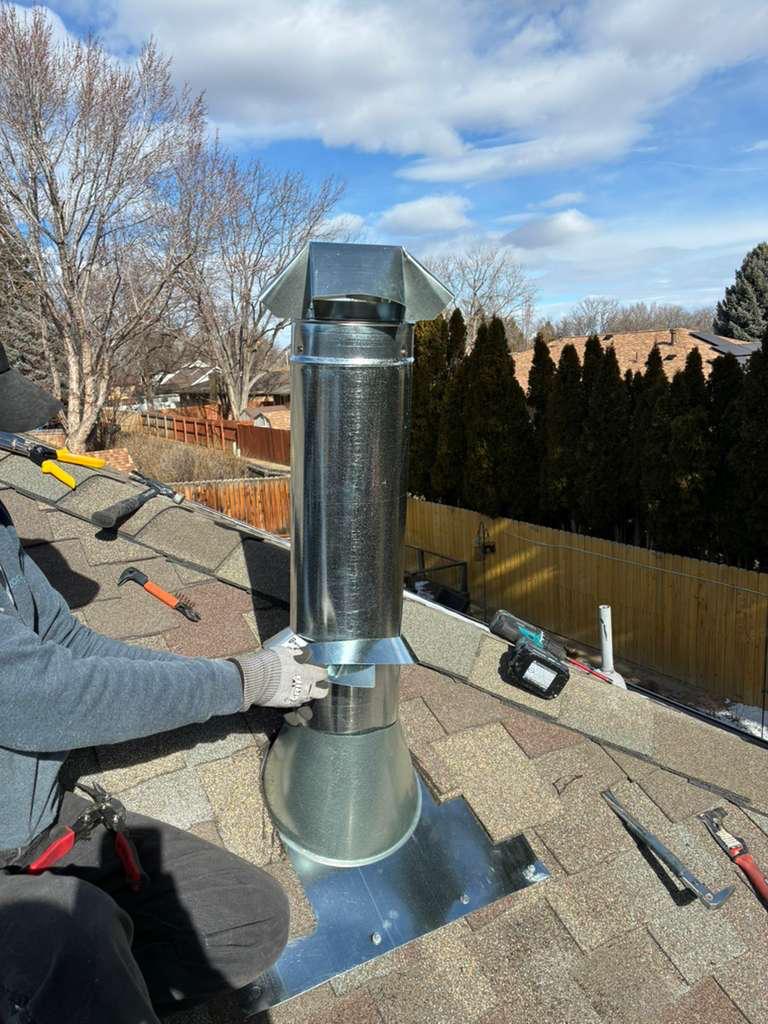
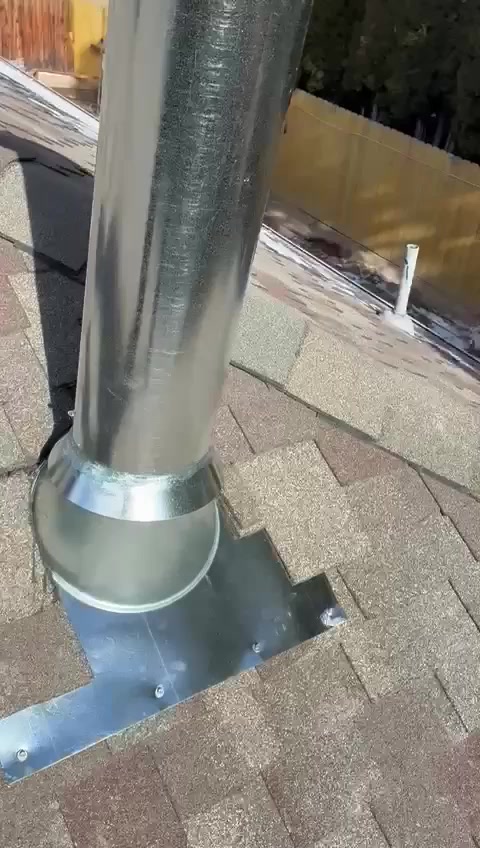
This is the part that leaks if it is done wrong, and in Colorado it is the difference between a dry ceiling and a stained one. The flashing base cannot just sit on top of the shingles. Water runs downhill, so the upper edge of the flashing has to tuck under the shingle course above it, and the lower edge has to lay over the course below it. We pulled back the right shingles, slid the base in so it was woven into the existing courses, and worked from the bottom up the way water travels. That layering is what makes it shed instead of pool. We bedded it in high temperature sealant where the pipe meets the flashing collar and fastened it so it cannot lift in a Front Range windstorm. Snow load and freeze thaw punish a lazy flashing job, and we build this part to outlast the roof around it.
We do not gamble on roof penetrations. The flashing is woven into the shingles the way water actually runs, because around here a shortcut up top shows up as a stain on your ceiling.
- Adam, Owner, Adam Chimney Sweep
Running the new galvanized chimney pipe
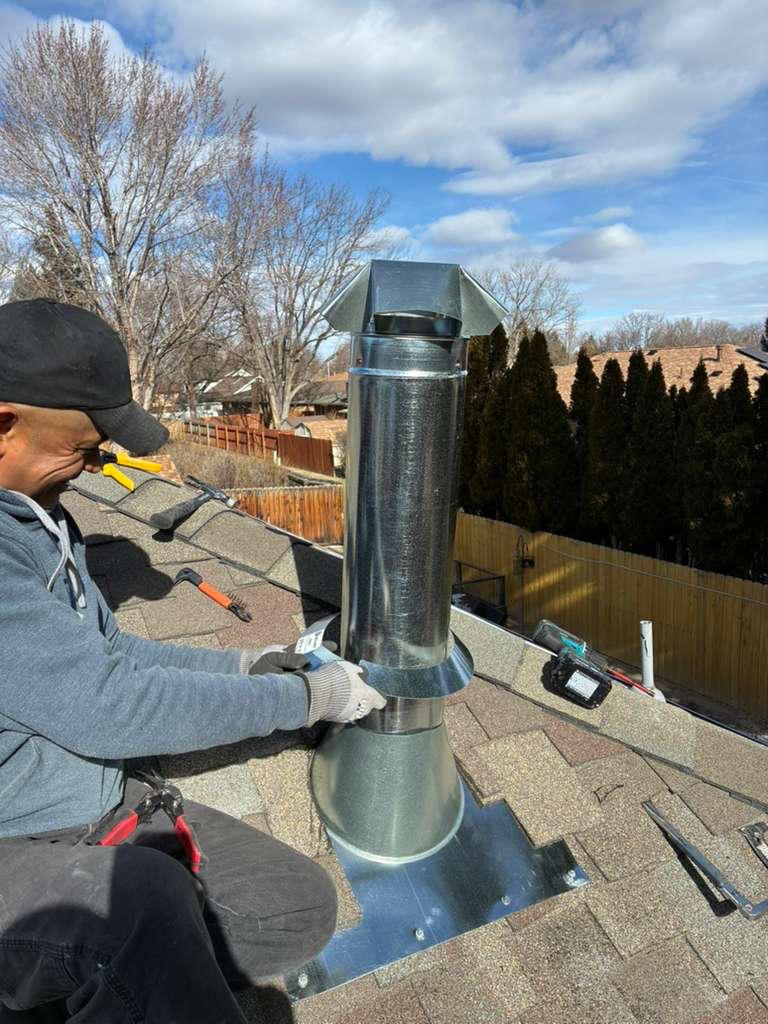
With the base set, we ran the Class A pipe up through the opening. Class A is double wall insulated pipe, rated for a wood burning appliance, and it keeps the outside surface cool enough to pass safely through the roof and the combustible framing near it. We locked each section together, kept the required clearances to anything that can burn, and held the pipe plumb as it came through the deck. Height matters here too. A wood stove chimney has to clear the roofline and any nearby high points by the right margin, or you get downdrafts and poor draw every time the wind shifts. We set the pipe tall enough to satisfy the rule that keeps the smoke pulling up and out instead of backing into the house. Galvanized pipe holds up well to weather and snow, and assembled correctly it gives the homeowner a chimney that runs clean for years.
Topping it with the galvanized rain cap
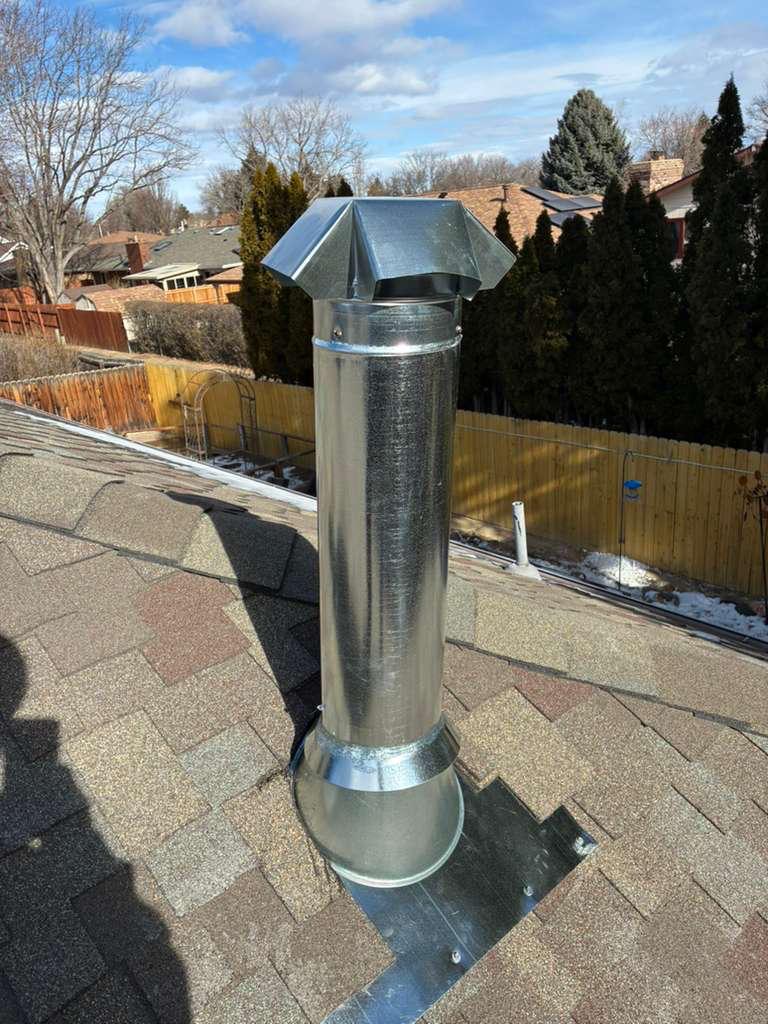
An open chimney is an invitation to every problem you do not want. Rain and snowmelt run straight down the flue and into the appliance, which rusts metal and rots whatever they touch. Birds and squirrels nest in the warm opening. Embers can ride the draft up and land on the roof. So we topped the pipe with a galvanized rain cap built for this kind of system. The cap covers the flue, keeps the weather out, and its spark arrestor screen stops critters and stray embers while still letting the smoke exit freely. We seated it square and locked it down so a gust cannot walk it off the pipe. A good cap is a small part of the total cost and easily one of the most important. It protects the pipe, the flashing, and everything below it from the top down.
A draft check is not optional for us. The cap can look perfect, but until I see that fire pull clean up the pipe, the job is not done and I am not leaving.
- Adam, Owner, Adam Chimney Sweep
The final draft check
A chimney is not finished when the cap goes on. It is finished when we know it pulls. So before we packed up, we ran a draft check on the appliance. We want to see the smoke rise and exit cleanly, with no spillage backing into the room and no sluggish smolder that says the column is not drawing. We checked the connector and the joints, confirmed the pipe height was doing its job, and made sure the path from the firebox to the cap was clear and tight all the way up. This is also where height and clearances prove themselves, because a chimney that looked right on paper either drafts or it does not once there is a real fire pulling on it. When it drew the way it should, we walked the homeowner through what we did and what to watch for. A clean draft check is how we hand off a job we stand behind.
If you are putting in a wood stove or fireplace, or your old chimney needs a real top on it, this is the work we do every week. A new Class A pipe, a flashing base that actually sheds water, and a solid galvanized rain cap all work together to keep your home dry and your fire drafting right. If you only need a cap, we handle chimney cap installation on its own, and if you are starting from the appliance, we cover fireplace and stove installation from the firebox to the flue. Family owned and working the Front Range since 2001. Call us for a free quote and we will tell you straight what your roof and your chimney need.