 Steamboat Springs gets that famous champagne powder and a winter that just won't quit, so wood-burning fireplaces and stoves up here run nearly non-stop from the first cold snap to spring thaw.
All that burning has a downside. Creosote builds up fast inside the flue, and the deep snow loads we get test every cap, crown and bit of flashing on the roof. Both of those things are exactly what we deal with for a living.
Chimney & fireplace services in Steamboat Springs, CO
 Chimney and fireplace services in Steamboat Springs come down to one thing: keeping your heat safe and your flue clean through a brutal Routt County winter. Adam Chimney Sweep is a family-owned crew that has looked after Colorado homes since 2001. Adam runs the company himself, and he's the guy who taught everyone on the truck how to do it right. In Steamboat Springs and across Routt County, we handle the full range of chimney and fireplace work:
- Chimney sweeping & cleaning — HEPA-vacuum sweeps that pull out creosote and soot without leaving a black mess in your living room.
- Inspections — dual-camera inspections that catch cracks, blockages and code issues early, before they turn into expensive problems.
- Repairs & tuckpointing — crown rebuilds, firebox repair and masonry repointing to put tired brickwork back together.
- Caps, crowns & liners — stainless caps and relining that keep weather, animals and stray sparks where they belong.
- Fireplace & insert installation — safe, code-compliant wood, gas and insert installs done by people who do this every week.
At altitude, a fireplace isn't a luxury. It's how a lot of homes around here stay warm when the power flickers or the propane bill climbs. We get that, and we treat every job like the heat in that house has to work all season.
Up in Steamboat, I tell folks the same thing every fall: your chimney works harder here than it does almost anywhere else in the state. You're burning from October clear into May some years. That's a lot of creosote, and it's why I push for a sweep before the season instead of after.
- Adam, Owner, Adam Chimney Sweep
Why Steamboat Springs homeowners choose Adam Chimney Sweep
There are plenty of folks with a brush and a ladder. What sets us apart is that we know what a high-country winter does to a chimney, and we build our work around it. Mountain homes aren't the same as flatland homes, and the wear shows up in different places.
Keeping up with a long Routt County winter
Annual sweeping and inspection keep creosote in check. That matters because creosote is the leading cause of chimney fires, full stop. Our cap and crown work is built to stand up to the snow load and meltwater that come with a Steamboat winter, the kind of freeze-thaw cycle that pries masonry apart a little more every year.
Here's the part a lot of homeowners don't think about. Snow piles on the crown, melts during a warm afternoon, runs into hairline cracks, then freezes again overnight. Water expands when it freezes, so each cycle widens the crack. Do that a few hundred times over a winter and a tiny flaw becomes a real leak. Catching it early is the whole game.
Local crew, upfront pricing
We don't do surprise invoices. You get a price before we start, and that's the number you pay. When you call (720) 207-9232, you talk to people who actually drive these mountain roads and know what a Steamboat roof looks like under a foot of snow. No call center, no runaround.
What a chimney sweep in Steamboat Springs actually involves
People picture the old movie version with the brush and the top hat. The real thing is cleaner and a lot more careful. Here's how a typical sweep goes when we show up at your place:
- Walk-through and setup. We lay down drop cloths and set up the HEPA vacuum so soot stays contained. Your carpet and furniture are protected the whole time.
- Inspection first. Before any brush touches the flue, we run a camera up to see what we're dealing with. Sometimes a "dirty" chimney is actually a cracked liner, and you'd want to know that.
- The sweep. We brush the flue from the right direction for your setup, knocking creosote and soot loose while the vacuum catches it. No black cloud, no mess on your hearth.
- Smoke chamber and firebox. We clean the shelf and chamber where buildup loves to hide, then check the damper so it opens and closes the way it should.
- Final check and report. We tell you straight what we found, show you photos, and let you know if anything needs attention. If it's all good, we say so and get out of your hair.
That whole process usually takes under two hours for a standard fireplace. Stoves and inserts can run a little longer depending on the setup and how much creosote has piled up since the last cleaning.
The first thing I do on any sweep is put a camera up the flue before the brush ever goes in. I've found cracked liners on chimneys that looked fine from the firebox. You can't fix what you can't see, and I'd rather catch a bad liner now than have someone heating their house through it all winter.
- Adam, Owner, Adam Chimney Sweep
Creosote: the part that catches up with mountain homes
Creosote is the tar-like gunk that wood smoke leaves behind as it cools on the way up your flue. Burn a little, get a little. Burn all winter the way Steamboat folks do, and it stacks up faster than most people realize. It comes in three stages, and they get harder to deal with as they go:
- Stage 1 is a light, flaky soot. A normal sweep brushes it right out.
- Stage 2 is a crunchy, tar-like layer that takes more work and the right tools to remove.
- Stage 3 is the dangerous one: a hard, shiny glaze that's basically fuel coating your flue. This is the stuff chimney fires are made of, and it needs special treatment to get out.
Up here, a few things push creosote to build faster. Burning green or wet wood makes it worse, because the extra moisture cools the smoke and leaves more residue. Damping the fire down low overnight does it too, since a slow, smoky fire produces way more creosote than a hot, clean burn. And our cold flue temperatures, just from the altitude and the long winters, mean smoke cools quicker on the way up than it would somewhere warmer.
The fix is mostly simple. Burn seasoned hardwood that's been split and dried for at least a year, keep your fires hot and bright instead of smoldering, and get the flue swept once a year. Do those three things and you knock the risk way down.
Warning signs your Steamboat chimney needs attention
Most chimney trouble gives you a heads-up if you know what to watch for. Call us if you notice any of these:
- Smoke spilling back into the room instead of drafting up and out
- A heavy, smoky or campfire smell when the fireplace isn't even lit
- White staining (that's efflorescence) or crumbling mortar on the exterior brick
- Water stains on the ceiling or wall around the chimney chase
- Bits of brick, tile or mortar showing up in the firebox
- A damper that sticks, won't seal, or has rusted up
- Animals or nesting debris you can hear or see up in the flue
None of these fix themselves, and most get cheaper to handle the sooner you call. A cracked crown caught in fall is a small repair. The same crack ignored through a winter of freeze-thaw can mean water damage inside the wall by spring.
Caps, crowns and liners that hold up at altitude
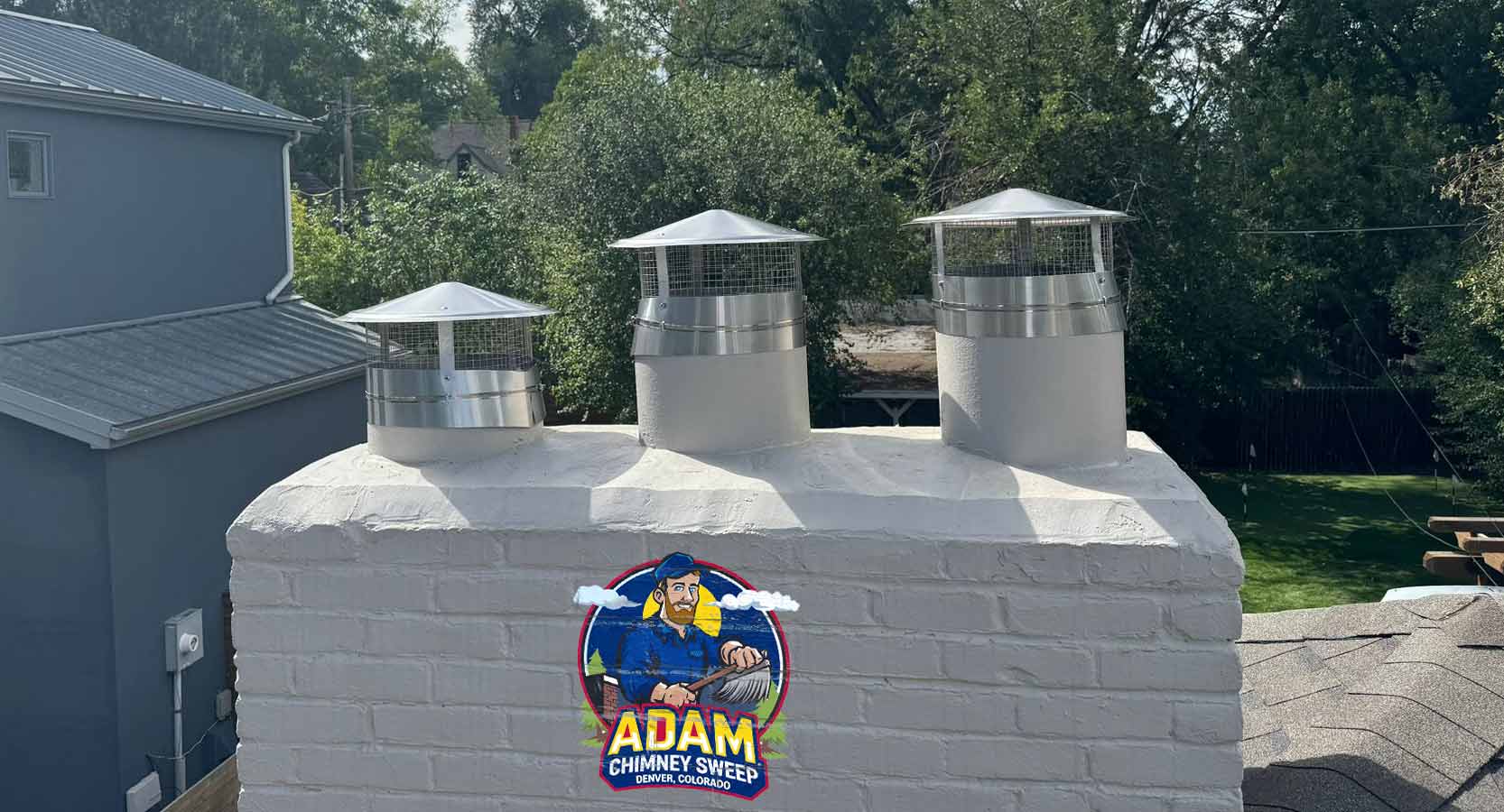
The top of your chimney takes the worst of a Steamboat winter. The crown is the concrete slab that caps the masonry and sheds water away from the flue. When it cracks, water gets in and the freeze-thaw cycle goes to work. We rebuild crowns, seal them, and when one's too far gone we pour a new one that's sloped to drain the way it should.
The cap sits over the flue opening and keeps rain, snow, animals and sparks out. A good stainless cap with a solid spark arrestor is cheap insurance, especially during fire season when a stray ember off the roof is the last thing anyone wants. We fit caps sized right for your flue so they don't rattle loose in a mountain windstorm.
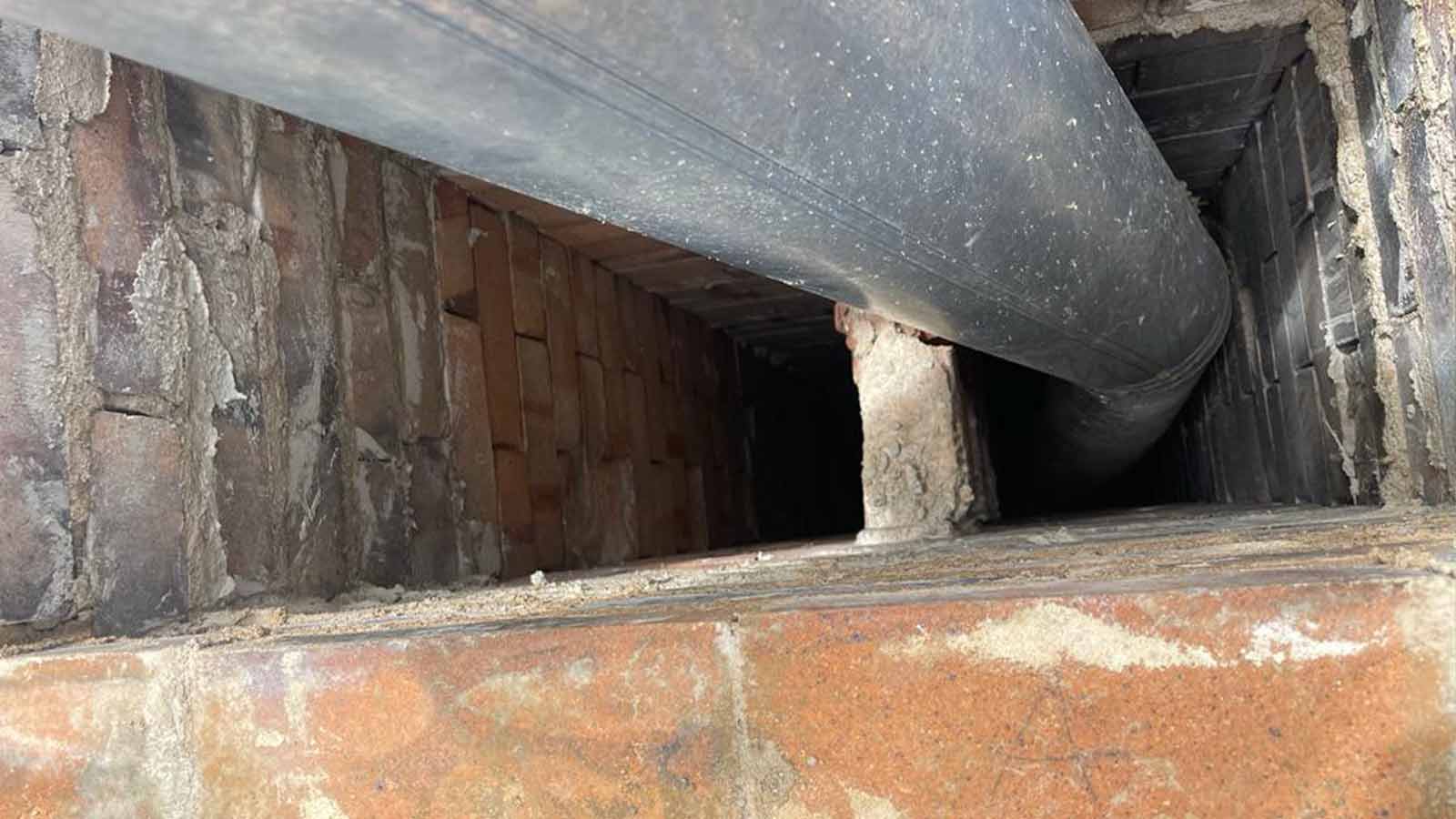
The liner is the channel inside the chimney that carries smoke and gases out safely. Older homes around Routt County sometimes have clay tile liners that have cracked or deteriorated, and that's a real safety issue because a damaged liner can let heat and gases reach the wood framing behind the brick. We install stainless steel liners that handle the heat, resist corrosion, and bring an old chimney back up to a safe standard.
Snow load is the thing people underestimate up here. I've seen crowns crack just from the weight and the freeze-thaw, not from age. If you've got a crack on top of your chimney, water's getting in every time it melts. Seal it before winter and you save yourself a much bigger repair down the road.
- Adam, Owner, Adam Chimney Sweep
Inspections done with a camera, not a guess
We run dual-camera inspections so we can actually see the inside of your flue top to bottom. The camera catches cracks, gaps, blockages and creosote buildup that you'd never spot from the firebox with a flashlight. We walk you through the footage and explain what we're looking at, in plain English, no jargon dump.
For most homes that burn regularly, a yearly inspection paired with the annual sweep is the right rhythm. If you just bought a place, or you've never had the chimney looked at, a one-time baseline inspection is worth it so you know exactly what you're working with before you light that first fire.
Frequently asked questions
How often should I get my chimney swept in Steamboat Springs?
Once a year is the standard, and around here that's not overkill. With how long the burning season runs at this altitude, an annual sweep before winter keeps creosote from stacking into the dangerous range. If you burn heavily, every single evening through the cold months, you may want it checked mid-season too.
When's the best time to book?
Late summer and early fall are ideal. You want the work done before you start burning, and that's also when our schedule is more open. Once the snow flies, everyone remembers their chimney at once and the calendar fills up fast. Booking ahead means you're ready when the first cold front rolls through.
Do you handle gas inserts and stoves too, or just wood?
Both. We service and install wood-burning fireplaces, gas inserts, and stoves. Gas appliances still need their venting checked and kept clear, so they're part of the regular care routine even though they don't build creosote the way wood does.
What does a sweep cost?
It depends on the system and how much buildup we're dealing with, but you'll always get an upfront price before we start any work. No hidden fees, no surprise line items at the end. Call us and we'll give you a straight number.
Is my old clay liner a problem?
It can be. Clay tile liners crack over time, especially after years of freeze-thaw, and a cracked liner is a genuine safety concern. We can't tell without looking, which is why the camera inspection matters. If yours is damaged, a stainless steel reline brings it back to a safe standard.
Burn safer this winter
A clean, well-kept chimney is the difference between a cozy winter and a dangerous one. If you want to read up on safe wood-burning practices, the Chimney Safety Institute of America is a solid, no-nonsense resource. And when you're ready to get your own system squared away, we're right here in the high country.
Ready to book a sweep, inspection or repair in Steamboat Springs? Call Adam Chimney Sweep at (720) 207-9232 for upfront pricing and a crew that treats your home like its own. You can also reach out through our contact page and we'll get back to you quick. We'll get your chimney ready before the powder flies.