An unused fireplace can be the biggest draft in your house
Here's a cost that sneaks up on a lot of Denver homeowners: the fireplace you never even light. An open or worn-out damper leaves a hole the size of a dinner plate open to the sky, and on a cold Front Range night your furnace-heated air pours straight out of it while cold air sinks down to chill the room. You feel it as a draft near the hearth. The good news, like most things on our DIY page, is that you can stop most of it for free.
I get called out for "a cold, drafty fireplace" all the time, and more often than not the fix costs nothing but ten minutes and a little attention. Here's how I'd seal up a cold fireplace in my own home, starting with the free fixes.
An open damper on a fireplace you never use is just an open window in your ceiling. I've measured rooms that were ten degrees colder by the hearth for exactly that reason, and the fix didn't cost the homeowner a dime.
- Adam, Owner, Adam Chimney Sweep
What that draft is really costing you
It's easy to ignore a cold spot by the hearth, but the number behind it is real. An open or leaking fireplace damper can let as much heated air escape as leaving a window open all winter, and in a Denver heating season that runs from September into May, that's money off your gas bill month after month. Heat you already paid for goes straight up the flue, and your furnace runs longer to make up for it.
The reason it bites harder here than in a milder place is simple physics: the bigger the gap between your warm indoor air and the cold outside, the harder that air wants to rise and rush up the chimney. On a single-digit January night the pull is strong, and an unsealed flue feeds it nonstop. That's also why the fixes below pay you back faster in Colorado than almost anywhere, because every one of them closes off that escape route.
There's a comfort cost too, not just a dollar one. A steady downdraft of cold air spilling out of the firebox makes the whole room feel drafty and pushes you to crank the thermostat to compensate, which heats the rest of the house more than you need just to keep one room livable. Seal the fireplace and the room holds its temperature, the furnace cycles less, and you stop paying to heat air that's already on its way out the roof.
Where the cold air is getting in
Before you start plugging holes, it helps to know the usual suspects. Cold air gets past an unused fireplace through:
- An open damper. The most common one. If it's open, or propped open by soot and debris, it's a chimney-sized vent.
- A damper that no longer seals. Old metal throat dampers warp and rust, so even "closed" they leak around the edges.
- No seal at the top. A standard chimney has nothing closing the top, so wind drives cold air straight down the flue.
- Gaps in the masonry and trim. Cracks where the firebox meets the wall, or around the surround, let drafts sneak in.
Work down this list and you'll catch nearly all of it.
1. Close the damper, all the way
Start with the free and obvious one. Reach up into the throat of the fireplace, find the damper handle, and make sure it's fully closed. Then check that it actually seals: on a windy day, hold a lit incense stick or a thin strip of tissue just below the closed damper. If the smoke or tissue gets pulled up or pushed around, your damper is leaking even though it's "closed." That tells you whether the next steps are worth your time, and they usually are.
2. Make a free chimney draft stopper
If your damper leaks, or you just want to seal an unused fireplace for the season, a chimney plug stops the draft cold. You can buy an inflatable one, but you can also make one for nothing from what's in the garage:
- Stuff an old pillow, a rolled towel, or scrap rigid foam into a heavy-duty trash bag, then double-bag it.
- Push it up into the throat of the flue, above the damper, until it wedges snugly and blocks the opening.
- Leave a corner of the bag or a ribbon hanging down where you can see it.
- Attach a bright note to the damper handle or the screen that reads "plug in flue."
That last step matters more than it sounds. The one rule with any chimney plug, homemade or store-bought, is that you must remove it before you ever light a fire. A blocked flue with a fire under it fills the house with smoke and carbon monoxide in minutes. Make it impossible to forget.
3. Feel for the leaks and seal the gaps
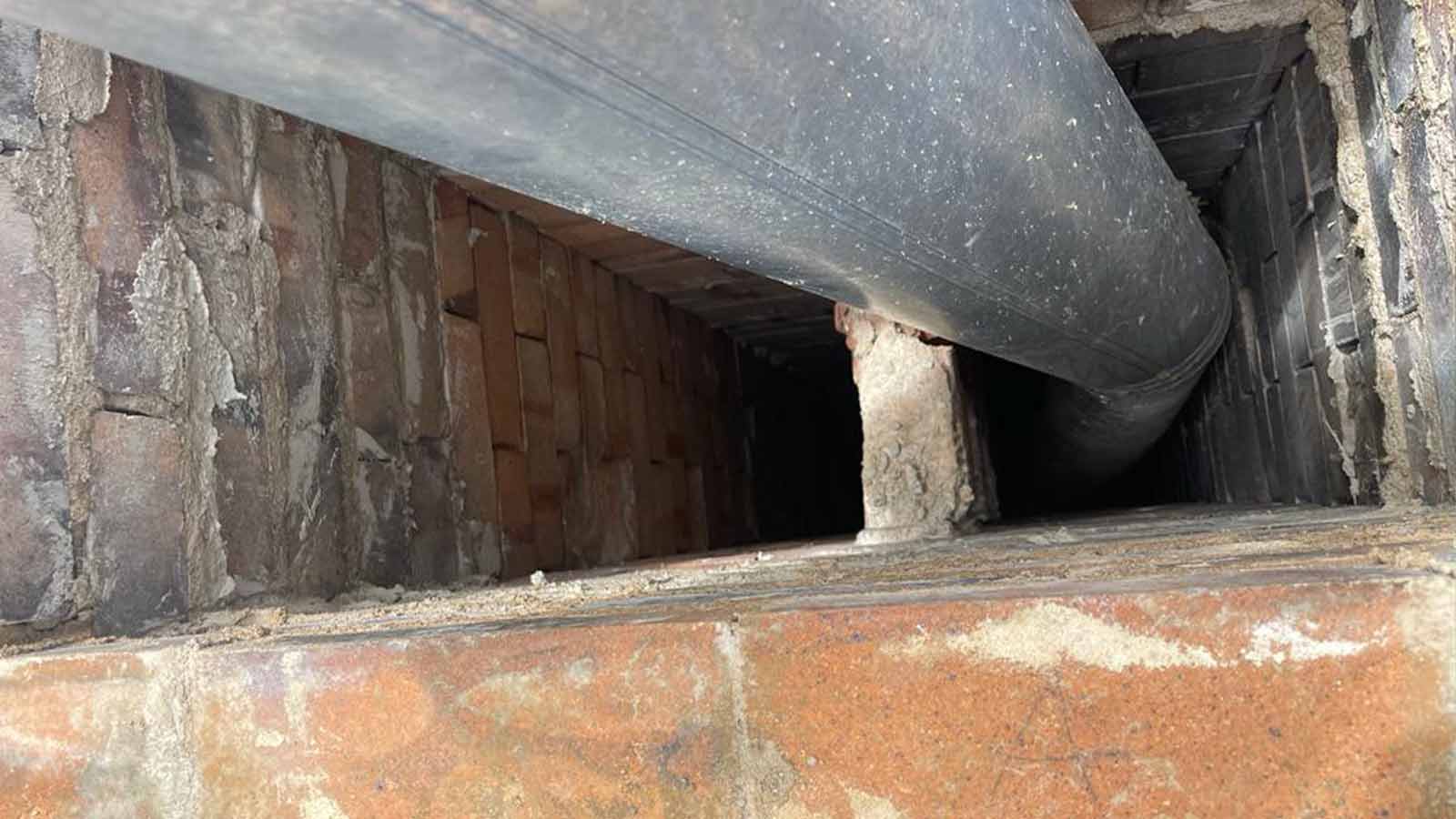
With the damper handled, hunt for the smaller leaks. Run the back of your hand around the firebox opening and the surround on a windy day, or use that incense stick again and watch where the smoke bends. Small masonry cracks and gaps around a metal surround can be closed with a little high-temperature caulk or fireplace mortar, which is a couple of dollars, not a service call. It's the cheapest insulation upgrade in the house.
People spend a fortune on fancy weatherstripping and forget the giant hole in the chimney. Seal the flue first. It's the single biggest draft most homes have, and you can plug it with a trash bag and an old pillow.
- Adam, Owner, Adam Chimney Sweep
4. Close the glass doors and the screen
If your fireplace has glass doors, keep them closed when there's no fire. They aren't airtight, but they add another barrier between the room and the flue and cut the draft you feel. A mesh screen alone does nothing for airflow, so it's the doors that matter here.
5. The lasting fix: a top-sealing damper
The free fixes will get you through the season, but if your throat damper is warped or rusted out, the real cure is a top-sealing damper that mounts at the top of the chimney and closes with a rubber gasket, sealing far better than the old metal flap ever did. It doubles as an animal and rain guard. That's a job for a pro, and you can read how caps and dampers work together in our guide to damper caps for Colorado.
A homemade plug is a great bandage, but if you're fighting the same draft every winter, a top-sealing damper pays for itself fast in heat you stop losing. That's the one I'd put on my own chimney.
- Adam, Owner, Adam Chimney Sweep
When a draft means something is broken
Sometimes a draft is a symptom, not just an open damper. If you can't get the damper to close or seal at all, if you see daylight or feel rain coming down the flue, or if the masonry around the firebox is cracked, those point to a warped damper, a missing or damaged cap, or crown damage that a quick DIY plug won't fix. While you're in there, it's a good moment to run our free DIY chimney checkup and see what else the chimney is telling you. The U.S. Department of Energy has solid free guidance on fireplace energy loss if you want the why behind it.
Frequently asked questions
Should I leave my fireplace damper open or closed?
Closed, any time there's no fire and the ashes are completely cold. An open damper lets your heated air escape and cold air pour in. The only time it must be open is while a fire is burning or coals are still warm, so smoke and carbon monoxide can vent safely.
Is it safe to block my chimney to stop a draft?
Yes, as long as you only block it when the fireplace is out of use and you remove the plug before every fire. A chimney balloon or a homemade bag plug works well. The danger is forgetting it's there and lighting a fire, so always leave an obvious reminder on the damper or screen.
Why is cold air coming down my chimney even with the damper closed?
Old throat dampers warp and rust, so they rarely seal tightly, and cold air leaks around the edges. A homemade or inflatable plug stops it for free in the short term, and a top-sealing damper fixes it for good.
Seal up that cold hearth and you'll feel the difference on the next cold night, and your furnace will thank you. When you do light a fire, get the most out of it with our tips on getting more heat from your fireplace for free. If your damper is shot or the draft won't quit, get a free quote and we'll sort it out.