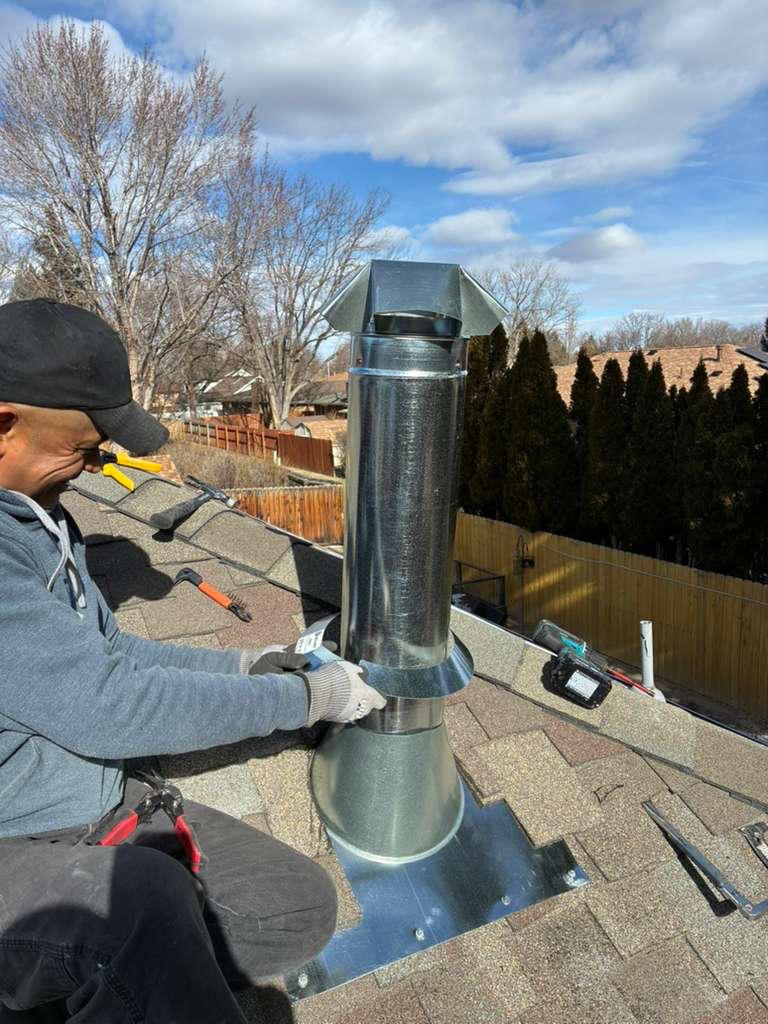
Every chimney pipe that goes through a roof starts with a clean, square opening. In this clip our crew marks and cuts the roof deck for a new flue, keeping the cut tight to the pipe so the flashing can seal and water stays out. Rushing this one step is where most leaky roof penetrations begin, so we take the time to get it right.
What is happening in this clip
The technician lays out the penetration point from below, transfers it to the roof, then cuts the decking to the exact diameter the pipe and its storm collar need. A tight, centered cut means the flashing sits flat on the shingles instead of bridging a ragged hole.
Why the opening decides whether the roof leaks
Almost every leaking pipe penetration we repair traces back to an oversized or off-center cut. Water does not need a big gap. Once it finds a path under the flashing it follows the decking, shows up as a ceiling stain rooms away, and rots the sheathing quietly.
Clearances matter as much as waterproofing
Vent and flue pipes also need the correct air space from the wood framing they pass through. We size the opening for both the pipe and its required clearance to combustibles, so the installation is fire-safe inside the roof, not just dry on top of it.