The chimney cap vs crown question comes up on almost every roof I climb, because folks hear the two words tossed around and figure they're the same part. They're not. They're two separate pieces sitting in two different spots, doing two different jobs, and your chimney needs both of them working to stay dry inside. I've been sweeping and repairing chimneys around Denver since 2001, and I'd say water getting past a failed cap or a cracked crown is the number one reason a perfectly good masonry chimney starts falling apart from the inside out.
So let's clear it up for good. Here's what each part is, where it sits, what it protects you from, and how to tell when one of them is letting you down.
Most people don't think about the very top of their chimney until water shows up on the ceiling or a bird ends up in the firebox. By then the damage has usually been working on you for a couple of seasons. The cap and the crown are the two things standing between Colorado weather and the inside of your flue, and when I do a chimney inspection in Denver, the top is the first place I look.
 Most people don't think about the very top of their chimney until water shows up on the ceiling or a bird ends up in the firebox. By then the damage has usually been working on you for a couple of seasons. The cap and the crown are the two things standing between Colorado weather and the inside of your flue, and when I do a
 Chimney Cap vs Crown: What's the Actual Difference?
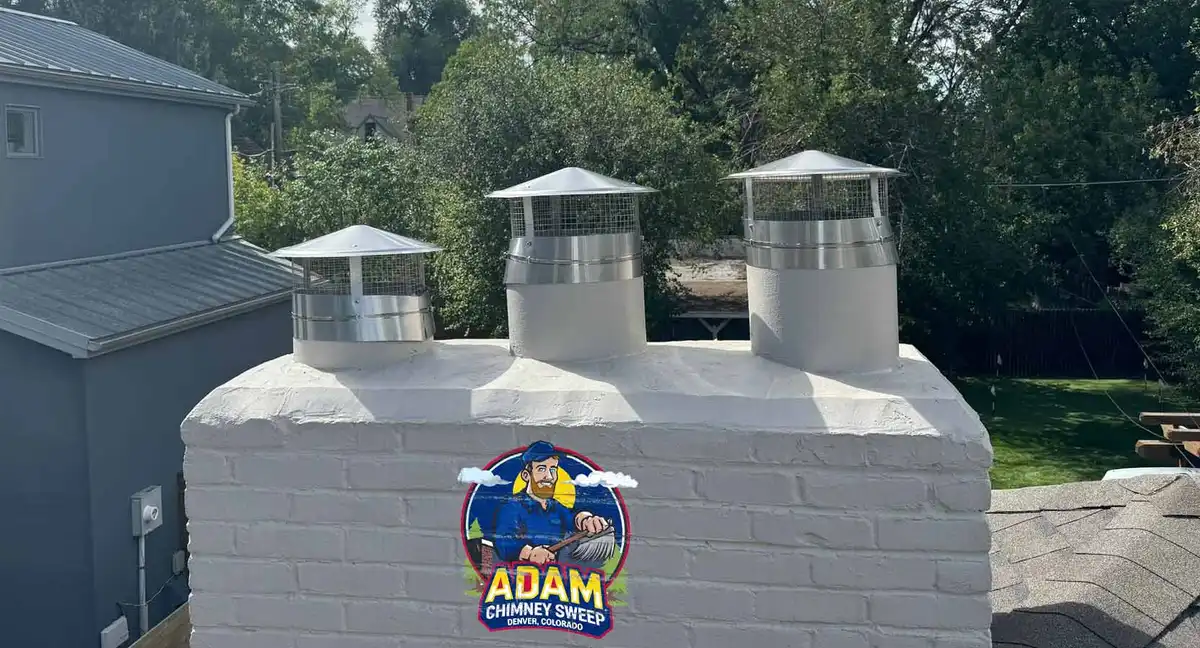
The simplest way I explain it on a job site is this. The crown is the concrete slab. The cap is the metal lid. They sit on top of each other but they're built from different stuff and they fail in completely different ways.
What Is a Chimney Crown?
The crown is the big sloped slab of mortar or concrete that covers the whole top of the masonry, the brick part you can see from the street. It's poured around the flue tiles and it slopes away from the center so rain and snowmelt run off the edges instead of pooling. Think of it as the roof of your chimney. A good crown overhangs the brick a little, has a drip edge, and is poured thick enough that it doesn't crack the first time the temperature swings 40 degrees in an afternoon, which around here is just called Tuesday.
I tell every homeowner the same thing: the crown is the most overlooked, hardest-working part of the whole chimney. It takes the full hit of every freeze-thaw cycle we get on the Front Range. Builders pour them too thin all the time, no overhang, no slope, and ten years later I'm up there looking at a crack you could lose a quarter in.
- Adam, Owner, Adam Chimney Sweep
What Is a Chimney Cap?
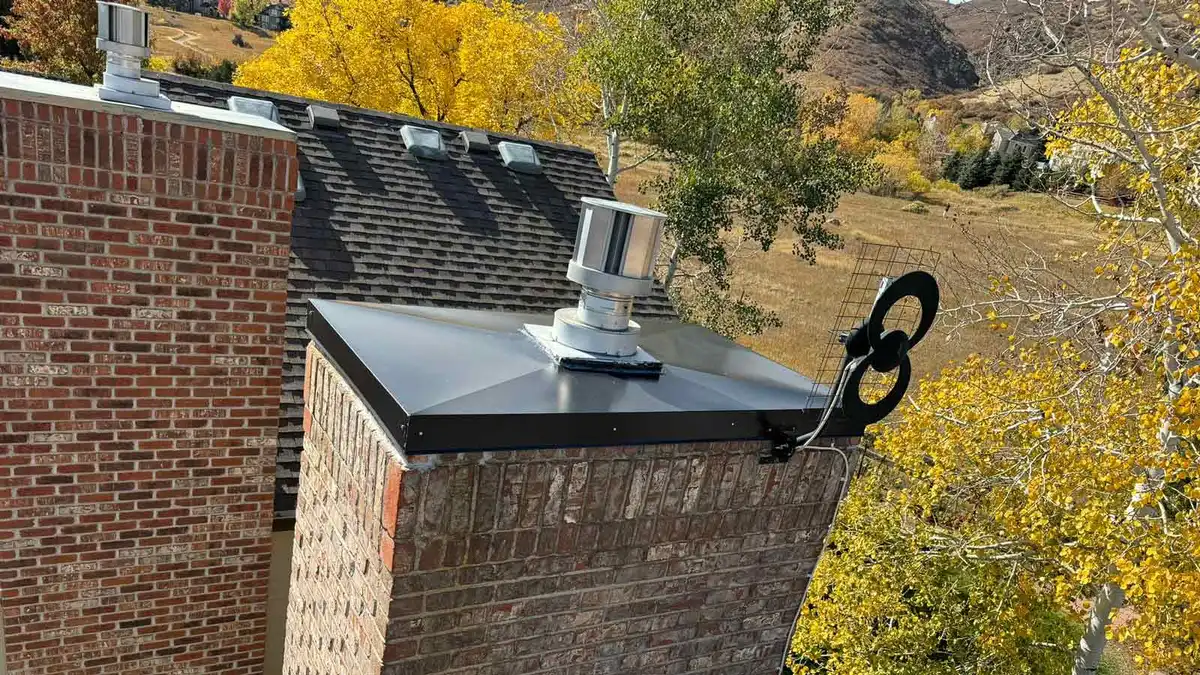
The cap is the metal cover that sits over the flue opening itself, the actual hole the smoke comes out of. Most are stainless steel, some are copper or galvanized, and they're built with a top plate and mesh sides. That mesh is doing three jobs at once. It keeps rain from dropping straight down the flue, it keeps animals and birds from nesting in there, and it stops burning embers from floating up onto your roof or a dry yard. A crown protects the brick. A cap protects the hole.
Where Each One Sits
Picture the top of your chimney from the side. From the bottom up it goes like this:
- The brick or block masonry. The tall stack itself.
- The crown. The concrete slab poured over that masonry, sloped to shed water.
- The flue tile. The clay or steel liner that sticks up an inch or two through the middle of the crown.
- The cap. The metal lid that clamps or screws onto that flue tile, hovering above the opening.
They're stacked, they work together, and a gap in either one lets water start its slow work on your masonry and your liner.
Why You Need Both, Not One or the Other
I get calls all the time from people who put a shiny new cap on and figured they were covered. A cap is great, but it only guards the flue opening. The crown is still wide open to the sky across the whole top of the chimney. If that slab is cracked, water runs straight down between the liner and the brick where you'll never see it, and it freezes, expands, and pops the masonry apart from the inside.
 I get calls all the time from people who put a shiny new cap on and figured they were covered. A cap is great, but it only guards the flue opening. The crown is still wide open to the sky across the whole top of the chimney. If that slab is cracked, water runs straight down between the liner and the brick where you'll never see it, and it freezes, expands, and pops the masonry apart from the inside.
Flip it around. A solid crown with no cap means rain pours right down your flue onto the damper and the smoke shelf, rusting steel and rotting mortar joints, and you've basically left the front door open for squirrels and raccoons. Out here that's not a maybe, that's a when. We pull nests out of uncapped flues constantly, which is its own headache I cover under animal removal in Denver.
A cap and a crown are a team. I've never once been able to tell a customer that one alone has them protected. The crown sheds the weather off the brick, the cap closes off the flue. Skip either one in a Colorado winter and water finds the gap every single time. I've seen a $200 cap save a $6,000 rebuild, and I've seen a hairline crown crack nobody fixed turn into exactly that rebuild.
- Adam, Owner, Adam Chimney Sweep
Signs Your Chimney Crown Is Failing
The crown takes the worst beating because it's flat concrete sitting out in the weather, and concrete and water do not get along long term, especially with our freeze-thaw swings. Here's what I'm checking for, and what you can sometimes spot from the ground with a pair of binoculars:
- Visible cracks across the slab. Hairline cracks aren't always urgent, but anything wider than the edge of a credit card is letting water in.
- Chips, spalling, or chunks missing. When the surface starts flaking off and you see crumbs of concrete on the roof, the crown is breaking down.
- White staining on the brick below. That chalky residue is efflorescence, mineral salts left behind by water moving through the masonry. It's a tell that water's getting past the top.
- A gap where the crown meets the flue tile. This joint cracks open first nine times out of ten, and it dumps water right down the side of the liner.
- Damp spots or stains on the ceiling near the chimney. If it shows up inside the house, the crown or the flashing has been failing for a while.
A cracked crown caught early is usually a patch-and-seal job. Let it go and the water works its way into the brick, and now you're talking tuckpointing or rebuilding the top courses too. The repair window matters a lot with crowns.
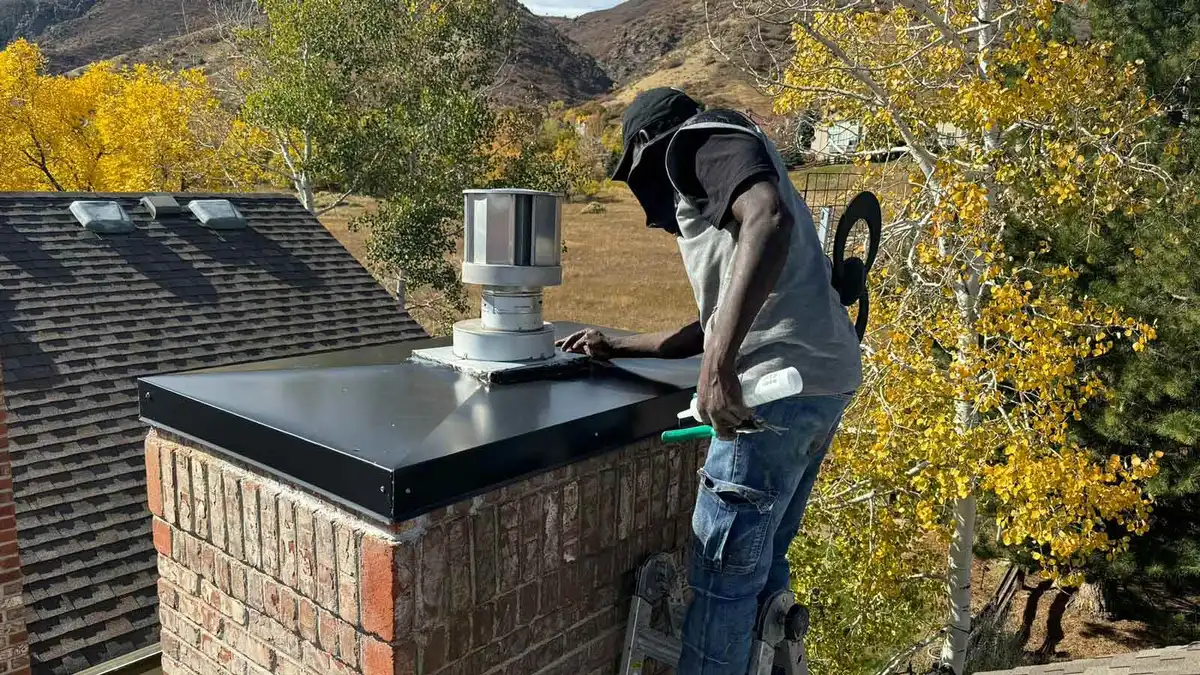
Here's a real look at how we handle a cracked crown up close, the kind of work that keeps a small problem from turning into a teardown:
Signs Your Chimney Cap Is Failing
Caps are simpler, and the failures are usually easier to spot since the part is right out in the open. Watch for these:
- Rust streaks running down the brick. A cheap galvanized cap will rust out in a few Colorado winters and bleed orange stains down your chimney.
- Missing, bent, or torn mesh. Our wind takes caps apart. If the screen is flapping or gone, animals and rain have a clear path in.
- The cap is loose, crooked, or flat-out gone. A windstorm can lift a poorly clamped cap right off. I've found them in the yard, in the gutter, two houses down.
- Animal noise or nesting smell. Scratching, chirping, or a musty smell from the firebox usually means the cap stopped doing its job.
- Water in the firebox after rain. If the bottom of your fireplace is wet, the most likely culprit is a failed or missing cap.
The biggest mistake I see is people buying the cheapest cap at the hardware store, the thin galvanized kind. It looks fine for two winters, then it rusts and the wind peels it off. Spend a little more on a stainless cap with a solid clamp and you'll forget it's even up there for fifteen or twenty years. It's the cheapest insurance on the whole chimney.
- Adam, Owner, Adam Chimney Sweep
Repair or Replace? How I Decide
People always want to know if they can patch it or if it's coming off. Depends on the part and how far gone it is.
The Crown
If the crown has hairline cracks and the slope and overhang are still good, I'll grind it clean and brush on a flexible crown sealant that flexes with the freeze-thaw instead of cracking again. That's a same-day fix and it buys you years. If the slab is crumbling, badly pitched, or has chunks missing, sealant is lipstick on a pig. At that point we form it up and pour a new crown with a proper overhang and drip edge so it actually sheds water. You can see how we approach the rebuild side on our chimney crown repair page.
The Cap
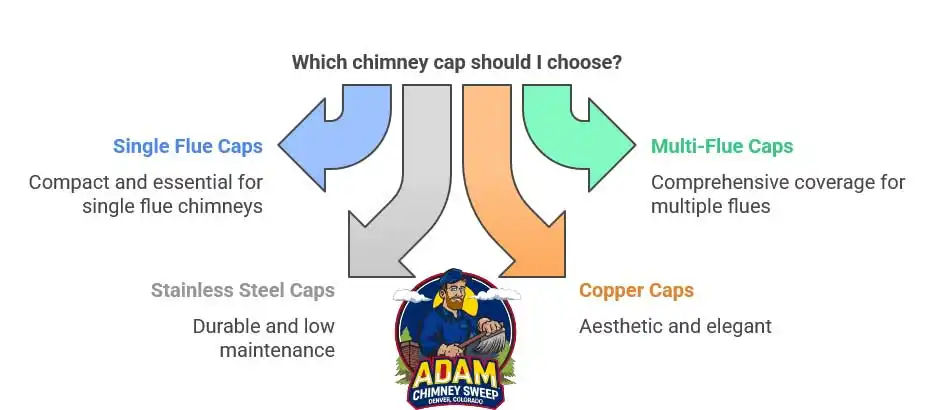
Caps are almost always a straight replacement. There's not much to repair on a rusted-out or wind-mangled lid, and a quality stainless or copper cap doesn't cost enough to mess around patching a bad one. If the flue is an odd size or you've got a multi-flue chimney, we'll size a custom one. Either way it's a quick job. Details on that live on our chimney cap repair and installation page.
One thing I'll add: while a tech is up there swapping a cap or sealing a crown, that's the perfect time to have the flue itself looked at. Water that's been getting in may have already started on the liner, and catching that early is the difference between a simple fix and a full reline.
Why Colorado Is Especially Hard on Caps and Crowns
Our climate is rough on chimney tops, and it's worth understanding why both parts wear out faster here than they would somewhere milder. We get big daily temperature swings, hard freeze-thaw cycles, intense high-altitude sun, and the kind of wind that comes barreling down off the foothills. Water seeps into a tiny crown crack during the day, freezes overnight, expands, and makes the crack a little bigger. Repeat that a few hundred times a winter and a hairline turns into a canyon. The sun bakes cheap sealants brittle, and the wind goes to work on any cap that wasn't clamped down right. It's a lot to throw at a slab of concrete and a metal lid, which is exactly why I push yearly inspections so hard. The National Fire Protection Association recommends a chimney check every year, and you can read their guidance over at NFPA.org. The folks at the Chimney Safety Institute of America say the same.
A Quick Homeowner Checklist
You don't need to climb up there yourself, please don't, but you can keep an eye out from the ground and from inside. Once or twice a year, check for:
- Cracks, chips, or white staining you can see on the chimney top.
- A cap that looks crooked, rusty, or missing.
- Rust streaks or dark water stains running down the brick.
- Damp spots on the ceiling or wall around the chimney.
- Any scratching or critter noise coming from the flue.
Catch any of those and it's worth a call before the next big storm. A ten-minute look from a pro now beats a masonry rebuild later, and our inspection covers the whole top, cap and crown both. If you want a sense of what work like this runs, we keep it straight on our pricing page.
Keep the Top Tight and the Whole Chimney Lasts
The cap and the crown aren't competing parts, they're partners. The crown sheds weather off your brick, the cap seals the flue, and together they keep water and wildlife out of a chimney that'll otherwise quietly rot from the top down. Most of the expensive chimney repairs I get called for trace right back to one of these two pieces being cracked, rusted, or flat-out missing for a few years too long. Stay ahead of them and your chimney will outlast all of us.
If you're not sure what shape your cap and crown are in, let's take a look. Call Adam Chimney Sweep at (720) 207-9232 or book an inspection online, and we'll get up on the roof, tell you straight what we find, and only fix what actually needs fixing. Free inspections, upfront pricing, same-week service across the Front Range.