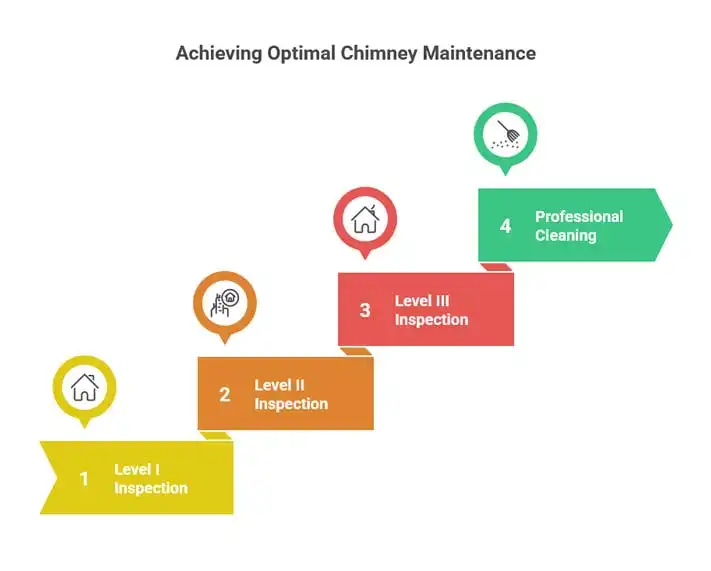
The three chimney inspection levels confuse more Denver homeowners than just about anything else in this trade, so let's clear it up in plain English. I'm Adam, and I've been climbing roofs around the metro since 2001. The National Fire Protection Association spells out three standard levels in a code called NFPA 211, and every honest sweep works off that same playbook. Level 1 is your routine annual look. Level 2 is the deeper one for home sales and big changes. Level 3 is the rare, invasive one for when something serious is hiding where we can't see it. Which one you need isn't a guessing game, and by the end of this you'll know exactly how to tell.
I get this same question on half my calls. Somebody read they need a "Level 2 inspection" before closing on a house, or insurance asked for one after a chimney fire, and they have no idea what that means or what it should cost. Let me walk you through it the way I would standing in your living room.
Chimney Inspection Levels, Defined by the NFPA
The reason there's a standard at all is that "inspect my chimney" can mean wildly different things. A quick visual check on a fireplace you've used safely for years is a different job than digging into a flue after a fire scorched it. So the industry split it into three tiers. Each level builds on the one below it: a Level 2 includes everything in a Level 1 and adds more, a Level 3 includes everything in a Level 2 plus the invasive stuff. You're never skipping steps, just going deeper.
 The reason there's a standard at all is that "inspect my chimney" can mean wildly different things. A quick visual check on a fireplace you've used safely for years is a different job than digging into a flue after a fire scorched it. So the industry split it into three tiers. Each level builds on the one below it: a Level 2 includes everything in a Level 1 and adds more, a Level 3 includes everything in a Level 2 plus the invasive stuff. You're never skipping steps, just going deeper.
Here's the part I want you to hold onto. The level isn't about how thorough the sweep feels like being that day. It's set by the circumstances. The code tells us which level fits, and a straight-shooting sweep recommends the lowest one that answers the question. If anybody's pushing a Level 3 when nothing's wrong and nothing's changed, that's your cue to get a second opinion.
I tell people the levels are like going to the doctor. A yearly physical is your Level 1. Getting an X-ray because something hurts, that's your Level 2. Surgery to actually open you up and look, that's a Level 3. Nobody jumps straight to surgery for a checkup, and nobody should be selling you one either.
- Adam, Owner, Adam Chimney Sweep
Level 1 Inspection: Your Annual Checkup
A Level 1 is the one most Denver homes need, and the one you'll get the vast majority of the time. It applies when your chimney is "readily accessible" and nothing about your setup has changed since the last look. Same fuel, same appliance, same burning habits. You're just keeping current.
On a Level 1 we examine the readily accessible parts of the chimney, inside and out, plus the connections to your fireplace or stove. We're checking the soundness of the structure, looking for blockages or creosote, and making sure the flue is clear and the system is put together right. We do all of this with a flashlight and our eyes. No tearing anything apart.
Here's what a Level 1 covers in the real world:
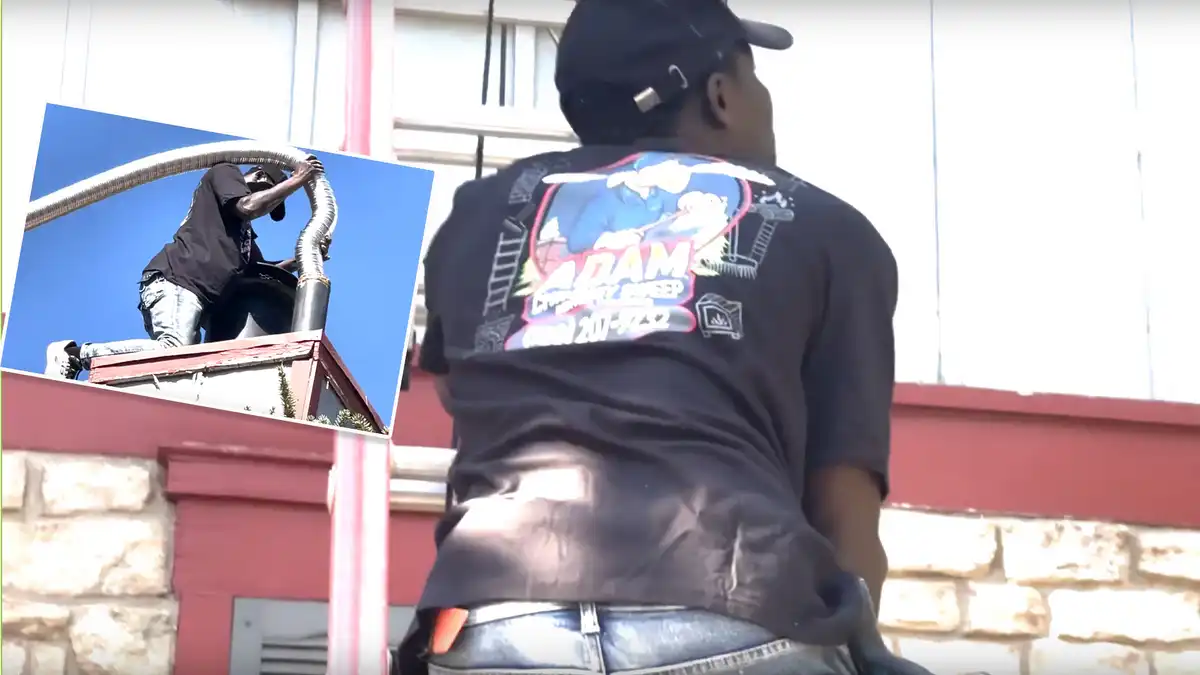
- The readily accessible portions of the chimney exterior, including the crown and cap from the ground or roof
- The readily accessible portions of the chimney interior and the flue
- Accessible parts of the appliance and the connector pipe that joins your stove or fireplace to the chimney
- A check for basic soundness, clearances, and any visible creosote, soot, or obstruction
This is the level that pairs with your yearly cleaning, and it's why I push the annual visit so hard. The NFPA says have your chimney looked at once a year whether you burn oak every weekend or light the gas fireplace twice a winter. A year of Denver weather and a season of soot do damage you'll never spot from the couch. Our Denver chimney inspection page breaks down what the appointment looks like start to finish.
Most folks only ever need a Level 1, and I'm happy to tell them that. Last fall I had a guy in Wash Park braced for some big expensive recommendation, and all his chimney needed was a sweep and a Level 1 thumbs-up. He looked relieved. That's the job most days, and there's nothing wrong with boring.
- Adam, Owner, Adam Chimney Sweep
Level 2 Inspection: Home Sales, Fires, and Changes
A Level 2 is where the camera comes out. This is the inspection the code requires whenever the stakes go up. You need a Level 2, not a Level 1, in these situations:
- You're buying or selling a home. Any time a property changes hands, the code calls for a Level 2. It protects buyer and seller both.
- You've had a chimney fire. Even a small one you barely noticed can crack flue tiles and warp liners. A Level 2 confirms whether the flue is still safe.
- You changed the appliance or the fuel. Switched from wood to a gas insert, added a stove, swapped unit types, anything that changes how the chimney vents. The flue has to match the appliance.
- Something happened to the building or the chimney. A lightning strike, a hailstorm that hammered the crown, a roof that settled. If the structure took a hit, you look deeper.
A Level 2 includes everything from a Level 1, then adds a video scan. We run a camera the full length of the flue so we see every joint and every tile the naked eye can't reach from either end. We also look at accessible parts of the chimney in attics, crawl spaces, and basements, and check clearances to combustible material. It's not invasive. We're not opening walls, just using the right gear to see what a flashlight can't.
That camera is the whole point. A cracked flue tile three feet down a thirty-foot flue is invisible otherwise, and on a home sale that one crack can be the difference between a safe purchase and a five-figure surprise after you move in. The video report also holds up with realtors and home inspectors during closing. If we find the liner's compromised, our chimney relining work is usually the fix, and a Level 2 is how we know for sure it's needed.
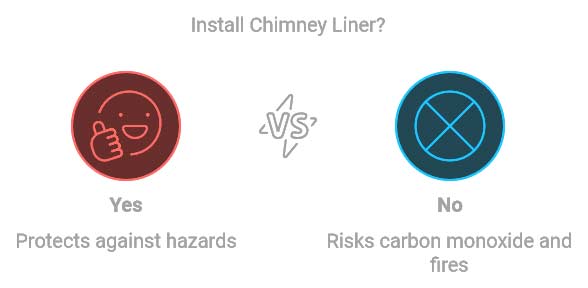
I'll be honest about one thing here. After any chimney fire, even one that seemed to put itself out, don't light another fire until somebody runs a camera up that flue. I've pulled cracked tiles out of chimneys where the homeowner swore the fire was "nothing." A Level 2 is cheap next to what a second fire through a cracked flue can do to your house.
Level 3 Inspection: When We Have to Go In
A Level 3 is the one nobody wants and most people will never need. It comes into play when a Level 1 or 2 turns up a serious hazard, or strongly hints at one, that we can't confirm without getting behind something. Reaching the problem may mean pulling a section of crown, opening a wall, or taking out part of the flue to see what's really going on.
Because it's invasive, a Level 3 is never the starting point. It's where we land when the evidence says there's a real danger hidden in a spot the camera couldn't reach. Think a chimney pulling away from the house, suspected damage deep inside a masonry wall, or a flue problem a Level 2 flagged but couldn't fully diagnose. At that point guessing isn't safe, so we open it up and find out.
Here's my rule of thumb on when a Level 3 is even on the table:
- A Level 1 or 2 already found or suspected a serious hazard
- The suspected problem sits behind a wall, the crown, or a concealed part of the chimney
- Confirming or fixing it means removing or accessing a component that's normally sealed up
- The safety of the chimney genuinely can't be verified any other way
If a chimney needs a Level 3, it usually needs real repair work too, whether that's serious masonry, a crown rebuild, or structural correction. The good news is these are rare. In a normal week I'll do plenty of Level 1s, a couple of Level 2s, and go weeks without a true Level 3. But when one comes up, it's exactly the situation where cutting corners gets somebody hurt.
A real Level 3 is rare, and I'm glad it is, because it usually means we're chasing something dangerous we couldn't see any other way. I don't reach for it lightly. But when a chimney's structure is in question, I'd rather open up one section of wall than light a fire and hope. Hope isn't a safety plan.
- Adam, Owner, Adam Chimney Sweep
So Which Level Do You Actually Need?
Let me make this dead simple. Match your situation to the level and you'll know what to ask for before you even call:
- Routine yearly checkup, nothing changed? Level 1. This is most people, most years.
- Buying or selling a house in the Denver metro? Level 2, every time. Get the camera report.
- Had a chimney fire, big or small? Level 2 before you burn again. No exceptions.
- Adding a stove, switching to a gas insert, or changing fuel? Level 2, so the flue is verified against the new appliance.
- Storm, lightning, or structural damage to the house or chimney? Level 2 to start, and Level 3 only if that look turns up a hidden hazard.
Notice what's missing from that list. There's no "Level 3 just to be safe." Nobody should sell you the invasive inspection unless a lower level pointed at a real problem first. A trustworthy sweep recommends the least invasive one that answers the question. That's not me being generous. It's how the code is written.
One Denver wrinkle worth mentioning. Our freeze-thaw cycles are brutal on masonry, and I see crown and mortar damage here that a sweep in a milder climate might go years without. Water sneaks into a hairline crack during the day, freezes overnight, and pries it wider. A few hundred of those cycles over one winter turns a cosmetic gap into a structural one. That's part of why I push the annual Level 1 so hard here, and why a hard freeze or a storm can be the thing that bumps you up to a Level 2.
What We're Actually Looking For
No matter the level, a handful of things are always on my mind up there. The flue liner is the big one. It's the barrier that keeps heat and combustion gases inside the chimney and out of your walls, and a cracked or gapped liner is how house fires and carbon monoxide leaks start. I'm also checking the crown for cracks, the cap for damage, the mortar joints for spalling, and the firebox and damper for wear. On gas appliances I pay close attention to venting and clearances, because a bad gas install is the quiet kind of dangerous.
 No matter the level, a handful of things are always on my mind up there. The flue liner is the big one. It's the barrier that keeps heat and combustion gases inside the chimney and out of your walls, and a cracked or gapped liner is how house fires and carbon monoxide leaks start. I'm also checking the crown for cracks, the cap for damage, the mortar joints for spalling, and the firebox and damper for wear. On gas appliances I pay close attention to venting and clearances, because a bad gas install is the quiet kind of dangerous.
Creosote is the other constant. That's the flammable tar wood smoke leaves behind, and once it builds into a hard, glazed layer, a normal brushing won't touch it and your fire risk climbs fast. A lot of the Level 1s I do end with the same advice: burn dry, seasoned wood, and don't skip the yearly visit. The folks who get burned, sometimes literally, are the ones who let years go by between looks.
Whatever level you get, you should walk away with a clear report you can actually read. Plain English, photos or video of anything we flag, and an honest summary of the chimney's condition. If a report leaves you more confused than you started, it's not doing its job. For the official standards behind all of this, the National Fire Protection Association publishes the code we work to, and the Chimney Safety Institute of America certifies sweeps like us to read these systems right.
How Long Does Each One Take?
A Level 1 visual usually runs 30 to 60 minutes depending on access and soot. A Level 2 takes longer, often an hour or more, since we're running the camera the full length of the flue and documenting it. A Level 3 is its own animal because it involves opening up part of the structure, so we scope and price that one case by case. We'll always give you a real time estimate when we book.
Get the Right Level the First Time
The worst outcome here is paying for the wrong inspection, or skipping one before a home sale or after a fire and getting blindsided later. You don't have to figure out the level on your own. Tell me what's going on with your chimney and I'll tell you straight which level fits, what it covers, and what it costs before we ever pull a truck up to your house. Reach out through our contact page or just call Adam Chimney Sweep at (720) 207-9232, and we'll get you the inspection your chimney actually needs, no upsell, no runaround.