If your chimney smells and you can't figure out why, you're in good company. It's one of the most common calls I get once the weather warms up, and folks are always a little embarrassed about it, like they did something wrong. You didn't. A chimney that stinks is just your fireplace telling you something, and the fix is usually simpler and cheaper than people expect. I've been crawling around Denver chimneys since 2001, and I can usually narrow it down from a few questions over the phone: what does it smell like, when does it hit, and is it worse on hot days or after it rains?
That's really what it comes down to. The type of smell points straight at the cause. A sour, musty basement smell is a different problem than a sharp campfire reek, and a dead-animal stench is its own thing entirely. So let's walk through each one the way I'd talk you through it in your living room, and I'll tell you what you can knock out yourself versus what's worth a call.
Why Your Chimney Smells: The Four Usual Suspects
When a chimney smells bad, it almost always traces back to one of four things, and a lot of the time it's a couple of them ganging up at once. Creosote left over from burning wood. Moisture getting in where it shouldn't. Something living (or no longer living) up there. Or air getting pulled down the flue backwards instead of going up. Figure out which bucket you're in and you're halfway to fixing it. Here's the short version before we dig in:
 When a chimney smells bad, it almost always traces back to one of four things, and a lot of the time it's a couple of them ganging up at once. Creosote left over from burning wood. Moisture getting in where it shouldn't. Something living (or no longer living) up there. Or air getting pulled down the flue backwards instead of going up. Figure out which bucket you're in and you're halfway to fixing it. Here's the short version before we dig in:
- Creosote, a sharp, smoky, campfire or barbecue smell that gets stronger in summer humidity. The most common one by far.
- Moisture and mold, a damp, musty, almost mildewy odor, usually worst right after rain or snowmelt.
- Animals or debris, could be a rotten, sickly-sweet stench (something died), or a sour, earthy ammonia smell from nesting and droppings.
- Negative pressure / downdraft, you smell the chimney inside the house even when nothing's burning, and it's worse when the furnace, dryer, or a bathroom fan kicks on.
Nine times out of ten, when somebody tells me their chimney smells like an old campfire in July, it's creosote and humidity doing a tango. The creosote's been sitting there since winter, the summer air gets damp, and suddenly your living room smells like the morning after a bonfire. A good sweep fixes it.
- Adam, Owner, Adam Chimney Sweep
Creosote: That Campfire Smell That Won't Quit
This is the big one. Every time you burn wood, you're coating the inside of your flue with creosote, that black tarry stuff that's both the leading cause of chimney fires and the leading cause of stink. Even a clean-burning fire leaves some behind. When summer rolls around and the humidity climbs, that creosote soaks up moisture out of the air and starts off-gassing, and the smell rides the damp air right back down into your house. People describe it as smoky, sooty, sometimes a little like asphalt or a wet ashtray.
Here's the part that catches folks off guard: the smell shows up in the off-season, not when you're burning. In winter the hot air going up the flue carries the odor out the top. Shut the fireplace down for spring, add Denver humidity, and now nothing's pushing that air up and out, so it drifts down instead. The cleaner solution is to get the creosote out. You can mask it for a weekend, but if the source is still caked on your flue walls, the smell comes back every warm day until it's gone.
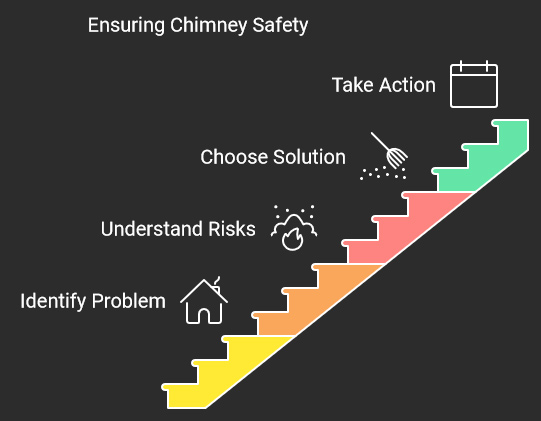
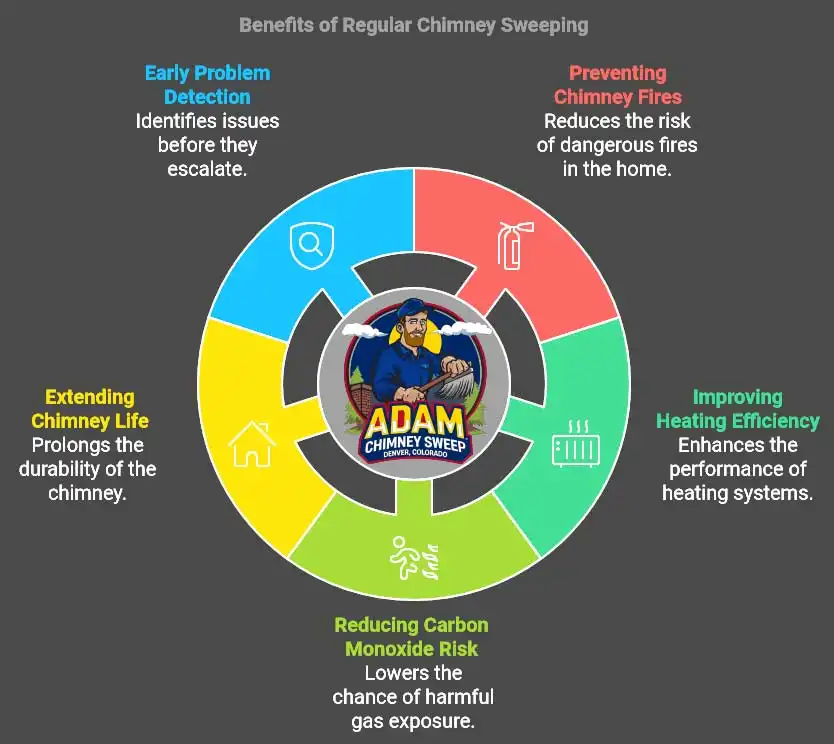
The Chimney Safety Institute of America recommends a sweep at least once a year for exactly this reason, and honestly, a real chimney sweep and cleaning solves the creosote-smell problem more reliably than anything you'll buy in a spray bottle. If the buildup is heavy and glazed, that's Stage 3 creosote, and it takes more than a brush.
Moisture and Mold: The Musty Basement Smell
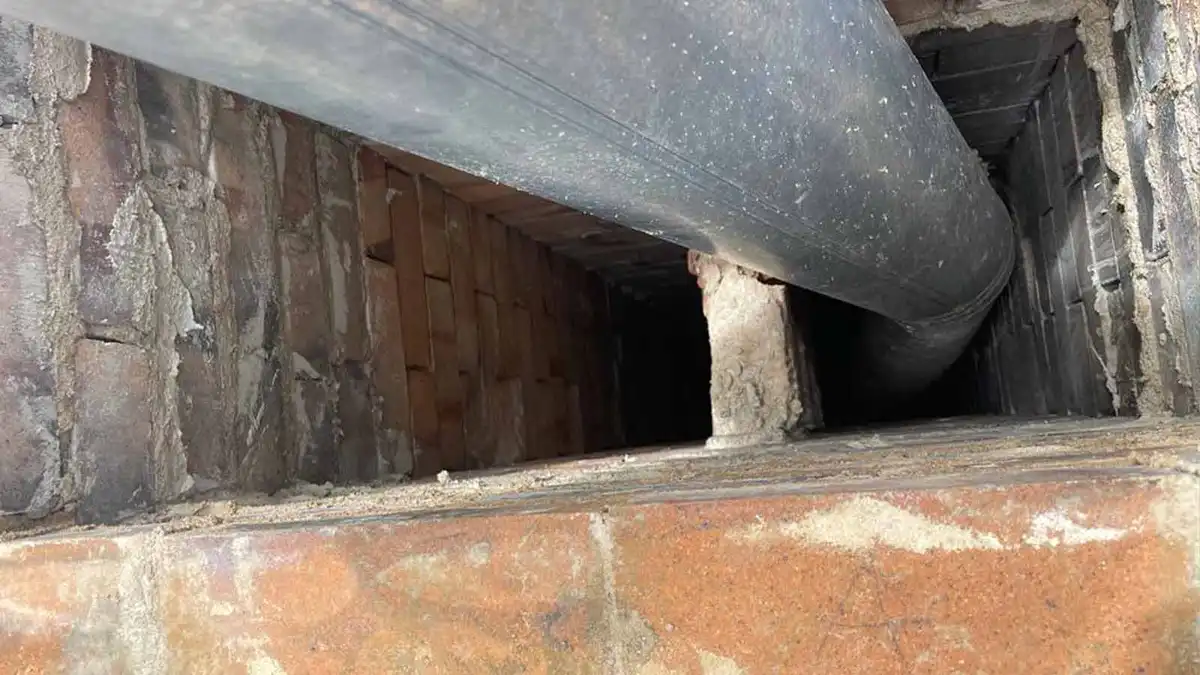
If your chimney smells musty, damp, or like a wet cardboard box, water's the culprit. Brick and mortar are like a sponge, and a flue that takes on water grows mildew and mold inside the masonry, which smells exactly like the corner of an old basement. In Denver we get it from a few directions: a missing or rusted-out chimney cap letting rain and snow drop straight down the flue, a cracked crown, or deteriorated brick that's wicking water in from the sides. Our freeze-thaw cycles up here are brutal on masonry. Water gets in a hairline crack, freezes overnight, expands, and makes the crack bigger. Do that a few hundred times a winter and you've got real damage.
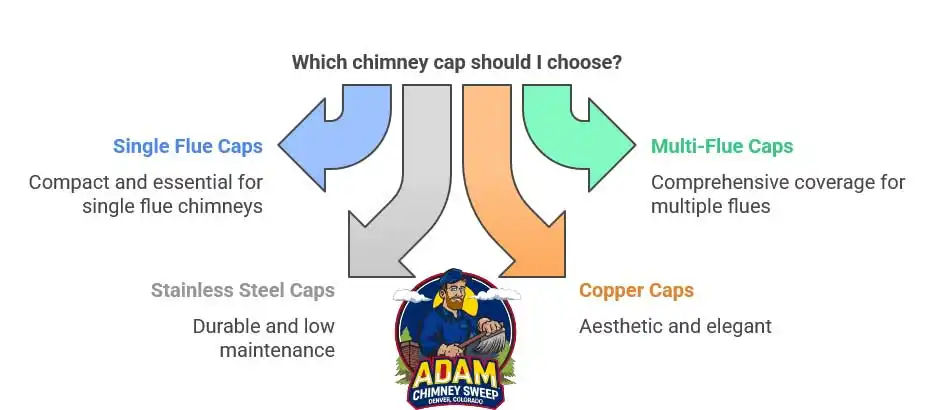
The tell with moisture is timing. If the smell spikes a day or two after rain or snowmelt and fades when things dry out, you've found your answer. The fix depends on where the water's coming in. A lot of the time it's as simple as a new chimney cap to keep weather out of the flue. Other times the crown needs resealing or the brick needs tuckpointing to stop water soaking through. A quick inspection tells us which it is so you're not guessing.
A chimney cap is the cheapest insurance you'll ever buy. I've pulled tennis balls, baby raccoons, two phones, and one very confused pigeon out of open flues over the years. A forty-dollar cap would've stopped every single one of them, plus all the rain that caused the mold smell in the first place.
- Adam, Owner, Adam Chimney Sweep
Animals and Debris: When Something Moved In (or Died)
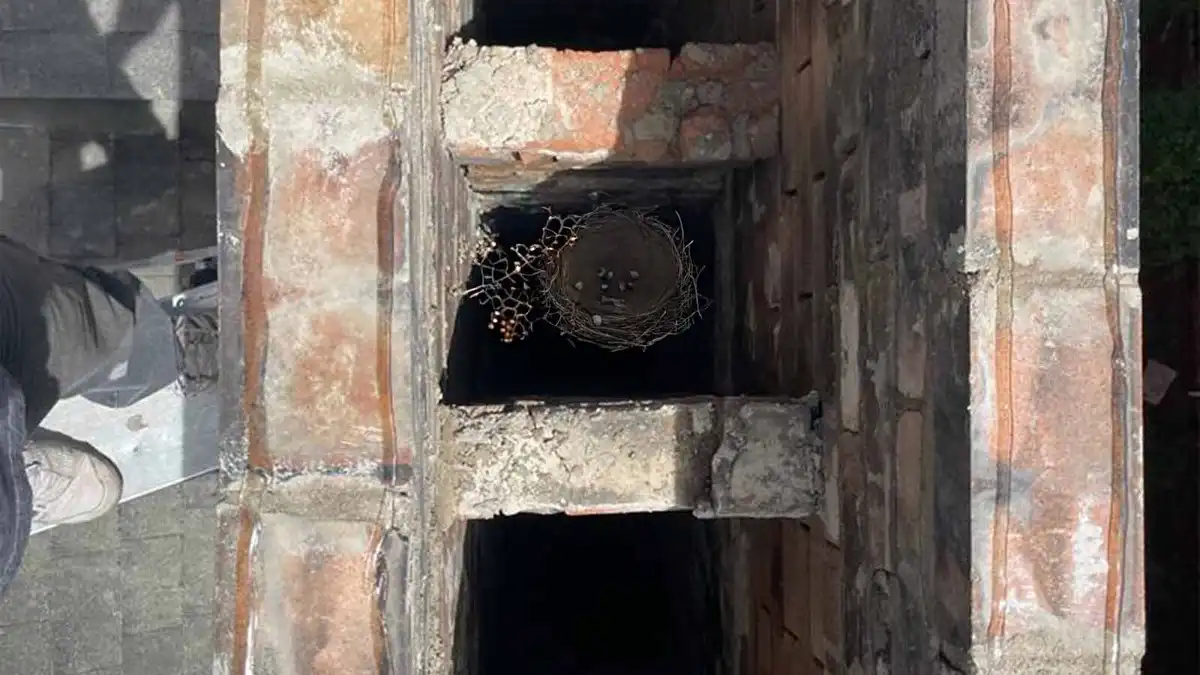
An uncapped chimney is basically a hollow tree to a bird or a squirrel, and they'll move right in. Sometimes the smell is a sour, earthy, ammonia kind of funk from a nest packed with droppings and old food. Sometimes, and there's no nice way to say this, it's the smell of something that got in, couldn't get back out, and died. That one is unmistakable, and it tends to get worse for a week or two before it slowly tapers off. Chimney swifts are actually a federally protected migratory bird, so if there's an active nest you can't just yank it, and that's another good reason to bring in someone who deals with this regularly.
 An uncapped chimney is basically a hollow tree to a bird or a squirrel, and they'll move right in. Sometimes the smell is a sour, earthy, ammonia kind of funk from a nest packed with droppings and old food. Sometimes, and there's no nice way to say this, it's the smell of something that got in, couldn't get back out, and died. That one is unmistakable, and it tends to get worse for a week or two before it slowly tapers off. Chimney swifts are actually a federally protected migratory bird, so if there's an active nest you can't just yank it, and that's another good reason to bring in someone who deals with this regularly.
Leaves, twigs, and acorns build up too, especially under big cottonwoods, and that organic gunk rots and stinks once it gets wet. The answer here is to clear the flue out and then cap it so nothing else gets in. We handle the humane animal removal side of it and the cleanup, and once it's capped, that problem's done for good. If you ever hear scratching or chirping coming from the firebox, don't light a fire. Call somebody.
Negative Pressure: Your House Is Sucking Air Down the Chimney
This is the sneaky one, and it's why a perfectly clean chimney can still stink up the house. Modern homes are built tight. When your furnace, water heater, dryer, kitchen hood, or bathroom fans run, they pull air out of the house, and that air has to come from somewhere. If the house is sealed up well, the easiest path for makeup air is straight down the chimney. So instead of odors going up the flue, the house pulls them down into your living room, creosote smell and all.
You'll notice it gets worse when the furnace cycles on, or when you run the dryer and the upstairs bath fan together. It's also common when the fireplace sits on a lower level. The smell isn't really a chimney problem at that point, it's an airflow problem, but the chimney is where it shows up. Cracking a window near the fireplace is a quick test: if the smell backs off, you've got negative pressure. A top-sealing damper that closes off the flue when the fireplace isn't in use is usually the real fix, since it cuts off that downward path entirely.
What You Can Try Yourself First
Before you call anybody, there are a handful of things worth trying. None of these are guaranteed, and a couple only work if the smell is mild, but they're cheap and they'll either help or tell you something useful about what you're dealing with. Work through them roughly in this order:
- Close the damper. Sounds obvious, but a damper left open is the number one reason odors come down the flue all summer. Make sure it's actually shutting, not just resting open. If yours is rusted or broken, that alone can be the whole problem.
- Clean out the firebox. Old ash and half-burnt logs hold smell and moisture. Scoop it all out, ash and debris, and wipe the firebox down. You'd be surprised how much that one step helps a faint odor.
- Set out an odor absorber. A bowl of baking soda or a few lumps of activated charcoal sitting in the firebox pulls a lot of the smell out of the air. Cat litter in a shallow pan works too. Swap it every couple of weeks.
- Run a dehumidifier nearby. Since damp air is what carries most of these smells, knocking the humidity down in the room makes a real, noticeable difference, especially with creosote odor.
- Check the cap from the ground. Grab some binoculars and look at the top of your chimney. No cap, a crooked cap, or a smashed one means rain and critters are getting in. You don't need to get on the roof, just see if it's there.
- Try the window test. Next time it smells, crack a window in that room. If the odor fades fast, you're dealing with negative pressure, not just dirt in the flue.
If you run through all of that and the smell's still hanging around, the source is up in the flue where you can't reach it, and that's the line where DIY stops and it's worth getting eyes on it. Air fresheners and candles just cover it up for an afternoon. They don't touch the cause.
Don't waste your money dumping perfume sprays down a smelly flue. You're treating the symptom, not the disease. Get the creosote cleaned out, get a cap on it, make sure water's not getting in. Do those three things and the smell doesn't come back. I'd rather fix it once than have you calling me about it every June.
- Adam, Owner, Adam Chimney Sweep
When It's Time to Call a Pro
Some chimney smells are a real safety flag, not just a nuisance, and those are the ones you don't sit on. If you smell something sharp and smoky while a fire's burning, that means smoke isn't drafting up the way it should, and that same poor draft can push carbon monoxide into your home. CO is colorless and has no smell of its own, which is exactly what makes it dangerous, so a working detector near the fireplace isn't optional. The folks at the EPA's Burn Wise program have good plain-language info on burning cleaner and safer if you want to read up.
Here's when I'd tell a neighbor to stop messing with it and just call:
- Smoke or a strong burnt smell pushes into the room when you light a fire (a draft or blockage problem).
- You hear scratching, chirping, or flapping in the chimney.
- The musty smell keeps coming back after every rain, which points to water damage in the masonry.
- There's a heavy, glazed, tar-like buildup you can see in the firebox or flue.
- You've cleaned, capped, and deodorized and the thing still stinks.
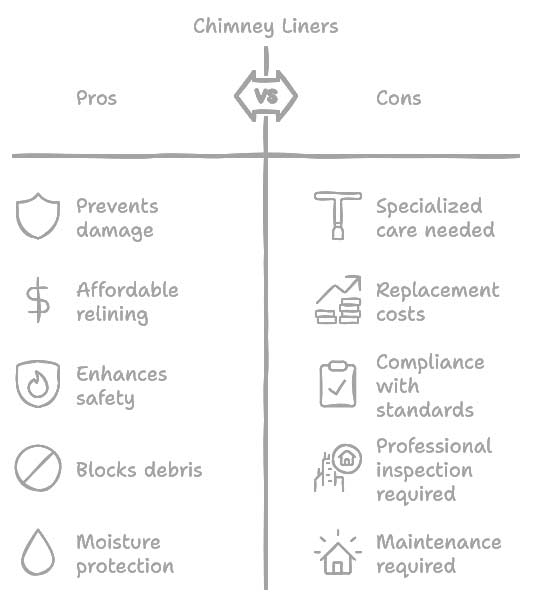
When we come out, we don't guess. A camera goes up the flue so we can see what's going on, whether it's creosote, a cracked liner, a nest, or water damage. From there it might be a sweep, a new cap, a liner, or some masonry work, and we'll tell you straight which it is and what it runs. No upsell, no scare tactics. If you want a sense of pricing before we ever show up, our pricing page lays it out, and you can dig into more seasonal tips over on the winter chimney safety checklist. For the broader picture on chimney fires and home safety, the National Fire Protection Association is the gold standard.
The Bottom Line on a Smelly Chimney
A chimney that smells isn't a mystery and almost never a disaster. It's creosote, moisture, critters, or air getting pulled the wrong way, and once you know which, the fix is usually straightforward. Knock out the easy stuff yourself, then if the smell's still there, that's your sign the source is up in the flue and it's time to get it looked at. A clean, capped, dry chimney just doesn't stink, simple as that.
If your chimney's been bugging you and you'd rather just get it handled, give us a call at (720) 207-9232 or reach out here. We've been keeping Denver fireplaces clean, safe, and odor-free since 2001, and we'll figure out exactly what's going on with yours. Most jobs get booked the same week.