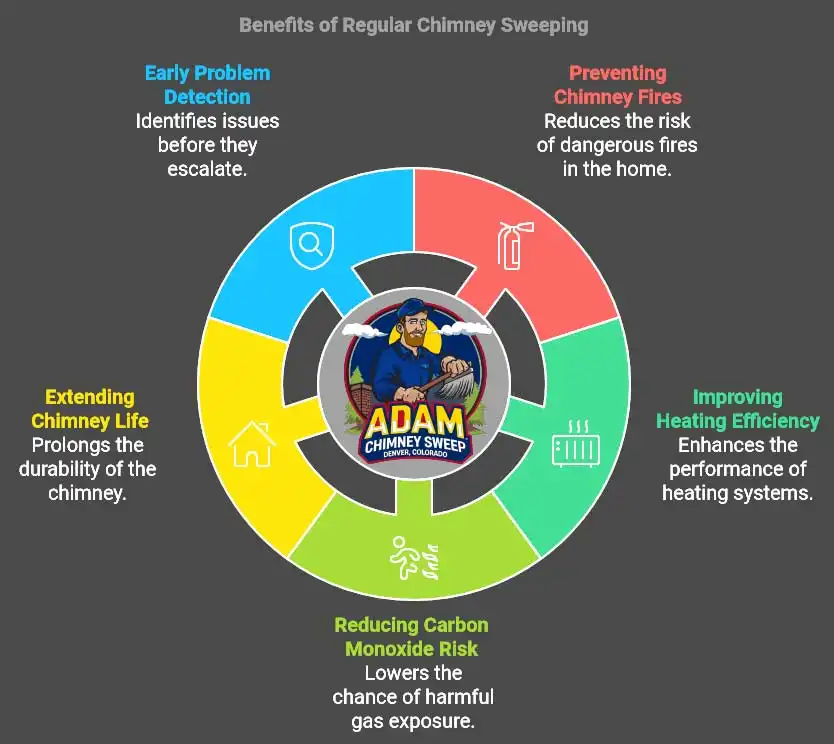
Chimney Fire: What Causes It, How to Spot One, and What to Do
A chimney fire is one of those things most Denver homeowners never picture happening to them, right up until the night it does. I’ve been sweeping and repairing chimneys along the Front Range since 2001, and I’ve crawled into the aftermath of more of these than I’d like to count. The good news is that almost every one I’ve seen was preventable, and the warning signs were usually there for months before anything caught.
Some chimney fires roar. People describe a sound like a freight train or a low jet engine, with sparks and flames shooting out the top of the flue. Others are quiet. Those are the ones that scare me more, because they smolder away inside the flue at a couple thousand degrees and the homeowner never knows it happened until I find the damage on an inspection. Either way, the cause almost always comes back to one thing, and that’s creosote.
Folks think a chimney fire looks like something out of a movie, big flames out the top, the whole nine yards. Half the ones I deal with, the family never heard a thing. They just lit a normal fire, the creosote inside ignited, and it burned itself out before they noticed. The cracked liner I find a month later is the only proof it ever happened.
- Adam, Owner, Adam Chimney Sweep
What Actually Causes a Chimney Fire
Creosote is the short answer, and it’s the right one about nineteen times out of twenty. When you burn wood, the smoke carries unburned gases, tar, and water vapor up the flue. As that smoke hits the cooler upper section of your chimney, it condenses and sticks to the walls as a dark, flammable residue. Burn enough fires without cleaning, and that residue keeps layering up until you’ve basically lined your flue with fuel.
Creosote builds in stages, and the worse the stage, the easier it lights and the harder it is to remove. I wrote a whole breakdown over on our guide to preventing creosote buildup, but here’s the short version of what drives it:
Thorough chimney inspection in Denver
Burning green or unseasoned wood. Wet wood smolders instead of burning hot. All that extra smoke and moisture is creosote in the making. I’ve pulled tar-like Stage 3 glaze out of chimneys in Lakewood where folks were burning pine they’d split that same fall.
Slow, smoldering fires. Damping a fire way down overnight feels efficient, but a cool, starved fire produces far more creosote than a hot one. Cooler smoke means more of it sticks to the flue.
A cold flue. A lot of Denver chimneys run up an exterior wall, and in January that masonry is frigid. The colder the flue, the faster smoke condenses on the way up.
Skipping cleanings. This is the big one. Creosote you could’ve brushed out in five minutes last year turns into a hardened, glazed coating that needs chemicals or rotary tools to remove. Neglect is what turns a little buildup into a fire hazard.
There are a couple of other causes worth naming. A bird or squirrel nest packed into the top of the flue can block the draft and trap heat, and I pull those out more often than you’d guess. Burning trash, cardboard, or a fistful of wrapping paper sends a column of burning embers straight up a creosote-coated flue, which is about the most reliable way to start a fire on purpose without meaning to. But strip it all down and you’re back to creosote being the fuel that lets any of it become a real problem.
Stainless steel chimney liner installed in a Denver chimney
A sound, properly sized liner is your best protection against fire damage spreading into the home
Why a Chimney Fire Is So Dangerous
The temperature is what gets people. A creosote fire can blow past 2,000 degrees Fahrenheit. Your clay tile flue liner is built to handle the heat of a normal fire, not that. At those temperatures the tiles crack, and once the liner is breached, the fire and its heat have a path to the wood framing inside your walls. That’s how a fire that started and ended inside the flue can show up days later as a house fire.
Even when nothing spreads, the damage isn’t cheap. A single chimney fire can crack a tile liner badly enough that the whole thing needs relining, and that runs a few thousand dollars. The fire doesn’t have to reach your living room to cost you real money and leave your chimney unsafe to use.
Warning Signs a Chimney Fire Already Happened
Because the quiet ones leave no obvious trace in the moment, I tell every customer to learn what the aftermath looks like. If you spot any of these, stop using the fireplace and get it inspected before you light another fire. Here’s what I look for when I suspect a flue has been through a fire:
Professional chimney and fireplace service in Denver, Colorado
Puffy or honeycombed creosote. Creosote that’s ignited and swelled up into a flaky, popcorn-like texture is a dead giveaway. Normal buildup is smooth or tarry, not puffed up.
Cracked or flaked flue tiles. When I run a camera up the flue and see fresh cracks or pieces of tile that have spalled off, that’s the heat signature of a fire. Sometimes you’ll even find tile shards down in the firebox or the smoke shelf.
A warped or discolored damper or metal cap. Steel that’s been heated to those temperatures changes color and can warp. A cap that looks scorched is telling you something.
Creosote flakes on the roof or in the gutters. Bits of burned creosote get blown out the top during a fire and land on the shingles. I’ve diagnosed fires from the ground just by what I found in the gutter.
A roofline that smells like a campfire days later. A faint, persistent burnt smell around the chimney when you haven’t had a fire going is worth a closer look.
None of this is something you can fully check from your living room, and that’s the point. A proper chimney inspection with a camera is the only way to know for sure whether your flue has been compromised. If you’ve owned the home a while and never had one done, that’s the place to start.
I had a couple in Wash Park swear up and down they’d never had a chimney fire. I sent the camera up and the liner was cracked from top to bottom, with that puffed-up creosote all over the walls. Turned out the previous owner had one years back and never knew. They’d been lighting fires over a broken liner the whole time they lived there. That’s exactly the situation that keeps me up at night.
- Adam, Owner, Adam Chimney Sweep
What to Do During a Chimney Fire
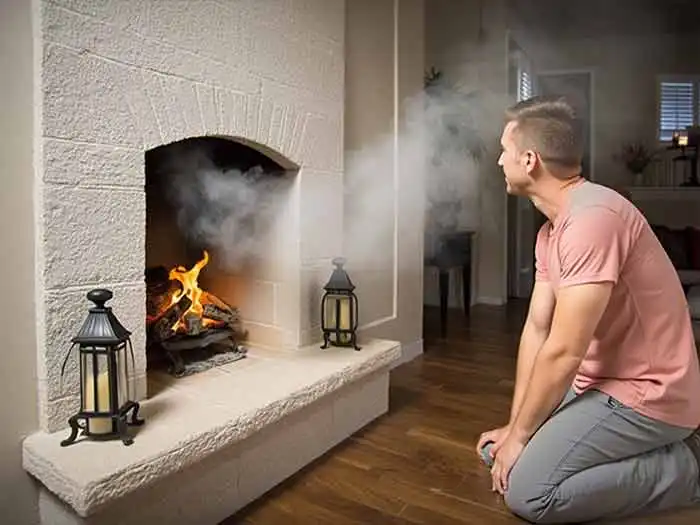
If you ever hear that roaring or rumbling sound, see flames at the top of the chimney, or watch dense smoke pour back into the room, treat it as the emergency it is. Don’t stop to figure out whether it’s “bad enough.” Move quick and in this order:
Get everyone out. People and pets go outside first, every time. The house and the chimney are replaceable. Your family isn’t.
Call 911. Even if it seems to be dying down, call the fire department. A chimney fire can spread inside the walls where you can’t see it, and you want them there to confirm it’s truly out.
Close the air supply if you can do it safely. If you have a wood stove or an insert, shut the air controls and the damper to starve the fire of oxygen. For an open fireplace, a chimney fire extinguisher (the kind you toss in) can help, but only if you can reach it without putting yourself in the smoke.
Do not throw water up the flue. Dumping water on a 2,000-degree flue can crack the liner instantly from the thermal shock, and the steam can scald you. Let the fire crews handle suppression.
Stay out until the fire department clears the house. Once they’ve confirmed it’s out and nothing’s smoldering in the walls, you can go back in.
Chimney cap installation and repair
After the trucks leave, do not use that fireplace again until a pro has inspected the flue. I mean it. The fire you survived may have cracked the liner, and the next fire is the one that finds the framing through that crack. Call us and we’ll get a camera up there and tell you straight what shape it’s in. If the liner’s gone, our chimney relining service is what brings it back to safe.
How to Prevent a Chimney Fire
This is the part I actually care about, because every chimney fire I’ve described above was avoidable. Prevention isn’t complicated and it isn’t expensive, especially next to a five-figure rebuild. Here’s what keeps your flue out of trouble:
Get an annual cleaning and inspection. The NFPA recommends it, and after 25 years on roofs I’ll back that all day. A yearly sweep clears the creosote before it ever has the chance to build into fuel. It’s the single most effective thing you can do.
Burn seasoned hardwood. Oak, ash, and maple that’s dried at least six months to a year burns hot and clean. Green wood and softwoods like pine throw off far more creosote. If the wood’s heavy and the ends aren’t cracked, it’s not ready.
Run hot fires, not smoldering ones. A bright, hot fire produces less creosote than a damped-down one limping along all night. Resist the urge to choke it way back.
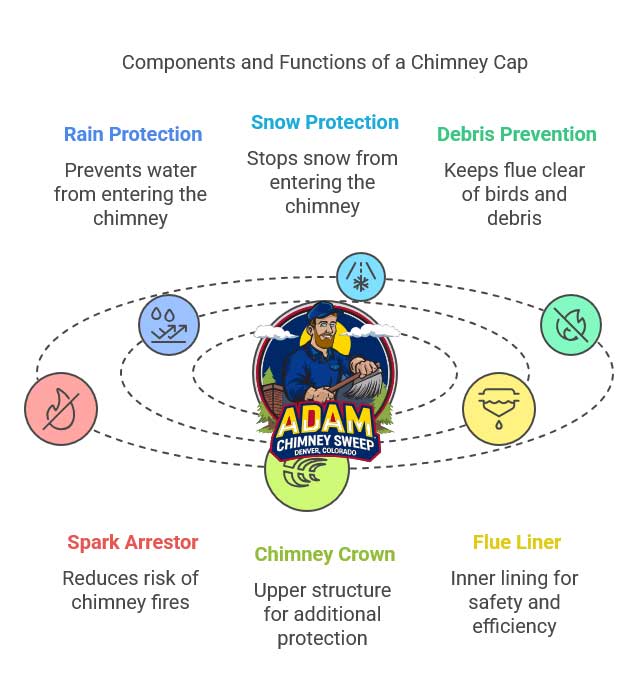
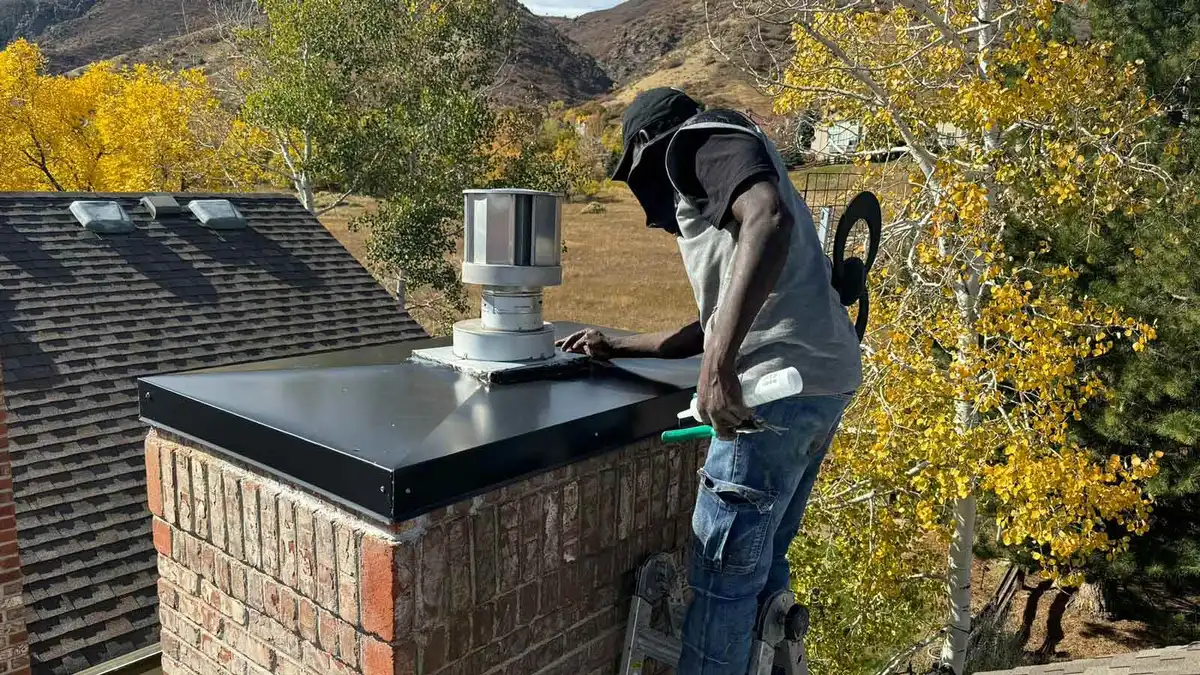
Put a proper cap on the chimney. A good cap keeps rain, debris, and nesting animals out of the flue, all of which contribute to blockages and buildup. If yours is missing or rusted out, our cap repair and installation crew can sort it.
Never burn trash, cardboard, or treated wood. They burn too fast and too hot and send embers straight up a creosote-lined flue.
If you want a season-by-season rundown of keeping your whole system safe through a Colorado winter, I put one together in our winter chimney safety checklist. And if you’re the type who likes to read it straight from the source, both the National Fire Protection Association and the Chimney Safety Institute of America publish solid, plain-language material on chimney fire safety that’s worth ten minutes of your time.
People ask me what the cheapest insurance on their house is. It’s a yearly sweep. I’ve never once been called out to a chimney fire on a flue I’d cleaned that season. Not one. Spend the small money in the fall and you’ll sleep better every time you light a fire all winter.
Chimney crown repair and sealing- Adam, Owner, Adam Chimney Sweep
A Quick Reality Check on Cost
I bring this up because I’ve watched too many people gamble the wrong way on it. A routine sweep and inspection is a small, predictable bill. A chimney fire is not. Best case, you’re relining a flue for a few thousand dollars. Worst case, the fire reaches the framing and you’re into a structure fire and an insurance claim that changes your whole year. You can see exactly what our routine work runs on our pricing page, and I promise the math favors prevention every single time.
One more thing I’ll say after all these years. The folks who get burned, sometimes literally, are almost never the ones who were careless on purpose. They’re the ones who figured the chimney was “probably fine” because nothing had gone wrong yet. A chimney that’s never been inspected isn’t safe, it’s just untested. There’s a real difference, and a camera up the flue is how you find out which one you’ve got.
Worried Your Chimney Might Be at Risk? Let’s Take a Look
If you’ve had a chimney fire, suspect you might have, or just can’t remember the last time anyone cleaned your flue, don’t roll the dice on it. Call me directly at (720) 207-9232 and we’ll get you on the schedule. I’ll run a camera up the chimney, tell you in plain words exactly what I find, and lay out what it’ll take to get you safe, with no scare tactics and no pressure. You can also reach out here and I’ll get right back to you. Let’s make sure the next fire you light is one you can enjoy without a second thought.
We use cookies to keep the site running, measure traffic, and improve our chimney services. Pick what you are comfortable with. We remember your choice for one week.Privacy Policy
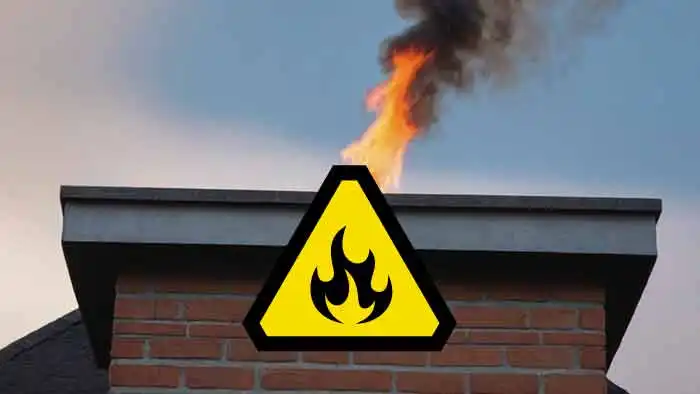
 Creosote is the short answer, and it’s the right one about nineteen times out of twenty. When you burn wood, the smoke carries unburned gases, tar, and water vapor up the flue. As that smoke hits the cooler upper section of your chimney, it condenses and sticks to the walls as a dark, flammable residue. Burn enough fires without cleaning, and that residue keeps layering up until you’ve basically lined your flue with fuel.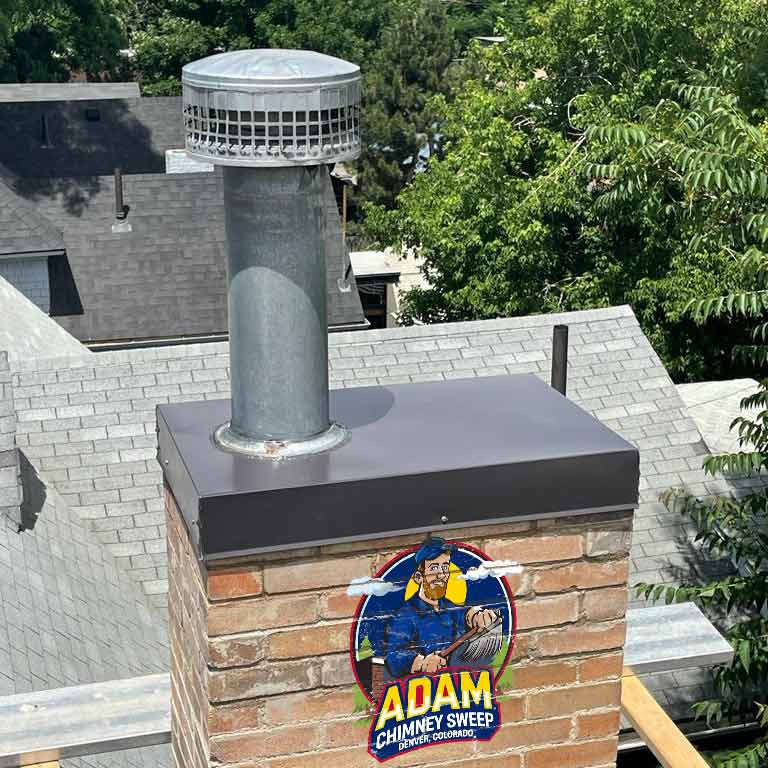
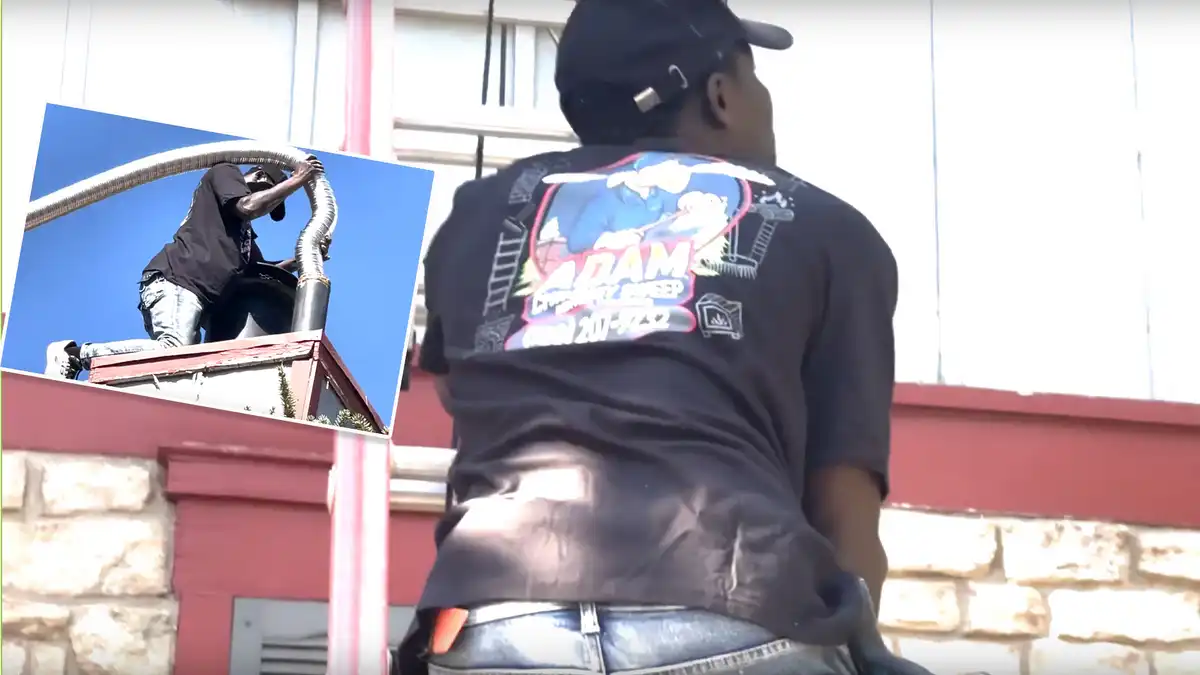
 If you ever hear that roaring or rumbling sound, see flames at the top of the chimney, or watch dense smoke pour back into the room, treat it as the emergency it is. Don’t stop to figure out whether it’s “bad enough.” Move quick and in this order: