Fireplace season feels a long way off in July, but the forecast desk just handed Colorado homeowners a reason to pay attention now. NOAA is leaning hard toward a strong El Nino winter, the metro Denver burn rules that govern your wood stove switch back on November 1, and a new state insurance law that took effect this month changes how your wildfire risk gets priced. Here is what changed these two weeks, and what is coming when the first hard freeze rolls in off the plains.
The winter ahead: NOAA is betting on a strong El Nino
In its June 11, 2026 advisory, the NOAA Climate Prediction Center said an El Nino is already here and building. This is the government's own read on the season, straight from the source:
"El Nino conditions are present and expected to strengthen into the Northern Hemisphere winter 2026-27." The center puts the odds of a very strong event during November through January at about 63 percent, which would rank among the largest El Nino episodes since 1950. NOAA Climate Prediction Center, ENSO Advisory
What this means for your home: a strong El Nino tilts the odds toward an active southern storm track. For the Front Range that is a higher ceiling but still track-dependent setup. A strong El Nino can load Denver's big upslope snows, yet Colorado's terrain means nothing is promised. Either way, plan for a real burning season and do not get caught with a dirty or cracked flue when the first storm hits. A heavy-snow winter is hard on a chimney:
- Freeze and thaw cycles work water into cracked crowns and mortar joints and split them wider.
- Snow load and ice can bend or unseat a weak cap, then meltwater runs straight down the flue.
- Cold, sealed-up houses pull harder on the chimney, so a partly blocked flue backs smoke into the room.
The fix is boring and cheap compared to a mid-January repair: get the chimney inspected in Denver while the weather is still warm and the schedule is open.
Metro Denver's wood-burning rules switch back on November 1
This is the part a lot of homeowners forget until they get a knock or a fine. The Front Range winter High Pollution Advisory season runs November 1 through March 31. On a declared Action Day, indoor wood burning is restricted across the seven metro Denver counties: Adams, Arapahoe, Boulder, Broomfield, Denver, Douglas, and Jefferson. Per the Colorado Department of Public Health and Environment, your device is exempt from the restriction only if it is one of these:
- An EPA Phase II certified wood stove.
- An EPA-certified pellet stove.
- A Colorado-approved masonry heater.
- A device in a home above 7,000 feet, or one covered by a specific state exemption.
What this means for your home: if your only heat on a bad-air night is an old open fireplace or a non-certified stove, you can be out of compliance exactly when you most want a fire. There are two clean ways out. Upgrade to a certified appliance, or drop in a sealed gas insert that sidesteps the particulate rules entirely and still throws real heat on the coldest, dirtiest-air nights of the year.
Your wildfire risk score is now yours to see and challenge
As of July 1, 2026, Colorado's House Bill 25-1182 is in force. If an insurer uses a wildfire risk model, a catastrophe model, or any scoring method to price, surcharge, or non-renew your homeowners policy, it now has to show its work. Here is the core of it from the official bill summary:
"The act requires a property insurer that uses a wildfire risk model, a catastrophe model, or a scoring method to assign risk" to disclose that score to policyholders and applicants, to factor property-specific and community mitigation into its models or give a discount, and to give homeowners a way to appeal. Colorado General Assembly, HB25-1182
You can request your score in writing, get a plain-language explanation, and appeal a score you think is wrong, with the insurer required to acknowledge the appeal within 10 days. It creates transparency, not a guaranteed lower bill. And while you are thinking about mitigation, the state still pays you back for some of it: for tax years 2023 through 2027, Colorado offers an income tax credit of up to $1,000 for out-of-pocket wildfire mitigation work, for landowners with federal taxable income at or below $120,000, when a qualified third-party provider does the job (Colorado Department of Revenue). It covers defensible space and vegetation management, not structural home-hardening. Clearing brush and dead limbs away from the roof and chimney chase counts on both fronts. For where chimney and venting rules fit in, see our Colorado chimney laws rundown, or just ask us.
Heating costs are climbing, so make every fire count
Denver-metro homeowners are heading into winter with a bigger heating bill on the horizon. Xcel Energy's time-of-use pricing already charges the most from 5 to 9 p.m. on weekdays, and the utility has filed for further residential rate increases with the state Public Utilities Commission (Xcel Energy, time-of-use info). A warm, efficient fire during that 5 to 9 p.m. window takes real load off the furnace when power costs the most.
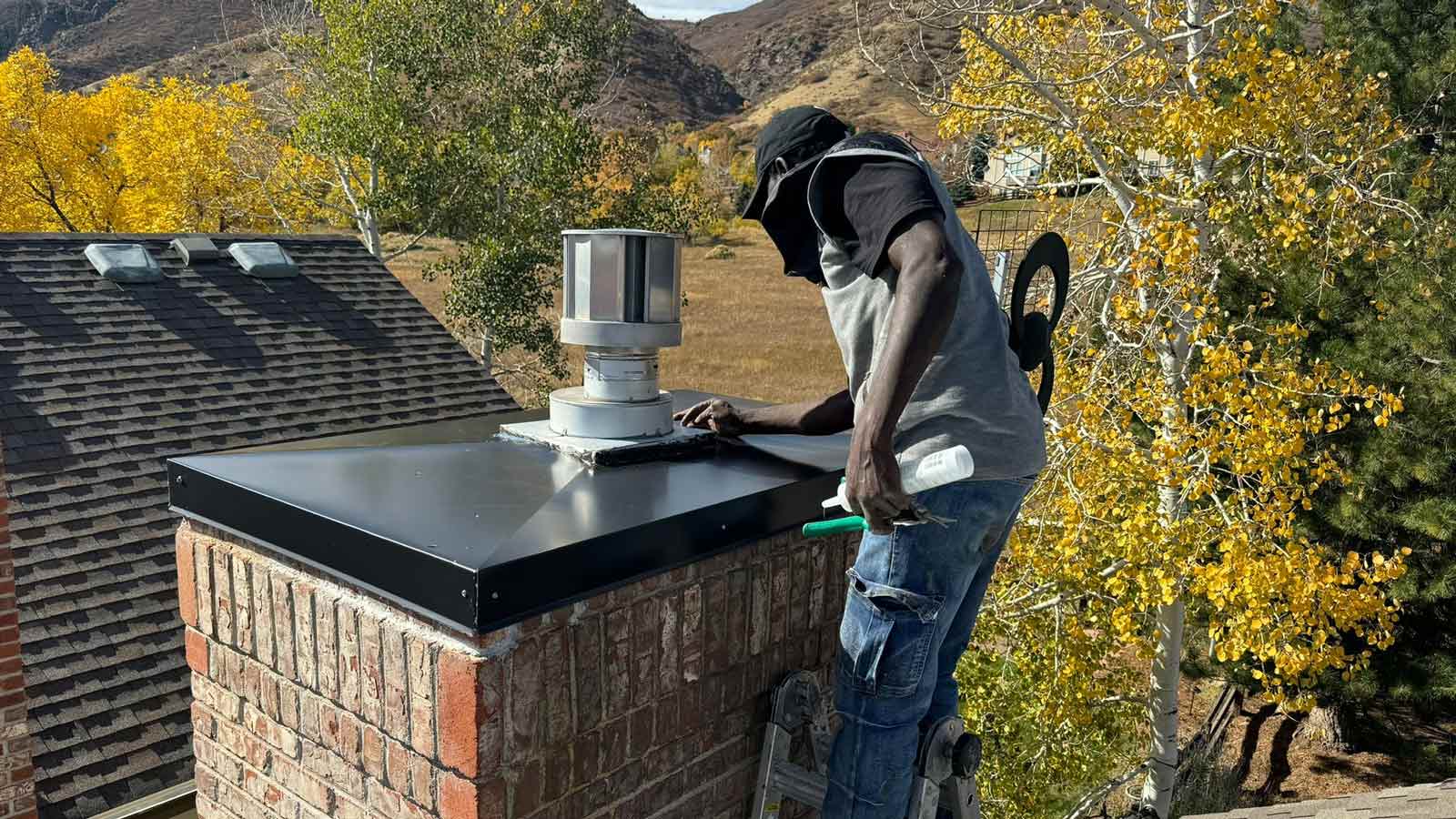
That only works if the appliance is clean and safe, which loops back to the off-season. The Chimney Safety Institute of America recommends a Level 1 inspection every year, even for a fireplace you barely use, and names creosote buildup as the leading cause of chimney fires in the country (CSIA). Book it now and a straightforward sweep and cleaning or a quick cap repair or installation gets handled long before you need the heat.
What we would do before the next edition
- Book the off-season chimney inspection and sweep now, while the fireplace is cold and the calendar is open.
- Check whether your wood stove is EPA Phase II certified before November 1, or plan a certified upgrade or gas insert if it is not.
- Request your wildfire risk score in writing from your insurer, and appeal it if it ignores mitigation you have done.
- If you clear defensible space this summer, use a paid qualified provider and keep receipts for the mitigation credit.
Want a second set of eyes on your flue, cap, or gas insert before the first snow? Call Adam Chimney Sweep at (720) 207-9232 or send us a message and we will get you on the summer schedule.
Want the news roundup? The Flue Report, our biweekly Colorado chimney news brief, publishes every two weeks on this blog.