A fireplace grate does one job that matters: it holds the wood a few inches off the firebox floor so air can reach the fuel from underneath. That air turns a smoldering pile into a real fire, and at Denver's altitude underside airflow matters more than most homeowners realize. The rest of the hearth kit, the fireback, the andirons, the screen, the tools, the rug, either supports the fire, protects the firebox, or is just there to look nice.
We pull out a lot of grates on sweep and repair calls, some burned so thin the wood sits on the floor anyway, some so oversized the fire has been roasting the lintel for years. This guide covers what each piece does, how to size it, which materials last, and which accessories damage a firebox. If yours already shows cracked brick or crumbling joints, a new grate will not fix that, and our firebox repair service is the place to start.
What a Fireplace Grate Actually Does
Wood flat on the firebox floor only burns from the top and sides. Wood on a grate burns from underneath too, and the rising heat pulls fresh air up through the fuel load. The fire lights faster, burns hotter, and leaves less charcoal behind. A raised front lip and a slight backward tilt also keep logs from rolling onto the hearth and hold the load toward the back wall, where the smoke chamber wants it.
The second job is ash bed management. Ash and small coals drop through the bars, and a one to two inch bed under the grate insulates the coals and makes the next fire easier to light. When the ash touches the underside of the bars it is choking the airflow and some needs to come out. How to do that safely, and why a lidded metal can is the only acceptable container, is in our fireplace ash disposal guide.
Why Altitude Changes the Math
At 5,280 feet the air pressure is roughly 17 percent lower than at sea level, so every breath of draft carries less oxygen, and it gets thinner up the foothills. A fire that burns cleanly on a firebox floor in Kansas City smolders here. A grate that lifts the fuel is one of the cheapest fixes for a lazy fireplace, alongside the fixes in our guide to getting more heat from your fireplace.
Sizing a Grate to the Firebox
The mistake we see most is a grate that fills the firebox wall to wall. It looks substantial in the store, but it puts the fire against the side walls and too far forward. Here is the rule of thumb we give homeowners.
- Measure the firebox width at the back wall, which is narrower than the front in most masonry fireboxes, and the depth from the front edge of the floor to the back wall.
- Subtract at least 3 inches from each side of the back width, leaving a 3 inch or wider air gap on both sides and a few inches behind.
- Grate depth should be 3 to 4 inches less than firebox depth so the front bar sits well back from the opening and the lintel.
For a typical Denver masonry firebox measuring 28 inches across the back and 18 deep, a grate around 22 by 14 inches is right. That looks small, but it keeps the fire centered under the throat, where the draft is strongest. Height matters too. Standard grates sit 4 to 7 inches off the floor. Taller than that pushes smoke forward, over the damper throat, into the room.
Grate Materials Compared
Grates fail from the bottom up. The bars sit buried in coals, and they oxidize and sag a little every burn. Thin material fails fast. Here is how the common options stack up in our experience.
Table 1. Fireplace grate materials compared by typical lifespan, heat behavior, and common problems.
| Material | Typical lifespan with regular use | Heat behavior | Common problems |
|---|---|---|---|
| Thin steel bar (under 1/2 inch) | 1 to 3 seasons | Heats fast, gives back little | Bars sag, burn through, drop coals onto the floor |
| Heavy steel bar (5/8 to 3/4 inch) | 5 to 10 seasons | Holds shape under hot coal beds | Surface scale, welds can crack if struck |
| Cast iron | 10 or more seasons | Slow to heat, radiates for hours after the fire dies | Brittle, cracks if hit with a poker or shocked with water |
| Stainless steel | 10 or more seasons | Similar to heavy steel | Higher cost, still sags if bars are thin |
| Tubular heat exchanger grate | 3 to 8 seasons | Hollow C shaped tubes pull room air through, heat it behind the fire, and push it forward, more with a blower | Tube ends buried in coals burn through, and a breached tube blows smoke into the room |
The short version: buy the heaviest bar you can find in the right size. A 3/4 inch steel or cast iron grate outlasts three or four cheap ones. If you run a tubular grate, check the tube ends for pinholes each season.
When a Grate Hurts the Firebox
A grate that is too big or set too high does three kinds of damage.
- Scorched lintel. The lintel is the steel angle or masonry arch across the top of the opening. When the fuel load is too high or too far forward, flame rolls under it every burn. Steel warps and the brick above it cracks.
- Cracked side walls. A wall to wall grate holds burning wood against the side firebrick. The mortar joints open up, and once water gets in during a freeze-thaw cycle the brick face spalls off.
- Concentrated heat on one spot. Grates with a narrow footprint, or grates that have sagged into a V, dump all the coals into one small pool, and the floor brick or prefab refractory panel under it cracks.
Smoke is the early warning. A fire that draws cleanly for twenty minutes and then puffs into the room as it builds is usually sitting too high or too far forward.
Firebacks: What the Iron Plate Behind the Fire Really Does
A fireback is a heavy cast iron plate that stands against the back wall of the firebox. It does two real things.
First, it protects the back wall, which takes the most direct heat in the firebox. In Denver's 1900s brick homes that wall is often original, with soft mortar that has been through a hundred winters. A fireback absorbs and spreads the heat so the brick behind it cycles less violently. If the wall is already cracked or bowed, a fireback is a stopgap, not a repair, and the firebox needs a chimney and firebox inspection before another season of use.
Second, it radiates. Cast iron soaks up heat while the fire burns and gives it back for an hour or more after the flames die. It is one of the few accessories that measurably improves heat output.
Sizing and Placing a Fireback
A fireback should be a few inches narrower than the back wall with a 1 inch or wider air gap behind it. It leans slightly back against the wall, not against the grate. Full size plates often weigh 40 to 80 pounds, so use the feet or bracket it comes with.
Andirons Versus Grates
Andirons are the pair of upright iron stands with a horizontal bar running back from each one. Logs rest across the two bars. In a big open hearth they work fine. In a modern firebox they hold two or three logs off the floor but do nothing for the smaller pieces and coals, which fall between the bars and smother. Most homeowners end up using them as bookends for a grate. If you burn often, a grate is the better tool. If you want the look, use both.
Table 2. Hearth accessories sorted by what they do: help the fire, protect the firebox or room, or decorate only.
| Accessory | Helps the fire | Protects firebox or room | Mostly decor | Notes |
|---|---|---|---|---|
| Grate | Yes | Yes, when sized right | No | Wrong size does more harm than no grate |
| Fireback | Slightly, by radiating heat | Yes, back wall | No | Needs an air gap behind it |
| Andirons | Somewhat | No | Often | Best paired with a grate |
| Spark screen | No | Yes, room and rug | No | In place whenever the fire is unattended |
| Glass doors | No, restricts air when closed | Yes, after the fire dies | No | Burn with doors open unless the maker says otherwise |
| Hearth rug | No | Yes, floor in front | Sometimes | Fire resistant, not fireproof |
| Ash bucket with lid | No | Yes | No | Metal only, never plastic |
Ash Dump Doors and Ash Buckets
Many masonry fireplaces built through the 1970s have a small cast iron door in the firebox floor that opens into an ash pit, with a cleanout door in the basement or outside at the chimney base. It is a good system when it works. The problems we find are doors rusted open, which let cold air and damp pit odors into the firebox, and pits that have never been emptied. A stuck or gapped door is a repair item. Never push hot coals into the pit.
For fireplaces without a pit, a lidded metal bucket kept on the hearth, never on carpet or a wood deck, is the tool.
Spark Screens, Hearth Rugs, and What Fire Resistant Means
An open fire throws sparks. Pine and other softwoods, which make up a lot of Colorado firewood, throw more than hardwoods, and a single ember on a wool carpet is how many small house fires start. A spark screen belongs in place any time the fire is burning and nobody is tending it. It should cover the full opening with a couple of inches to spare, with mesh fine enough to stop popping embers. Prefab fireplaces usually have a mesh curtain built in. Pull it closed while the fire burns.
Hearth rugs are labeled fire resistant, which means the material, usually wool or a fiberglass blend, chars and self extinguishes when an ember lands on it rather than spreading flame. It is not fireproof. A coal left on it long enough still burns a hole. Its job is to buy you time to notice.
Glass doors have their own tradeoffs, covered in our fireplace glass doors guide. Most stay open while the fire burns and close after it dies down.
Tools: Why a Poker and Shovel Are Not Optional
A five piece tool set has a poker, a shovel, a brush, tongs, and a stand. Two of those matter.
- Poker. The only safe way to reposition a burning log, knock back one that has rolled forward, or open up a collapsed fuel load that has started to smoke. Get one long enough that your hand stays outside the opening, generally 26 inches or more.
- Shovel. For pulling ash from under the grate between fires and lifting a stray coal off the hearth. Raised sides hold ash without spilling.
- Brush and tongs. Handy, not essential. Natural bristle brushes only, since plastic melts onto a hot hearth.
Store the stand outside the hearth extension, not leaning against the fireplace face where handles get hot enough to burn a hand. With kids or pets in the house, the tool stand is one of the items covered in our fireplace safety guide for kids and pets.
Accessories That Damage Fireboxes
Each of these shows up on our repair calls.
- Undersized or sagging grates that pool the coals. Concentrated heat cracks floor brick and refractory panels. If the bars have bowed into a V, replace the grate.
- Fire starters with accelerants. Lighter fluid, kerosene, gasoline, and charcoal starter have no place in a fireplace. They flash, and the vapor can ignite in the smoke chamber. Use wax and sawdust starters, dry kindling, or newspaper.
- Ceramic gas logs in a wood burning firebox. Gas logs are rated for a gas flame, not a wood fire. The ceramic cracks, and wood stacked around them blocks the airflow the grate is supposed to provide.
- Aluminum foil on the firebox floor. Foil melts at about 1,220 degrees Fahrenheit, and a hot coal bed can reach that. Melted aluminum fuses to firebrick and refractory panels and cannot be cleaned off.
Prefab fireplaces deserve a specific warning. The manual lists which grate, if any, is allowed, and often names the exact model. A heavy aftermarket grate or a fireback in a prefab firebox is a common way to crack the panels, and a cracked panel means the unit should not be used until our fireplace repair service has replaced it.
Setting Up a Masonry Firebox From Bare Brick
If you have just moved into a home with an empty fireplace, here is the order we follow.
- Get it inspected before the first fire. An empty firebox may hide a cracked back wall, a missing damper, or a flue that has not been swept in years. Pair our chimney sweep and cleaning service with an inspection so both get checked before you light anything.
- Measure the firebox. Front width, back width, depth, and height to the lintel. Write them down.
- Choose and place the grate. Heavy bar or cast iron, sized per the rule above, centered, front bar 3 to 4 inches back from the opening, sitting level.
- Add a fireback if the back wall needs protection, with an air gap behind it. Andirons, if you use them, go at the front corners with their bars beside the grate, not on top of it.
- Place the spark screen. It should cover the full opening and move aside one handed.
- Position the tool stand, ash bucket, and hearth rug outside the hearth extension, the noncombustible floor in front of the firebox.
- Build a small first fire. If smoke rolls under the lintel as it grows, the grate is too tall or too far forward. Adjust before the second fire, not after the lintel is black.
Gas Fireplace Accessories Are a Different Subject
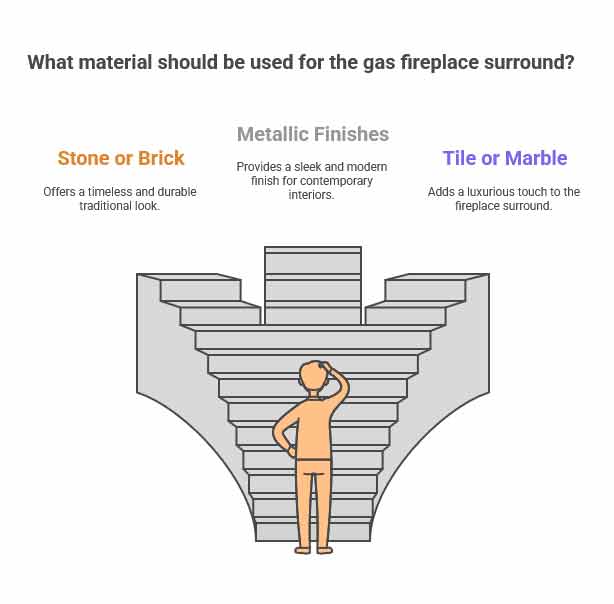
Everything above applies to wood burning fireboxes. A gas fireplace, whether a log set, an insert, or a direct vent unit, is an appliance. Log placement is set by the manufacturer and marked on the burner. Moving a log or placing a grate under a gas log set changes how the flame hits the ceramic, and flame impingement is what produces soot and carbon monoxide.
Do not add a fireback, andirons, or a wood grate to a gas fireplace, and do not put decorative glass or lava rock on a burner not designed for it. If the logs have shifted, the flame looks lazy or yellow, or there is soot on the glass, that is a service call, covered on our gas fireplace service page.
Frequently Asked Questions
Do I really need a grate in a wood burning fireplace?
Yes, for anything more than an occasional fire. A grate lifts the wood so air reaches it from below, which at Denver's altitude is the difference between a fire that burns clean and one that smolders.
What size fireplace grate should I buy?
Measure the back wall width and subtract at least 6 inches, which leaves 3 inches of air gap on each side. Grate depth should be 3 to 4 inches less than firebox depth. For a common Denver firebox with a 28 inch back wall and 18 inch depth, a grate around 22 by 14 inches is right.
Does a fireback actually make a fireplace warmer?
Somewhat. A cast iron fireback absorbs heat during the burn and radiates it into the room for an hour or more after the flames die. Its bigger job is protecting the back wall from direct flame.
Is it safe to line the firebox floor with aluminum foil?
No. Foil melts at about 1,220 degrees Fahrenheit, and a coal bed can reach that. Melted aluminum bonds to firebrick and refractory panels and cannot be removed. Use a shovel and a metal bucket instead.
Can I put a heavy cast iron grate in my prefab fireplace?
Only if the manufacturer's manual allows it and names the type. Prefab refractory panels crack under concentrated heat and weight, and a cracked panel means the fireplace should not be used until it is repaired.
Can I use a wood grate or fireback with my gas logs?
No. Gas log placement is fixed by the manufacturer, and adding a grate, fireback, or extra logs changes how the flame hits the ceramic, which produces soot and carbon monoxide. If the logs have shifted or the flame looks wrong, schedule a gas service visit.
Set Up the Hearth Right, Then Let Us Check the Firebox
A well chosen grate, a fireback where the back wall needs it, a screen that covers the opening, and a poker long enough to keep your hand out of the fire are the pieces that matter. Everything else is preference. What no accessory can do is repair a cracked firebox, and we would rather find that in October than after a chimney fire in January.
If you are setting up a fireplace for the first time, or you suspect an oversized grate has been cooking your lintel for years, call us at (720) 207-9232 to schedule a sweep and inspection. We will tell you what the firebox needs and what it does not. Current service rates are on our chimney and fireplace pricing page.