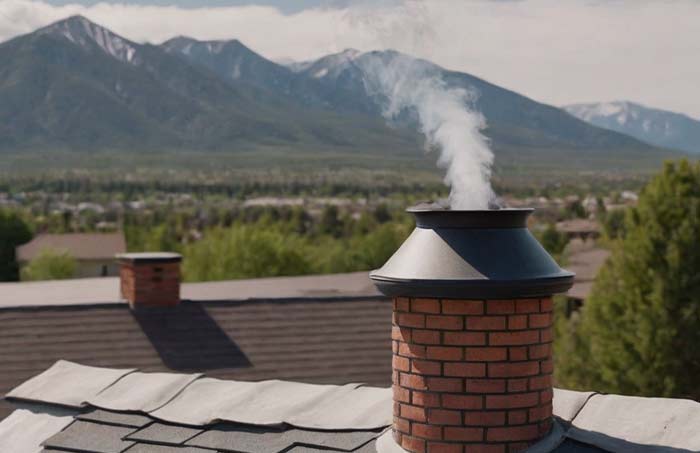
Fireplace smoke lands on a neighbor for physical reasons, not personal ones. A chimney that terminates below the height of the house next door, a wood pile that never dried, a damper closed down for an overnight smolder, and a Front Range inversion night all push smoke sideways and downward instead of up and away. Fix the physics and the complaint usually goes away with it.
We get calls from both sides of the fence. Sometimes the caller is burning the fire and sometimes their bedroom smells like a campfire every evening from November to March. Either way, the fixes are the same: a taller or better terminated flue, dry wood burned hot, a change in burn timing on bad air nights, and in some cases a better appliance.
This guide explains why neighbor fireplace smoke happens along the Front Range, what reduces it, how a reasonable conversation goes from either side, and how the rules work in general terms. For regulations by jurisdiction, see our Colorado chimney laws and regulations guide. For appliance certification details, see the EPA certified wood stove guide. We are chimney people, not lawyers, and nothing here is legal advice.
Why Smoke Ends Up in Someone Else's Yard
Flue gas cools fast once it leaves the chimney, and within a few feet the wind, the surrounding buildings, and the air layers above the roof decide where the plume goes. Four conditions put it in a neighbor's window.
A short chimney below the neighbor's window height
Many Denver metro lots are narrow, and plenty of 1900s brick homes sit ten or twelve feet from a two story neighbor. If your chimney tops out at the eave line of a single story ranch and the house next door has bedroom windows a few feet higher, the plume exits at their window height and drifts straight across on a still evening. The 3-2-10 rule in NFPA 211 and the building codes sets a minimum height above your own roof, but it says nothing about the building next door. Our chimney height rule guide covers the measurement.
Downwash from a taller adjacent structure
Wind hitting a tall wall or roof creates a rolling eddy on the downwind side. A chimney inside that eddy has its smoke pulled toward the ground instead of carried away. Along the Front Range the winter wind often comes off the foothills from the west or northwest, so a taller neighbor, a big cottonwood, or a garage addition on that side is a candidate. It also makes the fireplace puff smoke back into the room, which our smoky fireplace draft guide covers from the indoor side.
Inversion nights
On clear, calm winter nights the ground radiates heat to space and the air near the surface gets colder than the air a few hundred feet up. That is an inversion, and it acts like a lid. Smoke rises until it hits the warmer layer, then spreads out flat and sinks back toward the rooftops, settling into low spots, courtyards, and window wells.
Wet wood and overnight smolders
A hot fire with dry wood produces exhaust that is mostly clear. A damped down fire with wood above 20 percent moisture produces thick white or blue smoke loaded with unburned particles and tar vapors. That smoke is cooler, far more visible, and carries the sharp creosote odor people complain about. The classic pattern is a fire loaded at 10 p.m., damper closed down to hold coals until morning, and a neighborhood that smells like a smoldering trash pile at 2 a.m. The same smolder forms creosote in your flue, so the neighbor is not the only one paying for it.
Causes and Fixes at a Glance
Most smoke problems have a specific cause and a specific fix. Several fixes cost nothing but a change in habit.
Table 1. Common reasons chimney smoke reaches a neighbor and the fix that addresses each one.
| Cause | What you see | Fix | Typical effort |
|---|---|---|---|
| Flue terminates at or below neighbor's window height | Smoke drifts level across the gap on calm nights | Extend the flue with a listed extension or rebuild the top course taller | Professional, one visit |
| Downwash from taller building or trees | Smoke rolls toward the ground on windy days, fireplace puffs indoors | Raise the termination above the eddy, add a wind directional or draft improving cap | Professional, one visit |
| Wet or green firewood | Thick white smoke, hissing wood, strong odor | Burn wood seasoned to 20 percent moisture or less, check with a pin meter | Free, plan a season ahead |
| Overnight damper down smolder | Smell peaks late at night and early morning | Let the fire burn down naturally, stop adding wood two hours before bed | Free, habit change |
| Open fireplace on inversion nights | Whole street smells smoky, haze at rooftop level | Burn in daytime or on windy evenings, skip Action Days | Free, check the forecast |
| Old open fireplace or uncertified stove | Visible smoke even with dry wood | Upgrade to an EPA certified insert or stove | Professional, investment |
| Restricted or dirty flue | Lazy draft, smoke lingers at the top before rising | Sweep and inspection, clear the cap screen | Professional, annual |
The Front Range Inversion in Plain Terms
The Denver metro area sits in a shallow bowl against the foothills. On a calm night after a sunny day, the ground cools quickly in the dry, thin air at 5,000 to 6,000 feet, and the air touching it cools too. Cold air is dense, so it pools in the bowl while the air a few hundred feet up stays warmer. Warm over cold is stable, so nothing mixes, and whatever is released near the ground stays there.
A plume from a 25 foot chimney rises a little, cools, hits the warm layer, and flattens. Add a few hundred fireplaces and the neighborhood sits under a gray blanket until the morning sun breaks the lid.
Why winter evenings are the worst
- The sun sets early and the ground starts cooling by 4 p.m., so the inversion forms right when people light fires after work.
- Winds along the urban corridor are often calm at night between storm systems, and calm is exactly what an inversion needs.
- Snow cover radiates heat at night and deepens the cold surface layer.
- Everyone burns at the same time, so the trapped layer is thicker than any single chimney would produce.
A fire at 2 p.m. on a breezy Saturday puts almost nothing in a neighbor's window. The same fire at 9 p.m. on a still, clear January night puts smoke everywhere. If you change one habit, change when you burn.
No Burn Days and Action Days
Because inversions are predictable, Colorado issues air quality advisories during the winter season. When the forecast calls for stagnant air and rising particle levels, the state announces an Action Day, and in the Denver metro area that triggers residential burning restrictions for most wood burning devices. Exemptions, covered counties, and penalties vary by jurisdiction, and we keep those current in the laws guide linked above.
How to check before you light a fire
- Look up the current Colorado air quality advisory for the Front Range. The state publishes a daily winter advisory, and several free weather apps carry the same alert.
- Check whether your city or county has its own burn restriction in effect. Some municipalities are stricter than the state.
- Check the evening wind forecast. Calm and clear after sunset means an inversion is likely even without an advisory.
- If any of the three says no, burn tomorrow instead. Nothing about a fireplace is urgent.
Treating Action Days as a hard no and calm clear nights as a soft no covers most of the complaints we hear about.
What a Reasonable Conversation Looks Like
Most smoke disputes end with a small change on one side, and the conversation goes better when it starts with the physics instead of the grievance.
If your smoke is the problem
- Go look from their side on a typical evening and see where your plume goes. This is usually eye opening.
- Ask what they notice and when. Late night smell points to a smolder habit. Windy day smell points to downwash. Calm night smell points to inversions and height.
- Tell them what you will change first, and make it something you can do this week: dry wood only, no overnight loads, no fires on Action Days.
- Have the chimney swept and inspected so a restricted flue is not part of the picture, and ask the technician about termination height and cap options while they are on the roof.
- Check back after a couple of weeks. If it did not work, move to the next fix on the list.
If their smoke is the problem
- Pick a calm moment in daylight, not the middle of a smoky night, and lead with a specific observation. "Your smoke comes straight into our upstairs bedroom on still nights" gives them something to work with.
- Bring the timing. Most people have no idea their 11 p.m. reload is the problem because they are asleep when it peaks.
- Offer the easy fixes first. Many people do not know that a damped down fire is the smokiest fire there is.
- Give it a few weeks. Habits and firewood supplies take time to change.
- If nothing changes, move to documentation and, if needed, the appropriate agency. Keep it factual.
HOA Rules and Municipal Nuisance Language
Beyond the state air quality rules, HOA nuisance covenants and city or county nuisance ordinances can both apply to persistent, heavy smoke, and complaints generally run through an air quality or environmental health office or code enforcement rather than the police. The specific ordinances, covered devices, and penalties by jurisdiction are laid out in our Colorado chimney laws and regulations guide, so we will not repeat them here. Read the actual covenant or ordinance for your address and ask the agency or a lawyer about specifics.
How to Document Smoke If You Are the One Affected
If a friendly conversation has not worked, good records make every later step easier. Agencies and HOA boards act on patterns, not single bad nights. Keep a simple log with these fields.
- Date and time smoke was noticed, and roughly when it stopped.
- Weather at the time: wind direction and speed, temperature, whether the sky was clear.
- Whether a state Action Day or local burn restriction was in effect.
- A photo or short video of the visible plume with the neighboring chimney in frame, taken from your property.
- Any health effects on household members, especially anyone with asthma or a heart condition.
Photos at dusk with the sky behind the plume show density far better than night photos. Keep the log for a full season before escalating, because two weeks of bad weather can make an occasional problem look constant.
How a Sweep and a Burn Technique Change Cut Visible Smoke
Two changes together often reduce visible smoke more than any structural fix, and they are the cheapest.
The sweep
A flue coated with creosote and soot has a rougher interior and a smaller effective diameter. Both slow the exhaust, which then cools more before it leaves the top, exits with less upward momentum, and gets caught by downwash and inversions more easily. A restricted cap screen makes it worse. A professional chimney sweep restores the full diameter and smooth surface, and during the same visit a Level 1 or Level 2 inspection checks the cap, the crown, the flue tiles, and the termination height relative to the roof. Faster draft after a sweep means a plume that climbs instead of drifting.
The technique
Open fireplaces and older stoves produce the most smoke in the first fifteen minutes of a fire and any time the fire is starved of air. The fix is a top down fire built with dry wood and plenty of kindling, lit from above so the flames heat the flue immediately and the wood below ignites cleanly as the fire burns down. Our guide to getting more heat from your fireplace walks through the build.
Firewood matters as much as technique. Wood cut this spring will not be ready this fall, and all of it needs a covered top, open sides, and a season in the sun and wind. The best firewood for Colorado guide ranks the local species and explains the pin meter test.
Comparing the Structural Fixes
When habit changes and a sweep are not enough, the remaining options involve the chimney itself or the appliance. The right one depends on which of the four causes you are fighting.
Table 2. Structural and equipment options for reducing neighbor smoke, what each solves, and what it does not.
| Option | Solves | Does not solve | Notes |
|---|---|---|---|
| Extend the flue height | Termination below neighbor window height, mild downwash | Wet wood, smolder smoke, inversions | Must keep the 3-2-10 clearance and may need bracing above a certain height |
| Draft improving or wind directional cap | Downwash from nearby structures, backpuffing on windy days | Height problems on calm nights, wet wood smoke | Also keeps rain, hail, and animals out |
| EPA certified wood insert or stove | Visible smoke from an open fireplace, odor, overnight burns | Termination height alone | Burns far more completely than an open hearth and is usually allowed on Action Days where open fireplaces are not |
| Gas insert or gas log conversion | Wood smoke entirely | Nothing else needed for smoke | Removes the wood question but changes the experience |
| Chimney sweep and inspection | Restricted flue, slow draft, dirty cap screen | Height or downwash on their own | Recommended annually regardless, per NFPA 211 |
A few feet of stainless extension with a proper cap is usually enough to clear a neighbor's window line; more than that on an unsupported masonry stack needs bracing. If the appliance is the real problem, an insert or fireplace installation that replaces an open hearth with a certified unit changes the smoke and the heat output at the same time.
Frequently Asked Questions
Why does my neighbor's fireplace smoke come into my house at night but not during the day?
Nighttime inversions trap smoke near the rooftops when the ground cools after sunset and the wind dies down. During the day the sun heats the ground, the air mixes, and the same plume rises and disperses. The neighbor is probably also loading the fire for the night and closing the damper down, which produces the thickest smoke of the whole burn.
Is it legal to burn wood in my fireplace in Denver?
Yes, on most days. Wood burning is restricted on state Action Days in the Denver metro area, and some cities and HOAs add their own rules. The specifics by jurisdiction, including which appliances are exempt, are in our Colorado chimney laws guide.
My chimney meets the height code. Why does the neighbor still get smoke?
The 3-2-10 rule measures your chimney against your own roof, not the building next door. A code compliant chimney on a one story house can still terminate at the window height of a taller neighbor. Extending the flue a few feet above that window line usually fixes it.
Does a chimney cap reduce smoke?
A standard cap does not reduce smoke, but it prevents downdrafts, keeps rain and animals out, and a clean screen keeps draft strong. A wind directional or draft improving cap can help where downwash from a taller structure is pulling smoke toward the ground. No cap will fix wet wood or a smoldering fire.
Will an EPA certified wood stove stop the complaints?
It usually reduces visible smoke dramatically, because a certified stove burns the gases an open fireplace sends up the flue unburned, and it lets you hold a fire overnight without smolder smoke. It does not change termination height, so a short chimney may still need extending.
How do I report a chimney smoke problem in Colorado?
Start with a conversation and a written log of dates, times, weather, and photos. If that fails, most complaints go to the county or state air quality or environmental health office, or to city code enforcement if a local nuisance ordinance applies. An HOA covenant may also cover it. We cannot give legal advice, so check the rules for your address.
Next Step: Get the Chimney Looked At Before the Next Cold Snap
Whether your smoke is bothering a neighbor or theirs is bothering you, the fastest path is a sweep and inspection that looks at the flue, the cap, and the termination height together. We can tell you in one visit whether the answer is a habit change, a cap, an extension, or a different appliance, and pricing for each service is posted on our chimney and fireplace pricing page. Call Adam Chimney Sweep at (720) 207-9232 or use the contact page on our site to schedule, and we will get you and the neighbors breathing easier before the next inversion settles in.