A lightning strike on a chimney is rarely subtle when it happens, but the damage it leaves behind often is. The chimney is usually the highest point on a Colorado house, it holds moisture inside its brick, and it carries metal in the cap, the damper, and often a stainless liner. That combination makes it the most likely part of the roof to take a hit during a Front Range thunderstorm, and a strike can crack, blow apart, or quietly weaken the masonry from the inside out.
If your chimney was struck, the short answer is this: stay out of the fireplace until a camera inspection has looked at the entire flue, photograph everything you can see, and call the fire department if anything smells hot. Lightning is usually a covered peril on a homeowner policy, so early documentation makes the insurance conversation simpler.
Why Colorado Chimneys Take So Many Lightning Hits
Along the Front Range, storms build over the mountains most afternoons from late spring through the July and August monsoon and roll east across Denver, Aurora, and the plains. That frequency is half the story. The other half is what a chimney is made of and where it sits.
Height and the path of least resistance
Lightning does not aim. As a downward leader approaches, upward streamers reach from the tallest objects nearby, and the first to connect wins. On most houses the chimney is the tallest object, often by four or five feet over the ridge, and more on a 1900s Park Hill brick home built for coal draft.
Metal in the cap, damper, and liner
A metal cap on top, a cast iron damper at the throat, sometimes a stainless liner the full height, and often a gas line and wiring in the chase. None of it attracts a strike from a distance, but once a strike connects, it gives the current a continuous path from the top of the stack into the house.
Moisture inside the masonry
Brick and mortar are porous. After a spring snow or a monsoon downpour, the top few feet of a chimney hold a surprising amount of water, more so with a cracked crown or no cap. Wet masonry conducts far better than dry, and it sets up the most destructive part of a strike.
What Actually Happens When Lightning Hits Wet Brick
A lightning channel is hotter than the surface of the sun, and when that energy passes through water trapped in brick pores and mortar joints, the water flashes to steam instantly. The steam has nowhere to go. The result is a small steam explosion inside the masonry.
That is why a struck chimney looks like it took a sledgehammer rather than a burn. Brick faces pop off. Whole courses shift or blow out. The crown, usually the wettest part of the stack, splits into pieces. A blowout can throw brick well out into the yard, or leave nothing but a single blackened joint with the real damage hiding in the flue.
Inside, the current follows the metal and the wettest path. Clay flue tiles crack along their length or across a joint. A stainless liner develops pinholes where the current jumped to the masonry. A damper fuses to its frame. A cap is blown off or welded to the liner top. And where the current exits into the house, it can ignite framing or insulation that was too close to the chimney to begin with.
Visible Damage Versus Hidden Damage
This is the checklist we run through when we pull up to a strike call.
Table 1. Common lightning damage on a chimney, whether you can see it from the ground, and what usually hides behind it
| Sign | Visible or hidden | What it usually means | How we confirm it |
|---|---|---|---|
| Brick pieces on the lawn or roof | Visible | Steam blowout in the upper courses | Roof walk, count missing units |
| Cracked or split crown | Visible from a ladder | Water entry into the flue top and brick core | Roof inspection and photos |
| Displaced, bent, or missing cap | Visible | Strike connected at the cap, current went down the liner | Inspect liner top and fasteners |
| Scorched or blackened mortar joints | Visible up close | Arc path along the outside, joints may be powdered | Probe joints for loose brick |
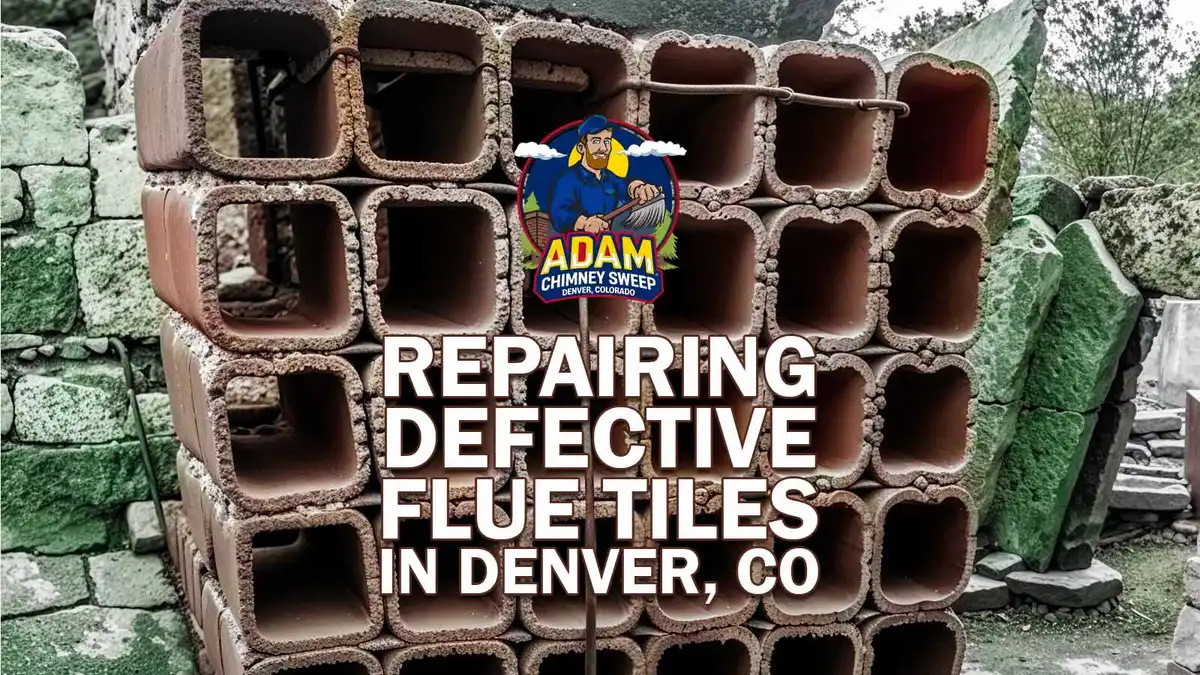
| Cracked or shifted flue tiles | Hidden | Loss of the barrier between fire and framing | Camera scan of the full flue |
| Fused or warped damper | Hidden until you try it | Current passed through the throat | Operate damper, inspect smoke chamber |
| Dead gas valve, ignition module, blower, or tripped breaker | Hidden | Surge through wiring or the gas bond | Test ignition, module, valve, and circuit |
| Warm wall or hot smell near the chimney | Hidden | Possible smoldering in framing, an emergency | Fire department first, then thermal check |
The most dangerous items sit in the hidden rows. A cracked flue tile is what lets a later fire reach the wood.
Why a Camera Inspection Is the Standard Step Even When the Outside Looks Fine
NFPA 211, the standard most chimney professionals work from, calls for a Level 2 inspection after any event likely to have damaged the chimney, including weather events. A Level 2 includes a video scan of the interior flue, the only practical way to see the inside of a clay tile liner from top to bottom. Our chimney inspection service handles the strike calls we get every summer.
The camera matters after lightning because of where the current goes. It follows the liner or the wettest part of the flue, and the tiles are the wettest part. A tile can crack cleanly across its width with no displacement, so nothing falls to the firebox and nothing looks off from the top. On camera, that crack is a bright line around the tile. Left alone, it opens with every freeze-thaw cycle and every hot fire. We also check the smoke chamber above the firebox, where an arc leaving the flue commonly lands.
The Safety Sequence Right After a Strike
Work through these steps in order.
- Check for fire and smell. Walk the house, including the attic access. Put your hand flat on the wall around the chase on every floor. Warm drywall, a hot or electrical smell, or haze near the ceiling means the next step is 911, not a call to us.
- Do not use the fireplace. That applies to wood, gas, and inserts, and to a furnace or water heater that vents into the same chimney if you can shut it down safely.
- Look for debris. Check the lawn, the roof from the ground, and the firebox. Brick or tile pieces in the firebox are a strong sign the flue took the current. Leave them in place.
- Call the fire department if anything smells hot. Fire in framing can smolder for hours before it shows. Fire crews carry thermal cameras and can check the chase and attic without opening walls.
- Shut off gas to a gas fireplace if you smell gas. The valve is usually behind the lower louver. If you smell gas in the house, leave and call the utility from outside.
- Photograph everything before you clean up. The chimney from every side, the debris where it landed, the firebox, and any tripped breakers.
- Schedule a Level 2 inspection and notify your insurer. Ask for a camera scan of the full flue and a written report with images. Most policies ask you to report promptly and to prevent further damage, so cover an open flue.
Gas Fireplaces, Surge Damage, and the Electronics Nobody Sees
A modern gas fireplace has a control board, a gas valve, an ignition module, a flame sensor, often a remote receiver, and frequently a blower on a 120 volt circuit. All of it is vulnerable to a surge, and a surge does not require a direct hit. A strike on a nearby tree or utility pole can push a spike through the power lines or the gas line bond and into the unit.
The symptoms are simple: the pilot will not light, the igniter clicks without a flame, the remote does nothing, or the blower is dead. If it started the same day as a storm, say so when you call, because it changes the diagnosis. Our guide to gas fireplace pilot light problems covers the ordinary causes so you can tell them apart from storm damage.
Table 2. Direct strike on the chimney versus a nearby strike, and where the damage usually lands
| What to look at | Direct strike on the chimney | Nearby strike on a tree, pole, or service line |
|---|---|---|
| Path of the current | Down the cap, liner, and wet masonry into the house | Through the power lines or the gas line bond into the appliance |
| Masonry and crown | Blown brick, split crown, scorched joints | Usually untouched |
| Flue liner | Cracked tiles or a pinholed stainless liner, camera scan required | Usually untouched, scan anyway if you find debris in the firebox |
| Damper and cap | Fused, bent, or missing | Usually untouched |
| Gas fireplace electronics | Often destroyed along with everything else | The main casualty: module, valve, receiver, blower |
| First call | Fire department if anything is hot, then a Level 2 inspection | Gas fireplace service, and mention the storm |
A direct strike on a gas chase adds venting concerns, so we check every vent joint and firestop, because a separated joint dumps exhaust into the wall cavity. A stainless liner on a wood insert gets the same check for pinholes, scorched insulation wrap, and separation at the stove collar.
The Insurance Angle in General Terms
Lightning is a classic named peril on a homeowner policy, so direct strike damage and surge damage to fireplace electronics are usually covered subject to your deductible, though we are not adjusters and every policy reads differently. The Level 2 report with camera images is the document that ties hidden flue damage to the event, and a temporary cover on an open flue prevents the follow-on water damage an adjuster can reasonably decline. Our guide on chimney storm and hail damage insurance in Colorado walks through documentation, the claim sequence, and deadlines.
Lightning Protection Systems and Why a Cap Is Not a Lightning Rod
We get asked whether the metal cap draws lightning, and whether a heavier cap would protect the house. No on both counts. A cap is thin sheet metal on a masonry crown, bonded to nothing. If it were bonded to ground through the liner, it would simply carry the strike into the house through the flue. A cap keeps rain, embers, and animals out. That is its job.
Real protection is a lightning protection system installed under NFPA 780. In general terms, it uses air terminals, the rods you see on a barn or a church, connected by heavy conductors to grounding electrodes, giving a strike a low resistance path around the structure rather than through it. Tall masonry chimneys are commonly fitted with their own air terminal.
We do not install those systems, but we coordinate with the installer so a terminal mount does not compromise the crown or flashing. On an exposed lot east of Aurora or a foothills ridge, that conversation is worth having.
Repair Options After a Strike
Repairs range from a new cap to a full rebuild above the roofline, and the inspection report tells us where a chimney sits on that range. We keep our current cost ranges on the chimney and fireplace pricing page rather than guessing here.
Rebuild above the roofline
When a blowout has displaced courses of brick, the upper stack comes down to sound masonry and goes back up with a new crown. On an older Denver home that can mean matching a 1920s brick and mortar color. How far down to go is a judgment call we lay out in our guide on chimney rebuild versus repair, and our chimney repair service covers everything from a partial rebuild to tuckpointing.
Repair or replace the crown
A cracked crown is the most common visible lightning repair, and it cannot wait through a winter of freeze-thaw. Depending on the crack, the crown is either sealed and coated or poured new with a proper overhang and drip edge. Our chimney crown service page explains both approaches.
Reline the flue
Cracked clay tiles are the most common hidden repair. Replacing individual tiles is sometimes possible, as our guide on repairing defective flue tiles explains, but strike damage is often spread across several tiles and a stainless liner is the more reliable answer. A damaged stainless liner is replaced outright. Our chimney lining service page lays out the options for wood, gas, and furnace flues.
Replace the cap and damper
A bent or fused cap is replaced and sized to the flue and any new liner. A fused throat damper is usually replaced with a top sealing damper, which also cures the cold air problem most older fireplaces have. Our chimney cap repair and installation page covers cap options for a wood or gas flue.
Restore the gas appliance
For a gas unit, that means testing and replacing the module, valve, receiver, or blower, then a full check of flame sensing and the vent. We also recommend a whole house surge protector at the panel, installed by an electrician.
The Order We Work In
The sequence matters, because installing a liner before the masonry above it is sound means doing it twice.
- Make it safe and dry. Remove loose brick and cover the open flue.
- Complete the Level 2 inspection and written scope. This drives the repair and the claim, so it comes before demolition.
- Structural masonry. Rebuild or repoint the stack above the roofline.
- Crown and flashing. Pour or repair the crown, then reset the flashing, which a rebuilt stack almost always disturbs.
- Liner. Install and insulate the new liner, then connect it at the appliance.
- Cap and damper. Fit the cap to the liner and flue, and install or replace the damper.
- Appliance and electronics. Replace gas components, blowers, and controls, then test the system.
- Waterproofing and a final camera check. Apply a breathable water repellent, scan the flue once more, and hand you the report.
Frequently Asked Questions
Can lightning hit a chimney without leaving any visible mark?
Yes. A strike can run down a metal liner or through the flue and crack clay tiles or fuse a damper without disturbing a brick on the outside. That is why a camera scan of the whole flue is the standard step after a strike, not a walk around the yard.
Is it safe to use my fireplace after a nearby strike if nothing looks damaged?
Not until the flue has been scoped. A cracked tile or a gap in the liner lets heat reach the framing, and you cannot see that from the hearth. That goes for a furnace or water heater on the same chimney too.
Does a metal chimney cap attract lightning?
No. Lightning is deciding where to connect long before it reaches the roof, and the chimney is a candidate because it is tall and damp, not because there is a thin piece of stainless on top. A cap is not a lightning rod and offers no protection.
Will insurance cover chimney lightning damage in Colorado?
In general terms, lightning is a standard named peril on most homeowner policies, so direct strike damage is usually covered subject to your deductible. Policies vary, so ask your agent. A written inspection report with camera images carries the most weight.
How soon should I schedule an inspection after a strike?
As soon as you can, and before the next rain if the crown or cap is damaged. Open masonry soaks up water fast, and one Colorado freeze-thaw season can turn a cracked crown into a crumbling one.
My gas fireplace stopped working after a storm. Could it be lightning?
It is one of the first things we check. A surge can damage the ignition module, the valve, the remote receiver, or the blower. If the pilot will not light and it happened the same day as a storm, treat it as possible surge damage.
Can a lightning strike start a chimney fire days later?
It can set up the conditions for one. If the strike cracked flue tiles and the flue also holds creosote, the next hot fire can ignite that creosote and heat can reach the framing through the new cracks. The damage the strike leaves is what makes a later fire more likely.
What to Do Next
If your chimney took a strike, or you found brick in the yard after a storm, start with the safety steps above and get the flue scoped before anyone lights a fire. We serve Aurora, Denver, and the Front Range, and we bring the camera to every strike call. Call Adam Chimney Sweep at (720) 207-9232 to schedule a Level 2 inspection. We will tell you plainly what the strike did, what is urgent, and what can wait.