If you only touch your chimney once a year, do it between March and August, not October. Same work either way, but in the off season the weather cooperates, the calendar is open, and whatever we find has months of runway before you need a fire.
Spring chimney maintenance in Colorado has a specific job. Our winters drive water into masonry and then freeze it, wind and wet snow work on caps and chase covers, and a season of creosote sits in the flue waiting for humid weather to turn it into a smell. Warm dry months are also the only stretch when mortar, crown repairs and water repellents cure properly.
Here is what our crew looks at from March through August. Pre winter prep and in season safety are a different conversation, covered in the winter chimney safety checklist.
Why the Off Season Is When This Work Should Happen
Nobody thinks about the fireplace until they want to use it, so it lands last on your October list and first on everyone else's at the same moment. Four reasons to move it.
Scheduling. From late spring through midsummer we can usually get to a house within days. At the fall rush, a sweep and a repair quote stretch into weeks.
Cure conditions. Mortar, crown sealants, water repellents and firebox refractory all need sustained temperatures above freezing, dry masonry and a clear forecast. Colorado gives you that in June, not in November, when a sunny 55 degree afternoon still drops to 18 overnight.
Problems stay small. A hairline crown crack found in April is a sealant job. After another freeze thaw winter it is a crown rebuild, and the water that went through may have taken a flue tile with it.
Roof safety. Dry shingles in May beat frosted shingles in November, and the inspection we do in dry conditions is more thorough.
What a Colorado Winter Actually Does to a Chimney
Freeze Thaw Damage Only Shows Up After the Thaw
Brick and mortar are porous, so meltwater soaks in on a sunny afternoon and expands when the temperature drops overnight. Our guide on why chimneys leak walks through that cycle and how we trace water back to its entry point.
What matters for a spring plan is the timing. The damage stays hidden while it happens, because the ice holds everything together, and the loose material lets go all at once when the last real thaw comes through in March or April. That is why homeowners find mortar crumbs in the flower bed and assume it happened overnight. It happened all winter, and March is when you can finally see it.
Caps, Chase Covers and Crowns After Wind and Snow Load
Front Range wind does not respect a cap installed with two screws and good intentions, and heavy March snow adds real weight to one already rusting at the seams. We pull loose, tilted and missing caps off roofs every spring.
On newer builds around Aurora and Parker, watch the sheet metal chase cover. When it goes flat and rusts through, water runs down inside the chase into the firebox and framing. On older Denver brick homes the weak point is the concrete crown, which cracks along the flue and lets water into the gap between liner and brick.
A Whole Season of Creosote Sitting in the Flue
At our elevation there is less oxygen per cubic foot of air, so a fire short on combustion air burns cooler and less completely than it would at sea level, and incomplete combustion is what makes creosote, a process we cover in our guide to preventing creosote buildup. Most Colorado homeowners burn hard November through March and then stop cold, leaving a season of deposits with nothing scheduled to remove them.
Table 1. Winter damage we commonly find on Front Range chimneys in spring, and how fast it needs attention.
| What you notice | Where to look | Usual cause | How soon |
|---|---|---|---|
| Mortar crumbs and brick chips | Gutters, roof, beds at the base | Freeze thaw letting go after the thaw | Inspect now, repair in summer |
| Brick faces flaked off, sandy craters | Top third of the stack, weather side | Spalling from saturated brick freezing | Before monsoon rain |
| Cap tilted, lifted or gone | Top of the flue, seen from the yard | Wind event or snow load | Promptly, an open flue invites nesting |
| Rust streaks or standing water | Chase cover on a framed chase | Failed cover with no drainage slope | Before July storms |
| Cracks radiating from the flue | Concrete crown on top | Freeze thaw plus shrinkage | Seal or rebuild while dry |
Start With a Ground Level Look in March
Before you book anything, spend ten minutes checking the chimney from the ground on a clear morning once the roof snow is gone. Work the weather side first, usually the west and north faces, and note what changed over the winter: a cap sitting crooked, missing brick faces, debris at the base. Our free DIY chimney checkup walks through exactly what to look at and how to read what you find.
Do it in March so the findings land on the calendar before nesting season and before the repair schedule fills up. Anything you turn up is a reason to get eyes inside the flue, which a flashlight cannot do, and that is what a camera chimney inspection is for.
The Summer Odor Is a Spring Scheduling Problem
The most common call we get in July is a fireplace that was fine all winter and now smells like a wet ashtray. The short version is that leftover creosote pulls moisture out of humid summer air while the draft runs backward down a cool flue, and our guide on why your chimney smells breaks down that cause and the others in full.
The spring angle is that it is preventable on a calendar. Book a professional chimney sweep in April and the source is gone before the humid weather that activates it, which is the whole argument for sweeping on the way out of the burning season instead of on the way in.
Cap the Flue Before Nesting Season Closes the Window
Birds start scouting nest sites as soon as the weather breaks, which on the Front Range means late March into April. That is a narrow window, and it is the one deadline in this plan you genuinely cannot move.
The reason is legal rather than technical. Many native birds are protected under the federal Migratory Bird Treaty Act, and chimney swifts in particular nest inside flues, so once eggs or chicks are up there the lawful move is to wait until the young fledge and leave on their own before anything is removed and the flue is capped. That can mean weeks of noise and smell in the middle of summer.
So if your cap came off in a February wind event, March is the month to replace it. Our guide on keeping animals out of your chimney covers free prevention, a correctly sized chimney cap installation with stainless mesh solves it permanently, and if something is already up there we handle humane animal removal.
Get Ahead of Monsoon Season Before July
Colorado's summer monsoon usually arrives in July and runs into September, dropping hard, short, heavy rain most afternoons, and hail season builds from late spring through midsummer. That is the wettest stretch of the year landing on your masonry, so water management has a hard deadline rather than a vague one.
Which pieces fail, and how we trace a stain back to the entry point, is the subject of our guide on why chimneys leak. What a spring plan adds is the order, because these jobs depend on each other and cannot be done in one visit:
- Cap and chase cover first, since an open flue or a flat, rusted cover is the fastest path to water in the firebox.
- Masonry next. Repointing, crown repair and spalled brick have to be done before anything is sealed over them.
- Water repellent last, on dry masonry, after the repointing has cured, with a clear forecast behind it. Use a breathable, vapor permeable product, never a film forming sealer, because trapping moisture inside brick in a freeze thaw climate guarantees spalling.
Month by Month, March Through August
- March. Do the ground walkaround as soon as the roof clears. Book the sweep and inspection, and replace a damaged cap ahead of nesting.
- April. Sweep and inspection. Get last season's creosote out before humidity arrives, and get findings written up as a scope you can act on.
- May. Masonry work. Repointing, crown repair, spalled brick replacement and firebox refractory, while temperatures are steady and the monsoon is weeks off.
- June. Water management. With repairs cured, apply the water repellent, correct flashing and replace a failing chase cover.
- July. Verify. After the first real storms, check top floor ceilings, walls and the firebox for any sign of water.
- August. Plan the burning season. Stack firewood so it has time to season, schedule gas service, test every alarm.
Table 2. A Front Range off season chimney calendar matched to typical Colorado weather.
| Month | Typical conditions | What to schedule | Why this month |
|---|---|---|---|
| March | Wet upslope snow, first thaw | Ground check, book the sweep, replace a cap | Damage is visible, nesting not started |
| April | Late snow, drying, windy | Sweep and camera inspection | Creosote out before humidity |
| May | Afternoon storms, hail risk | Tuckpointing, crown repair, brick work | Cure temperatures, no freeze |
| June | Hot, dry, low humidity | Water repellent, flashing, chase cover | The best cure window of the year |
| July | Monsoon, hard afternoon rain | Verify repairs, watch for leaks | A real test, time to correct |
| August | Monsoon fades | Firewood, gas service, alarm testing | Wood needs months of dry air |
What to Do With an Unused Fireplace All Summer
An unused fireplace is a hole in your house with a straight shot to the sky. Close it down deliberately.
- Sweep it first. Never shut a flue down for the summer with a season of creosote in it. That is the July odor, waiting.
- Shovel the firebox clean and get the ash out. Ash holds moisture and its salts corrode dampers and grates.
- Close the throat damper, and the top sealing damper at the cap if you have one. It seals better and keeps conditioned air from pouring out.
- Keep glass doors shut but leave the firebox empty. No stored kindling, no decorations, nothing that holds moisture.
- Never cover the top of the chimney with plastic. It traps moisture in the flue and does more damage than the rain it blocks.
- Leave carbon monoxide alarms powered all summer, especially if a furnace, boiler or water heater shares the chimney structure.
One note on gas. Shutting the pilot down for the summer is fine, but plan a service visit before you relight, because pilots that sit idle for months are the ones that will not stay lit in October.
Why Booking the Annual Sweep in Summer Beats Calling in October
NFPA 211, the national standard for chimneys and vents, calls for chimneys to be inspected at least once a year. It does not say which month, and that is the loophole worth using.
Table 3. The same annual sweep and inspection, booked at two different times of year.
| Factor | Booked April through August | Booked October through December |
|---|---|---|
| Typical lead time | Days | Weeks at the peak |
| Time to act on findings | Months before you need a fire | Days, in cold weather |
| Masonry and sealer cure | Warm, dry, no overnight freeze | Marginal to impossible |
| Roof access | Dry shingles, safe footing | Frost, ice and snow are common |
| Creosote condition | Out before humidity hits | Sat in the flue all summer |
| Animal entry risk | Cap goes on ahead of nesting | Nesting season came and went |
| Downtime for repairs | None, you are not burning | Fireplace lost mid season |
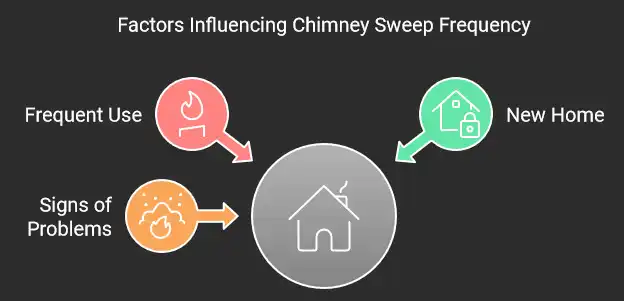
How often you need the sweep itself depends on how much you burn and what you burn, and we laid that out in our guide on how often to sweep a chimney in Colorado. The inspection cadence is annual for nearly everyone.
Off Season Jobs Around the Hearth
- Clean the glass while the deposits are old and nothing is hot.
- Check firebox refractory panels for cracks wider than a coin edge. Cracked panels are a repair item, not cosmetic.
- Vacuum the spark screen track and the outside air intake if the unit has one.
- Test every smoke and carbon monoxide alarm and change the batteries.
What an Off Season Visit Actually Looks Like
A spring visit is calmer than a fall call, because nobody is waiting on us to get their heat back. We set up drop cloths and containment, run a vacuum with fine filtration at the firebox, sweep the flue with brushes matched to the liner material, and clear the smoke chamber and shelf.
Then comes the part that matters most, which is looking. A camera goes up the flue to check liner condition end to end, then the damper, firebox, cap, crown, chase cover, flashing and exterior masonry. You get told what is urgent, what can wait a season and what we would leave alone. For what services generally run, our pricing page is the starting point.
Frequently Asked Questions
Is it worth sweeping the chimney in spring if I had it done last fall?
Yes, if you burned all winter. The point is removing what this season deposited so it does not sit in the flue all summer. That is what causes the July smell and what feeds a chimney fire in November.
When should I schedule spring chimney maintenance in Colorado?
Sweep and inspection in late March or April once roof snow has cleared, masonry work in May, waterproofing in June. That gets the flue clean before humidity arrives and finishes water management before the monsoon starts in July.
My chimney only smells in the summer. Does that mean it needs repair?
Usually not repair, but it does need attention. Summer odor is almost always creosote absorbing humidity combined with a reversed draft sending flue air into the room. A sweep removes the source. If it persists, we look at moisture entry, animal debris, and how your fans and air conditioning pressurize the house.
A bird is nesting in my chimney right now. Can you remove it?
Not while eggs or chicks are present, if it is a protected species. Many native birds are covered by the federal Migratory Bird Treaty Act, and chimney swifts commonly nest inside flues. Wait until the young fledge on their own, then clean the flue and cap it. Do not light a fire and do not try to smoke them out.
Can chimney waterproofing be applied any time of year?
No. Water repellents need dry masonry, temperatures well above freezing and a dry window afterward to cure, and any repointing has to cure first. Make sure the product is vapor permeable, because a film forming sealer traps moisture in the brick and accelerates spalling.
My fireplace is decorative and I never use it. Do I still need spring maintenance?
You still need the annual inspection, because an unused chimney is still exposed to weather, animals and movement, and it may still vent a furnace or water heater. Skip the sweep if nothing has been burned. Do not skip the cap.
Does altitude really change how much creosote builds up?
It contributes. There is less oxygen per cubic foot of air up here, so a fire short on combustion air burns cooler and less completely, and incomplete combustion creates creosote. Dry seasoned wood and a hot fire matter more, but elevation is part of why Colorado flues need attention.
Get Your Spring Chimney Work on the Calendar
The best thing about off season chimney work is that none of it is an emergency. You find out what winter did, decide what to fix, and the work happens in weather that lets it cure. Do it now and October becomes a non event.
If the flue has not been looked at since last heating season, or you spotted mortar crumbs in the flower bed or a cap sitting crooked, call our crew at (720) 207-9232 while the calendar is open. We work out of Aurora across the Denver metro and the Front Range.