Chimney liner insulation is a layer of high temperature insulation that wraps around a stainless steel liner before it goes down the old masonry chimney, or gets poured in around it afterward. Usually it is a ceramic fiber blanket held on with foil tape and stainless mesh, or a vermiculite and cement mix filling the space between the liner and the brick. It is not padding. It is the part that keeps flue gas hot enough to behave.
The whole argument fits in one sentence: a warm flue drafts and a cold flue condenses. A bare liner running inside a big masonry chase loses heat to the brick the whole way up. On wood that means creosote forms faster and lower in the flue. On a furnace or water heater flue it means mildly acidic water running back down the liner and soaking into the masonry. Insulation keeps the temperature above the point where either of those starts.
We are not going to argue price here. Our guide on the cheapest way to reline a chimney covers cost strategy. This is the technical case for the insulation itself, the line item homeowners cut when a bid feels high, and the one that comes back three or four winters later.
What Chimney Liner Insulation Physically Is
There is no mystery to the material. It is fireproof, light, and it fills the space between the stainless pipe and the inside face of the old clay tile. That space has a name on installation drawings: the annulus. Every insulation decision comes down to whether the annulus is big enough to hold something useful.
Ceramic Fiber Blanket Wrap
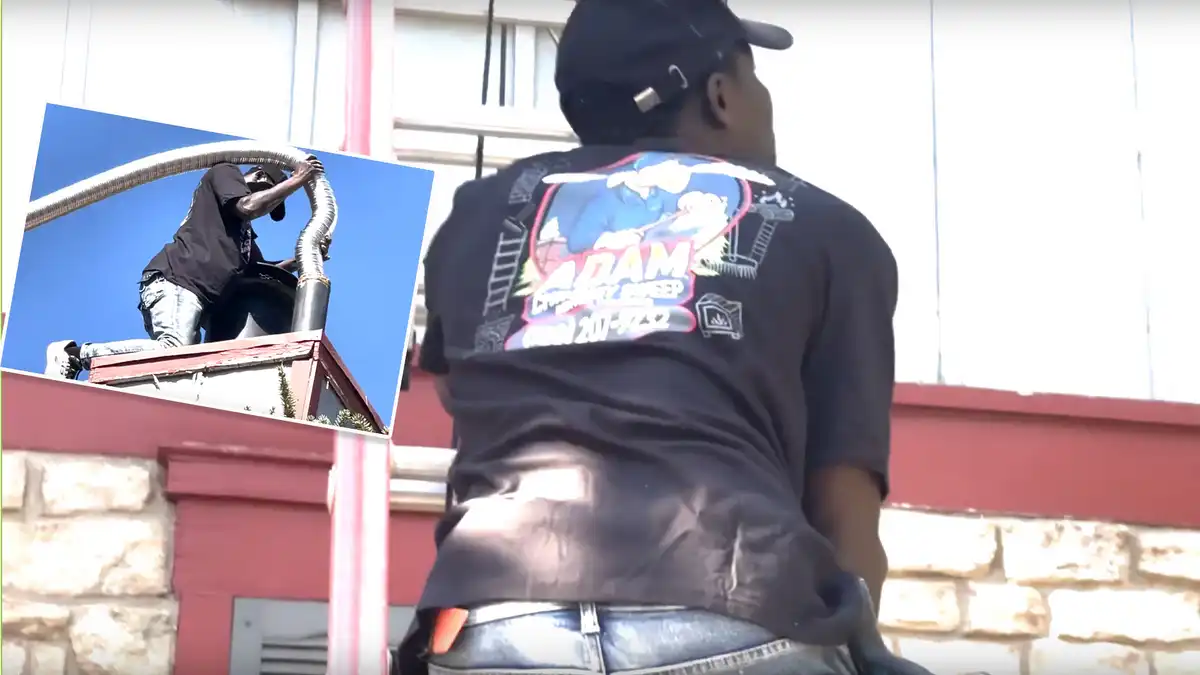
The common method is a high temperature ceramic or mineral fiber blanket, usually a half inch thick, sometimes a quarter inch in a tight flue. We wrap it around the pipe on the ground, seam it with rated foil tape, pull a stainless mesh sleeve over the assembly, and band the mesh so nothing bunches when the liner drags past a clay tile shoulder on the way down. The liner has to reach the bottom with the insulation still evenly distributed.
Poured Vermiculite And Cement Mix
The other method is a pour. The liner goes down bare and centered, the bottom of the annulus gets blocked, and a vermiculite and portland cement mix is poured in from the top. It fills irregular chases well, which earns its place in older Denver chimneys where the flue wanders or the tile is broken. It is heavy and permanent, and it makes future work in that chase harder. We use it when the geometry argues for it, not by default.
Factory Insulated Liner
Some manufacturers sell liner already jacketed as a single listed assembly. It is tidy and the paperwork is clean. It also has a larger outside diameter than bare liner of the same inside size, so it only helps when the chase has room.
Why A Warm Flue Drafts And A Cold Flue Does Not
A chimney is a temperature engine. The column of hot gas inside it is lighter than the outdoor air of the same height, and that density difference is the only thing pulling smoke out. Lose the temperature and you lose the pull. On a conventional fireplace there is no fan, no assist, nothing else holding the system up.
Colorado tightens that math. Thin air at five thousand feet and up gives you less mass in the column to work with, so a fireplace that drafted fine back east can be marginal here. Add a January morning where the masonry sat at ten degrees all night and the flue spends the first twenty minutes of every fire acting like a cold drain. That is the window where smoke rolls into the room, and the window insulation shortens most. If your fireplace already fights you on startup, our guide on why a fireplace smokes and will not draft covers the same ground.
The Oversized Chase Problem, Which Is The Worst Case
Picture a 1920s bungalow in Park Hill with a chimney built for coal. The clay tile inside might be twelve inches square. Today it vents an 80 percent furnace and a water heater, so the correct stainless liner is five or six inches round. That leaves a large cavity of cold air around a small warm pipe, running up through an unheated attic and out into the wind.
That cavity is not neutral. Air in it picks up heat from the liner, dumps it into the brick, cools, sinks, and comes back for more. The masonry is a heat sink with real mass, and on the north side of the house it never warms up in winter. A small liner in an oversized chase with no wrap is the most reliable way to build a chimney that condenses, and we see it constantly on relines done cheap.
Insulation restores what installers call the effective flue temperature. It adds no heat. It stops the chase from taking it.
What Condensation Does To A Wood Burning Flue
Wood smoke carries water vapor and unburned volatile compounds that condense on any flue surface cold enough to accept them, and the rule of thumb most sweeps work to is that surfaces below roughly 250 degrees Fahrenheit start collecting condensate. A cold bare liner does not only collect more deposit, it collects the worse kind, the hard shiny glaze a brush will not take off, while an insulated liner and dry wood often leave a light dusting after a full season. What creosote is and how to burn so you produce less of it is covered in our guide on preventing creosote buildup, and insulation works the same problem from the temperature side.
What Condensation Does To A Gas Or Furnace Flue
Natural gas combustion produces a large volume of water vapor, and when it condenses in a cold flue it is not clean water: it carries combustion acids that are corrosive to stainless over time and aggressive toward mortar and brick. Masonry that stays wet through a Colorado winter then freezes overnight, and ice expands. Diagnosing and sizing a masonry flue for a furnace or water heater is a subject of its own, and our guide on furnace and water heater chimney venting works through it properly.
The Clearance To Combustibles Angle Most People Miss
This is where insulation stops being a performance question and becomes a code and safety question, and it is why we will not install certain liners bare.
Stainless relining systems are tested and listed to UL 1777. Many of those listings grant reduced clearance to combustibles only when the liner is installed with the manufacturer's specified insulation. Take the insulation away and you are outside the listing. What is on your chimney is no longer what was tested.
That matters in older housing stock. NFPA 211 calls for airspace between a masonry chimney and framing, and two inches is the familiar figure for an interior chimney. Houses built in 1908, or remodeled by an owner with more enthusiasm than reference material, routinely have joists notched into the chimney or a mantel nailed to furring against the breast. When the framing is that close, the wrap on the liner is doing real work holding the temperature down at it.
An inspection tells you which situation you are in, which is why we push for a camera scan rather than a flashlight peek. The differences are spelled out in our guide on chimney inspection levels.
Insulated Versus Uninsulated, Side By Side
Table 1. How an insulated stainless liner compares against a bare liner running inside an oversized masonry chase.
| Factor | Insulated liner | Bare liner, oversized chase |
|---|---|---|
| Cold start draft | Warms quickly, pull established in minutes | Long warmup, smoke rollout on the first fire of the day |
| Flue surface temperature | Stays above the condensation range through most of a burn | Falls into the condensation range up high and on low fires |
| Creosote on wood | Lighter and flakier, brushes off in a normal sweep | Heavier, far more likely to form hard glaze |
| Condensation on gas venting | Minimal once the appliance is up to temperature | Recurring every cycle, acids attacking liner and masonry |
| Clearance to combustibles | Reduced clearance listing intact when installed to instructions | Outside the listing on many systems |
| Surrounding masonry | Chase stays drier, freeze and thaw damage slows | Chronic moisture, spalling and white staining |
| Practical service life | The long end of what the maker warrants | Often cut short by corrosion, especially on gas |
Choosing An Insulation Method For Your Chimney
Table 2. The four common approaches, the space each one needs, and where each earns its keep.
| Method | Space needed | Best fit | Trade offs |
|---|---|---|---|
| Half inch blanket wrap | About one inch added to outside diameter | The default for most relines | Needs careful meshing so it does not bunch on the drop |
| Quarter inch blanket wrap | About a half inch added | Tight chases where a half inch will not pass | Less thermal benefit, confirm the listing allows it |
| Factory insulated liner | Set by the manufacturer | New installs with room to spare | Stiffer through offsets, higher material cost |
| Poured vermiculite mix | Fills whatever space exists | Irregular chases, badly broken tile | Heavy, permanent, future work gets harder |
When Insulation Will Not Fit, And What We Do Instead
Sometimes the chase wins. A six inch clay tile carrying a five and a half inch liner leaves no meaningful annulus, and forcing a wrapped liner into it either shreds the insulation on the way down or jams it halfway. When there is no room, we work down this order.
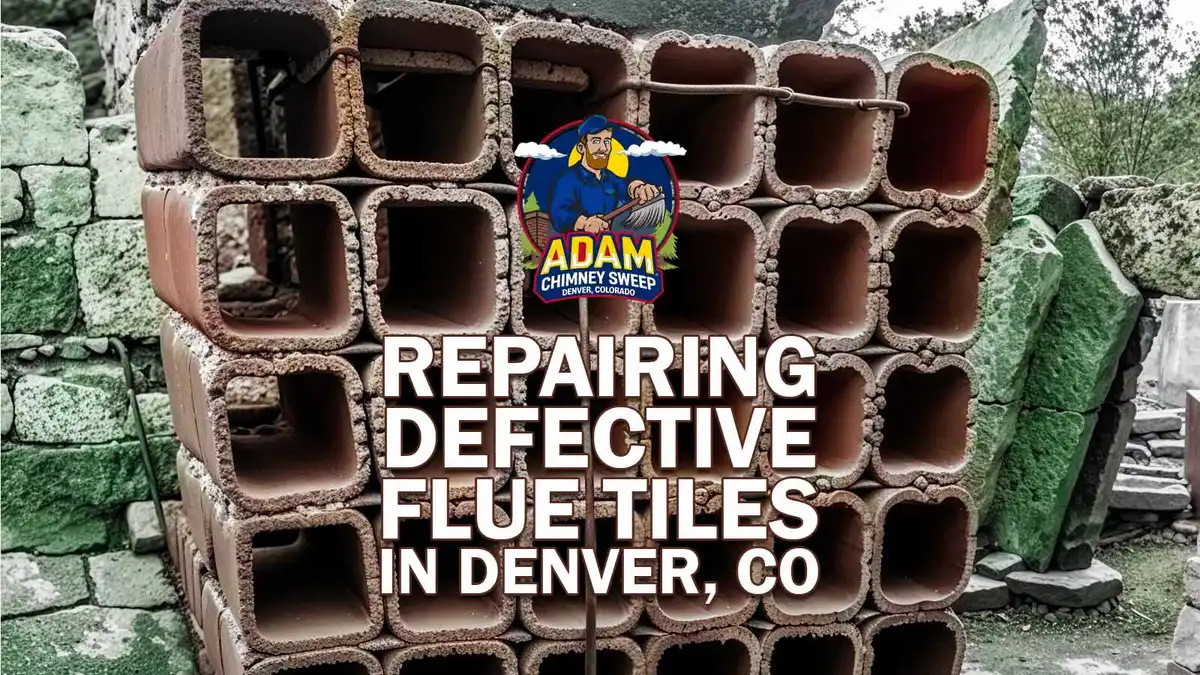
- Open the flue. If the clay tile is already cracked or spalled, breaking out the old tile creates room for a properly insulated liner. Our guide on repairing defective flue tiles covers when removal makes sense.
- Step down to a quarter inch wrap. Half the thickness is not half the benefit in every case, and it beats bare metal where a thicker wrap will not pass.
- Recheck the liner size. Oversizing is a common error. A correctly sized liner for the actual load may free up the room the insulation needs, and it improves velocity too.
- Change the venting strategy. If a mid efficiency furnace is the problem, the honest answer is sometimes to vent that appliance another way and leave the masonry chimney to the fireplace.
What we will not do is install a bare liner in a large cold chase and let the homeowner find out in year three. If a chimney truly cannot take insulation, that is a conversation to have before the work.
How To Tell Whether Your Existing Liner Was Insulated
Plenty of homeowners inherit a liner with the house and no paperwork. You can usually get the answer without tearing anything apart.
- Look down from the top. At the crown, an insulated liner shows a thicker collar where the wrap and mesh terminate under the top plate. A bare liner shows plain stainless and an open gap.
- Check the top plate. Insulated installs use a plate sized to the wrapped diameter with the annulus sealed. Bare installs often leave a wide open void underneath.
- Look for the tag. UL 1777 listed systems carry a label, often near the top or at the appliance connection, and the instructions state whether the clearance rating depends on insulation.
- Read the deposits. A wood flue with glaze in the top third and little at the bottom is telling you the upper run is cold. That points hard at a missing wrap.
- Have it scanned. A camera run shows the annulus, the condition of the wrap at terminations, and whether the liner is corroding. That is the definitive answer, and a normal part of a chimney inspection.
Symptoms worth checking sooner rather than later:
- Smoke pushing into the room on cold starts that used to draft fine
- A tarry smell at the fireplace opening in humid weather
- White chalky staining on the chimney above the roofline
- Rust colored streaking at the base of the flue or on the furnace connector
- Mortar joints washed out on the chimney and nowhere else on the house
What A Correct Insulated Reline Looks Like On The Job
The sequence matters, because most insulation failures are installation failures rather than material failures.
- Inspect and camera scan the flue, confirming actual internal dimensions instead of guessing from the outside.
- Size the liner to the appliance using the manufacturer's venting tables, not to whatever fills the hole.
- Clear the chase of debris, mortar drops, and broken tile shoulders that would tear the wrap on the way down.
- Wrap the liner on the ground, seam the blanket with rated foil tape, sleeve it in stainless mesh, and band the mesh at intervals.
- Lower the assembly with a controlled pull and a nose cone, never forcing it past an obstruction.
- Terminate with a plate sized to the wrapped liner, seal the annulus, and finish with a cap that keeps rain and animals out.
- Connect at the appliance to spec, then verify draft on a live burn before anyone leaves.
That last step is not a formality. A liner that measures right and drafts poorly is telling you something, and it is cheaper to learn that while the truck is in the driveway. Our chimney lining service page covers what we install and how we size it, and if the masonry needs attention first, that falls under chimney repair.
Frequently Asked Questions
Does every stainless liner need insulation?
Not literally every one, but most benefit and many require it to keep their listing. It matters least on a short run inside a heated interior chimney with a snug chase, and most on exterior chimneys, tall runs, oversized chases, and gas appliances.
Can insulation be added to a liner that is already installed?
Not by wrapping it, because the wrap has to go on before the liner goes down. The realistic options are pulling the liner and reinstalling it wrapped, or pouring a vermiculite and cement mix into the annulus around it. Which one makes sense depends on the chase and the liner condition.
Will insulation make my fireplace hotter in the room?
No. It keeps heat inside the flue and sends it out the top, which is what you want for draft and for keeping the flue dry. Room heat is a separate problem, solved by the appliance and the firebox rather than the chimney.
Does an insulated liner reduce how often the chimney needs sweeping?
It usually reduces how much you find, not whether you need the visit. Annual service is still the standard because the inspection matters as much as the brushing. What insulation changes is the deposit itself, from hard glaze toward light flake.
My installer said the air gap acts as insulation. Is that true?
Still air has some insulating value, but the gap in a masonry chimney is not still. It convects, and it connects to a large mass of cold brick. Treat the claim as a reason to ask which UL 1777 listing the liner carries and what clearance it grants bare.
Is liner insulation required by code in Colorado?
Colorado jurisdictions adopt the model codes and inspect against the manufacturer's listed installation instructions. If those instructions require insulation for the clearance being relied on, then it is required for that install. There is no single statewide rule saying every liner must be wrapped, which is why the listing paperwork is the thing to check.
What happens if I skip it now and add it later?
You pay for the liner work twice, and possibly for masonry repair in between. Pulling and reinstalling a liner is most of the labor of the original job, so whatever you saved by skipping the wrap disappears the first time someone opens the top.
Get A Straight Answer About Your Flue
If you are collecting quotes for a reline, ask every bidder one question: is the liner insulated, and what clearance does its listing give you without it. The answers sort the bids faster than the prices do. If you already have a liner and do not know what is behind the top plate, a camera scan settles it in one visit.
We are a family crew working Aurora, Denver, and the Front Range, and we will tell you plainly whether your chimney has room for a proper insulated liner. Call Adam Chimney Sweep at (720) 207-9232 to schedule an inspection, or look through our pricing page to see how we structure the work before you call.