If your furnace and water heater both vent into the chimney, that chimney is not decoration. It is a working exhaust system, and it has to be sized for the appliances hanging off it. A furnace chimney liner that is too large does as much damage as one that is too small, and in Denver we see the oversized version constantly.
Here is the short version. Gas exhaust carries a lot of water vapor, and it stays a vapor only while it is hot. In a flue too big for the appliance, exhaust slows, gives up its heat to cold masonry, and condenses on the way up. That condensate is acidic, and it eats mortar, clay tile, and sheet metal from the inside.
The usual path here is a furnace upgrade. A new high efficiency furnace vents out a sidewall through plastic pipe and leaves the water heater alone on a flue built for two appliances. That is the orphaned water heater problem, and the chimney can start failing within a season.
Quick answers on furnace and water heater chimney venting
Four things get settled on almost every call about this.
- Can a furnace and water heater share one flue? Yes, if both are natural draft appliances and the flue is sized for the combined input and for each appliance alone.
- Is a bigger flue safer? No. An oversized flue cools exhaust below its dew point, producing acidic condensate and weak draft.
- What changes with a high efficiency furnace? It vents out a wall, leaving the water heater orphaned on a flue far too big for it.
- What is the fix? A listed stainless liner sized to the remaining appliance, insulated where the chimney runs cold.
The rest of this guide covers the sizing, the damage, and when a liner is the fix.
What a furnace chimney liner actually does
A liner has three jobs. It contains exhaust so combustion products cannot leak through cracked masonry into the house. It shields brick and mortar from heat and moisture. And it gives the gases a smooth, correctly sized path so they stay hot enough to keep rising on their own.
That last job gets underestimated. Natural draft appliances have no fan pushing exhaust out. They run on buoyancy, on a pressure difference measured in hundredths of an inch of water column. Cool the exhaust and that difference collapses.
The orphaned water heater problem after a high efficiency furnace upgrade
Picture a typical postwar Denver ranch. An 80,000 BTU natural draft furnace and a 40 gallon gas water heater, both tied into one clay tile flue at the center of the house. That flue was sized for the pair, and it worked because the furnace ran long cycles that kept the chimney warm.
The furnace fails in January. The replacement is a condensing unit venting through PVC out the side wall, exactly as it should, and nobody touches the chimney. Now the water heater is alone, dumping a small volume of exhaust into a cold flue with many times the cross section it needs. It never warms the tile, so it condenses and runs back down.
Table 1. What happens inside a masonry flue as the appliance load changes
| Appliance setup | What the flue sees | Typical result | What it needs |
|---|---|---|---|
| Furnace plus water heater, original sizing | Frequent hot cycles, flue stays warm | Stable, tile wears over decades | Inspection, tile repair as it ages |
| High efficiency furnace in, heater orphaned | Small exhaust volume, large cold flue | Condensation, spalling, rusted connector | Liner sized to the water heater |
| Both appliances now sealed or direct vent | No appliance load at all | Moisture and animal entry | Proper abandonment, cap, crown work |
| Water heater alone, exterior wall chimney | Cold masonry on three sides | Heavy condensation year round | Insulated liner, sealed top plate |
We see it every spring, when ice comes off the roof and white staining shows on the brick. That is efflorescence, salts pulled from the masonry by moisture that started as exhaust.
How liner sizing works, and why bigger is never better
Vent sizing is not guesswork and it is not matching the old pipe. The national fuel gas code venting tables take appliance input, total vent height, connector length and rise, vent type, and whether the appliance is alone or common vented. Out comes a permitted range with a minimum and a maximum. Both ends matter.
A single 40,000 BTU water heater commonly lands on a three inch or four inch liner. The clay flue it shared with a furnace might be seven by eleven inches of open area, several times the cross section that heater can warm. A sized liner is not a downgrade. It is the only way to move exhaust fast enough to carry its moisture out the top.
Altitude thins the draft in Colorado
Denver sits around a mile up. Thinner air means fewer oxygen molecules per cubic foot, which is why gas appliances get derated and re-orificed for high altitude. It also means less buoyancy, since draft depends on the density difference between flue gas and outside air. A system that limps along at sea level fails here. The tables carry altitude corrections, and skipping them is a common shortcut we find during a chimney inspection in Denver.
Height, offsets, and the cold exterior chimney
Two chimneys with identical flue sizes can behave completely differently. A flue up the middle of the house sits in conditioned space and stays warm. A flue on an exterior north wall, common on postwar builds and nearly every 1900s brick home here, sheds heat on three sides all winter. Offsets add resistance, long horizontal connector runs shed heat before exhaust reaches the chimney, and the termination still has to satisfy the 3-2-10 rule. For background, see our overview of how chimneys work in Colorado homes.
B-vent, masonry flue, direct vent, and stainless liner compared
Homeowners hear these terms during a furnace quote and reasonably assume they are interchangeable. They are not, and mixing them up is where the expensive mistakes start.
Table 2. Gas venting methods, what they suit, and the Colorado considerations
| Venting method | Strengths | Weak points | Colorado notes |
|---|---|---|---|
| Bare masonry flue, clay tile | Durable when warm and sized right | Oversized for one modern appliance | Freeze thaw widens tile cracks fast |
| Type B double wall vent | Air gap keeps gas warm, light to install | Never for solid fuel or oil | Common in postwar framed chases |
| Stainless liner in masonry | Right size, isolates the masonry | Needs access and correct alloy | Insulation earns its keep outside |
| Direct vent, sealed combustion | Outside air, ignores house pressure | Termination rules, condensate drain | Ice can block a low terminal |
| Power vent water heater | Sidewall exit, frees the chimney | Needs electrical, makes noise | Option when masonry is past saving |
Alloy matters as much as diameter. Category I natural draft appliances use one class of stainless, while condensing appliances producing continuous acidic condensate require a listed special gas vent material. Aluminum flexible liner is permitted for some draft hood equipped gas appliances only, never for oil or solid fuel. Sorting that out is routine on a chimney lining project in Denver.
Acid condensate damage and what it looks like from the inside
Run a camera down a flue orphaned a few years and the damage has a signature. Clay tile loses its glaze and goes chalky. Mortar joints between tiles wash out until you can see through into the surrounding brick. At the base, a white crust forms and the cleanout collects grit that used to be structure.
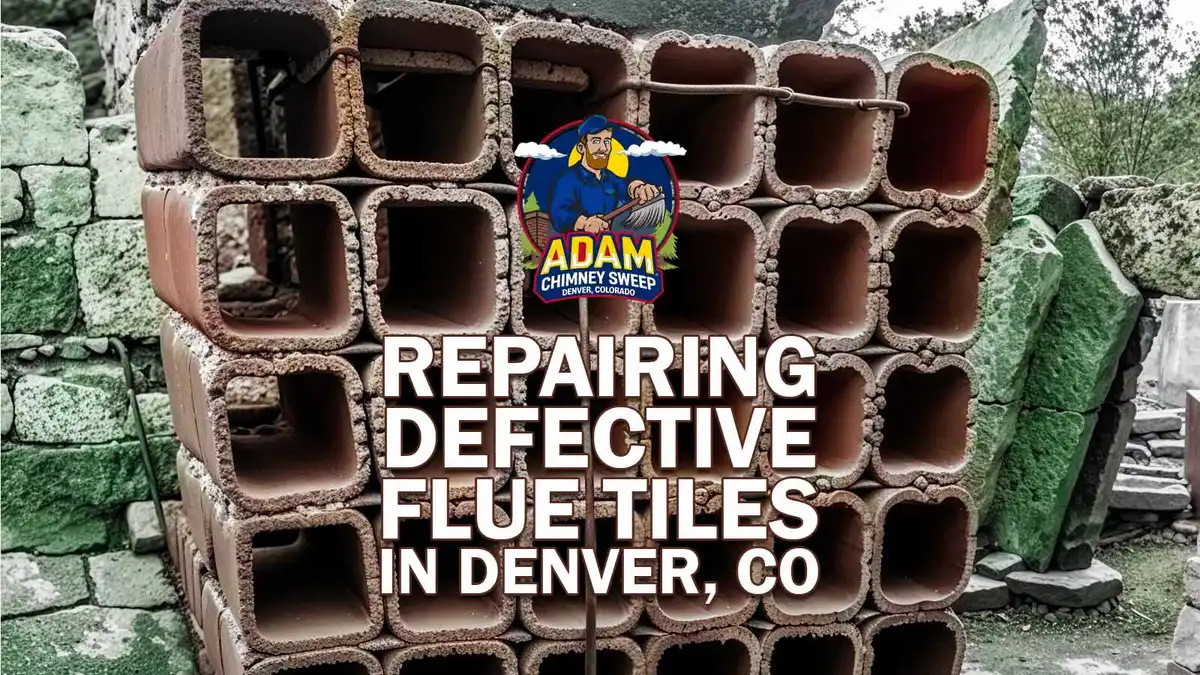
On the appliance end, the water heater rusts around the draft hood and the connector perforates at its low points. Outside, brick faces spall as trapped moisture freezes. Once tiles crack or drop out, combustion gas has a path into wall cavities, which is a safety problem rather than a maintenance item. Our page on repairing defective flue tiles covers that work. Fix the moisture source first, or you pay for the masonry twice.
Signs of a venting problem you can spot from the basement
You do not need instruments for most of these. Stand by the water heater with a flashlight on a cold morning, right after it fires, and look at the draft hood, the connector, and the base of the chimney. These are the gas venting symptoms specifically, not the broader signs you need chimney service.
Table 3. Symptom, likely cause, and the usual fix for gas venting problems
| What you notice | Likely cause | Usual fix |
|---|---|---|
| Rust ring on the heater or flaking connector | Condensate forming in an oversized flue | Liner sized for that appliance |
| White chalky staining on exterior brick | Efflorescence from saturated masonry | Correct venting, then repair mortar |
| Grit or tile chips in the cleanout | Tile and joint deterioration in the flue | Camera inspection, then reline |
| Humid air or exhaust smell at the draft hood | Spillage, exhaust is not going up | Stop using the appliance, diagnose now |
| Carbon monoxide alarm in the mechanical room | Combustion products entering the house | Leave, then call the utility |
Two of those deserve a stronger word. A carbon monoxide alarm is not a nuisance device, and an exhaust smell at a draft hood is not normal. Both mean get people out and shut the appliance off. The rest are scheduling matters, but none of them improve on their own.
Why this shows up every furnace replacement season in Denver
The Front Range housing stock sets this up perfectly. Homes built between the 1920s and the 1970s have center chimneys and clay tile flues sized for two natural draft appliances. Those furnaces are at the end of their run, and the replacement is almost always a condensing unit.
The furnace swap is an HVAC job. The chimney is a masonry job. Different trades, and the handoff is where things fall through. Replacements also cluster in the coldest months, when the chimney is coldest and condensation is worst, so by the time staining shows in April the flue has been condensing all winter.
Backdrafting, spillage, and carbon monoxide in tight houses
A natural draft water heater competes with everything in the house that moves air. Range hoods, bath fans, dryers, and radon fans all pull air out. If the house is tight and makeup air is limited, the easiest path for replacement air is down the chimney, reversing the flow the water heater depends on.
The result is spillage: exhaust rolling out of the draft hood into the mechanical room instead of going up. It is worse in shoulder season, worse when the flue is oversized, worse with a range hood running. A technician checks it by running the house at worst case depressurization and testing at the draft hood, which takes two minutes and catches a lot.
If you smell exhaust or an alarm sounds, leave and call the fire department or gas utility from outside. Once that is handled, call us at (720) 207-9232 and we will look at the venting side.
When a sized stainless liner is the right fix
Not every venting complaint ends in a reline. Sometimes a connector is disconnected, and sometimes a nest blocks the flue, which is animal removal rather than a reline. But when the flue is genuinely oversized for the remaining appliance, and especially on an exterior wall chimney, a sized liner is the durable answer.
Here is how we size one instead of guessing.
- Read the rating plate for actual input, and note whether the appliance is draft hood equipped or fan assisted.
- Measure vent height from the draft hood outlet to the termination, plus connector length and rise.
- Confirm whether another appliance shares the flue, and if so run the common vent and individual checks.
- Apply the high altitude correction rather than sea level values.
- Camera the flue for tile damage, offsets, or debris that would restrict the liner path.
- Choose the diameter that sits inside the permitted range, then match alloy and insulation to the exposure.
If cost is the real question, our breakdown of the most affordable way to reline a chimney explains what drives the number, and figures for our own work live on the chimney and fireplace pricing page.
What the reline itself involves
On a straightforward water heater flue we are usually in and out in a day, and most of the work happens on the roof and at the appliance.
- Camera the flue top to bottom and confirm appliance input and vent height.
- Sweep out debris, loose mortar, and nesting material so the liner has a clean path.
- Drop the sized stainless liner from the top, adding insulation where the chimney is exposed.
- Secure it with a top plate and listed cap, and seal the crown penetration.
- Connect the appliance with a properly pitched connector and seal at the thimble.
- Fire the appliance, verify draft, and test for spillage before leaving.
Masonry repairs, if condensate already did damage, are usually a separate visit and often a separate season, since mortar work goes badly in freezing weather. That falls under chimney repair in Denver, and we will tell you whether it is urgent or can wait for spring.
Code and inspection touchpoints in Colorado
Two standards carry the weight. NFPA 211 covers chimneys and liner condition, and the national fuel gas code holds the venting tables. The piece specific to this article is the appliance change trigger: removing an appliance from a shared flue changes the venting system, so the remaining appliance has to be reevaluated against the tables, whether the furnace came out last week or six years ago. Scope matters too, since a visual look is a different animal from an interior camera scan. Our explanation of the three chimney inspection levels lays out which fits which, and Colorado chimney laws and regulations covers permits and what code expects.
Questions to ask before the new furnace goes in
The cheapest time to solve this is before the HVAC crew shows up. If you are collecting furnace quotes right now, work these into the conversation.
- Is the new furnace condensing, and will it vent through a sidewall instead of the chimney?
- If so, what happens to the water heater that was sharing that flue?
- Has anyone run the venting tables for the water heater alone, with our altitude applied?
- Does the quote include a liner, or is that separate scope I need to arrange?
- Will someone camera the existing flue before the furnace is disconnected?
- Who tests the water heater for spillage after the new furnace is commissioned?
Vague answers do not mean a bad contractor, usually just that the chimney side is not their trade. Handle it separately and you avoid the whole cascade. It is also the natural moment to deal with the cap and the crown.
Frequently Asked Questions
Can my furnace and water heater legally share one chimney flue?
Yes, when both are natural draft appliances and the flue is sized for common venting, with both running together and each running alone. The problem is rarely the sharing. It is that the flue was sized for a pairing that no longer exists.
What is an orphaned water heater?
A water heater left as the only appliance on a flue sized for it plus a furnace. The furnace gets replaced with a high efficiency model venting out a wall, and the heater cannot warm that much flue, so exhaust condenses inside it.
How do I know if my furnace chimney liner is the wrong size?
The reliable answer comes from the venting tables using appliance input, vent height, connector geometry, and an altitude correction, not from eyeballing the pipe. Visible clues are rust on the water heater, a corroded connector, and grit in the cleanout.
Is aluminum liner acceptable for a gas water heater?
Aluminum flexible liner is listed for some draft hood equipped gas appliances and can be acceptable in the right application. It is never acceptable for oil or solid fuel, and it is the wrong choice where condensation is already a problem.
Does a liner need insulation in Colorado?
On an interior chimney with a short run, often not. On an exterior wall chimney, which describes a large share of Denver homes, insulation keeps exhaust above its condensing temperature all the way to the top and improves draft.
Can I abandon the chimney and switch to a power vent water heater?
Sometimes that is the better call, especially if the masonry is badly deteriorated or there is no practical liner path. It needs a nearby electrical circuit and makes some noise. The abandoned flue still has to be sealed and capped properly.
How often should this system be inspected?
The general recommendation across the trade is annually for any chimney serving an appliance, plus any time an appliance is added, removed, or replaced. Gas venting fails quietly, so the annual look does real work even when nothing seems wrong.
Get the venting looked at before the first cold snap
If you replaced a furnace in the last few years and nobody mentioned the water heater, the chimney deserves twenty minutes of attention. We will camera the flue, run the sizing for the appliance actually connected, check for spillage, and tell you whether you need a liner now, next season, or not at all. It pairs well with a regular chimney sweep and cleaning.
Late summer and early fall are the right window, while the masonry is dry and repairs can finish before freezing weather makes mortar unworkable. Call the shop at (720) 207-9232 or use the contact page, and we will come out from Aurora to anywhere on the Front Range.