A chimney inspection report is the written record of what a technician found inside and outside your chimney, with photos to prove it, a reference to the standard each finding is measured against, and a recommendation for each one ranked by urgency. If you can read those four pieces, you can read the whole document and decide what to fix now, what to plan for, and what to watch.
Most Front Range homeowners see one of these once a year at best, and it usually arrives as a PDF full of unfamiliar words. This guide walks through each section of a good report, translates the common findings into plain language, and explains the three priority tiers we use so you know which items mean stop burning tonight and which can wait for spring.
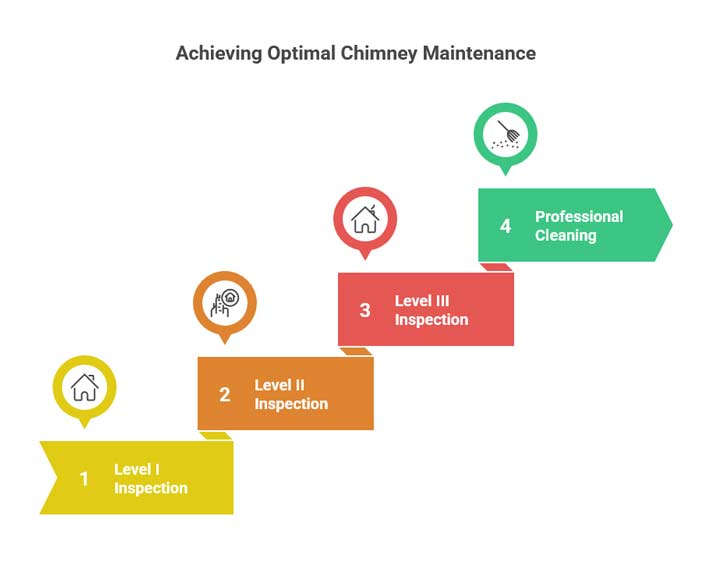
This is not a guide to the inspection levels themselves. For what a Level 1, 2 or 3 includes and when each is required, read our chimney inspection levels guide. This article picks up after the truck has left and you are holding the paperwork.
The Anatomy of a Good Chimney Inspection Report
A report worth keeping has the same bones no matter who wrote it. If one of these pieces is missing, that part of the work was probably not done or not documented, and either way you have no record to lean on later.
Table 1. The sections a complete chimney inspection report should contain and the question to ask if one is missing.
| Report section | What it should contain | Ask this if it is missing |
|---|---|---|
| Appliance and flue identification | Address, date, technician, the appliance (masonry fireplace, factory-built unit, insert, gas logs, furnace) and which flue it vents into | Which flue did you inspect, and are there others in this stack? |
| Level performed and why | Level 1, 2 or 3 and the reason: annual check, sale, after a chimney fire, new appliance | What would a higher level have seen? |
| Access and limitations | What could not be seen: snow on the roof, a sealed damper, a flue too tight for the camera | What does that leave unknown? |
| Photos with captions | Dated images of each condition labeled by location | Can you send me the photo for this finding? |
| Conditions found | Each observation stated as a fact, with a measurement where it matters | How big is it? |
| Standard reference | The NFPA 211 section, manufacturer instruction or local code the condition fails | Which standard says this is a problem? |
| Recommendation and priority | The repair that resolves it and how urgent it is, in words you can act on | Can I use the fireplace tonight? |
Two of these matter more in Colorado than elsewhere. The first is flue identification. Many of Denver's early 1900s brick homes have two or three flues in one stack: one for the fireplace, one for an old coal furnace that now vents a gas water heater. A report that says "the chimney" without naming the flue is ambiguous, and ambiguity is where expensive misunderstandings start. The same crack in a liner is also a different problem for wood, gas and furnace flues, so the report must name the fuel.
The second is limitations. Front Range roofs carry snow or ice for much of the year, and a technician who will not walk a frosted roof is making the right call. But "roof not accessed" means the crown, cap and flashing were not examined that day. A January report that lists no limitations at all should make you a little suspicious.
On the standard column: most reports cite NFPA 211, the National Fire Protection Association standard for chimneys, fireplaces and vents, along with manufacturer instructions for factory-built units and gas appliances. A finding tied to a published standard is not the technician's preference. Suggestions like a top-sealing damper or glass doors are advice, and a good report labels them as recommendations rather than deficiencies.
Translating Common Findings Into Plain Language
These are the findings we write most often on Denver metro reports, what each means for your house, and the urgency we would typically assign. The urgency column is a starting point, not a verdict. Extent, fuel type and season all move an item up or down.
Table 2. Common chimney inspection findings, what they mean in plain language, and the urgency we typically assign along the Front Range.
| Finding as written | What it means for your house | Typical urgency |
|---|---|---|
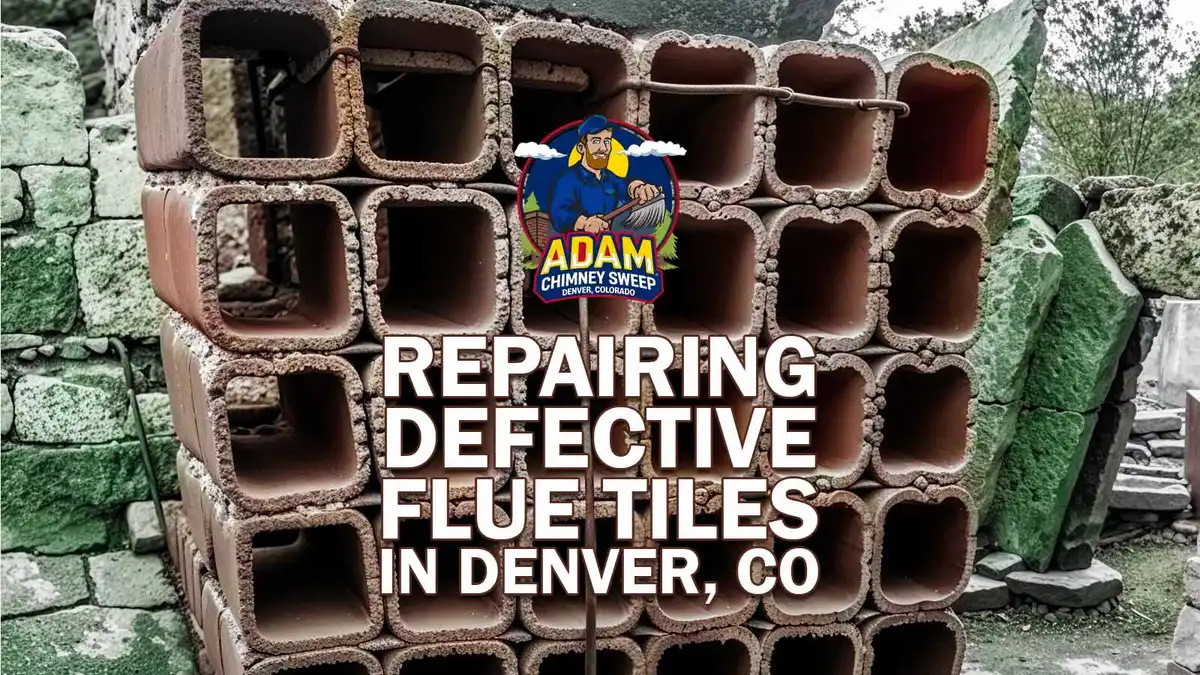
| Cracked or broken flue tiles | The clay liner sections that carry smoke have split. Heat and gases can reach the brick and any framing behind it. Freeze-thaw movement and past chimney fires are the usual causes. | Stop using until repaired or relined |
| Missing or eroded mortar joints in the liner | The mortar between tiles has washed out or burned away, leaving gaps. Same risk as a crack, harder to spot without a camera. | Stop using for wood; fix before next season for some gas flues |
| Stage three (glazed) creosote | Creosote has baked into a hard, shiny tar layer a brush will not remove. It is the fuel a chimney fire burns. | Stop using until removed and the flue is re-examined |
| Crown cracks | The concrete cap on top of the masonry has split. Water gets in, freezes, and widens the crack every winter. | Fix before next season; monitor true hairlines |
| Spalled brick | Brick faces are flaking off because water soaked in and froze. Common on south and west faces where daily thaw is strongest. | Fix before next season |
| Missing or damaged cap | Nothing keeps rain, hail, birds and wind-blown embers out of the flue. | Fix before next season; sooner in wildfire season |
| Flashing failure | The metal seal where chimney meets roof has lifted or rusted. Water follows it into the attic. | Fix before next season; sooner if staining shows inside |
| Damper issues | The damper is stuck, warped or missing, so it will not open fully (smoke) or will not close (heat loss). | Monitor or fix before next season; stop using if it partly blocks the flue |
| Clearance to combustibles | Framing, sheathing or a mantel sits closer to the flue or firebox than the standard allows. This is how fires spread into walls. | Stop using until corrected |
How each of these findings plays out at a real estate closing is a different question, covered in our guide to chimney inspections when buying or selling a home. If cracked tiles or open joints show up on your report, read our explanation of repairing defective flue tiles and our chimney relining service page, which covers the options for restoring a continuous liner.
The Three Priority Tiers We Use
Different companies use different labels: red, yellow and green, or "immediate," "recommended" and "advisory." We use three plain sentences because they answer the question homeowners actually ask: what do I do about this?
Tier 1: Stop using the fireplace
Any condition that lets heat, flame or exhaust reach a place it should not go, or that blocks the path it should take. Cracked tiles, open liner joints, glazed creosote, clearance violations, a flue packed with nesting material. For gas and furnace flues it also covers anything that could push carbon monoxide back into the house. Tier 1 does not mean the chimney is condemned. It means no fire until the item is fixed and re-checked.
Tier 2: Fix before next season
Almost all water and wear. Crown cracks, spalling, failed flashing, a missing cap, a rusted damper. None will hurt you tonight, and all get worse with every freeze-thaw cycle, of which the Front Range delivers dozens between October and April. A hairline crown crack in September is often a missing chunk by spring. Fixing Tier 2 items on schedule prevents the Tier 1 items of a few years later.
Tier 3: Monitor
Stable, cosmetic or too early to act on. A little efflorescence, fine crazing on the crown, light rust on a cap. Keep the photo, compare it next year, and act when it changes. A good report tells you what change would move the item up a tier.
The quickest way to tell the tiers apart is one question: does the condition touch the path that heat, smoke or gas takes, or a clearance to wood? If yes, it is Tier 1 no matter how small. If no, the only question is whether it is getting worse (Tier 2) or holding steady (Tier 3). Here is how we assign a tier on site:
- Identify the system: wood, gas, pellet, or a furnace flue. The same finding carries different weight for each.
- Ask whether the condition touches the flue path or a clearance. If yes, it starts at Tier 1.
- Look at extent. One hairline crack in one tile is not a run of displaced tiles.
- Consider the season. A missing cap in June is Tier 2. The same cap during a red flag wind warning gets fixed this week.
- Write the tier and the reason side by side. A tier with no reason is just an opinion.
Why the Photo Is the Evidence
A finding without a photo is a claim; a finding with a photo is a fact you can hand to a second company, an insurance adjuster or a buyer's agent, which is why we photograph everything, including the parts that look fine. Each image should carry a caption saying where it was taken, a date, and for flue camera stills a rough depth, since a cracked tile near the top where weather hits tells a different story from one at the smoke chamber where heat hits. What good documentation looks like, and why it is the strongest signal of an honest company, is covered in our guide on how to choose a chimney company.
Using the Report to Get a Second Quote
A well-written report is the tool that makes a second opinion useful: send the whole document with every photo, ask the second company to answer the same findings line by line, and compare the conditions found and the standard cited before you compare prices. If the facts themselves differ, meaning one company found cracked tiles and the other found none, one inspection was incomplete, and a camera scan you can watch on screen settles it. Our guide on how to choose a chimney company walks through the second opinion process step by step, and our pricing page explains how we structure inspection and repair pricing.
What a Report Does Not Tell You
A report describes the parts of the chimney that were examined, on the day they were examined, at the level performed. That leaves gaps, and a trustworthy report admits them.
A clean Level 1 is not a guarantee about the inside of the flue: it covers what can be seen without tools or a camera, so a hairline crack twelve feet up or an eroded joint behind soot stays hidden, and those are precisely the findings that become Tier 1 items. A Level 2 adds a camera run and photos you can check, which is why we suggest one if the flue has never been scanned or you are buying the house. Which level fits which situation is the subject of our inspection levels guide, and our chimney inspection service page explains how we perform each one.
A report also does not tell you how the fireplace performs, because draft depends on the house, the altitude and the weather, not just the chimney. It does not tell you whether framing behind a finished wall is charred, because that takes a Level 3. And a July hail storm can change the crown, cap and flashing findings in an afternoon.
Finally, a report is not a sweep. If it says the flue has creosote, the flue still has creosote until someone removes it. The report should state whether a chimney sweep was performed that day or only recommended.
Keeping Reports Year Over Year
A single report is a snapshot. A folder of them is a movie. Chimney damage in Colorado is rarely sudden. It is a crown crack that grows an inch a year, a spalled brick count that goes from two to nine. Lay this year's photo next to last year's and you can see whether a Tier 3 item has quietly become a Tier 2.
Keep every report in one place and ask the technician to photograph the same reference points each year: the crown from above, each face of the masonry, the uphill flashing, and a still from the same depth in the flue.
The folder pays off at a sale, when a buyer's inspector handed five years of dated reports has little to argue about, as our guide to chimney inspections when buying or selling a home explains. It also pays off after hail, when a dated photo of an intact crown from three months earlier keeps the adjuster conversation short.
Questions to Ask the Technician Before They Leave
The written report may take a day or two to arrive. These questions get you the important answers on the spot.
- Which flue and appliance did you inspect, and are there others in this stack?
- Is there anything that means I should not burn tonight?
- Will I get every photo you took?
- Which items fail a standard, and which are recommendations?
- What could you not see today, and would a higher level change that?
- If I fix only the urgent items this year, what happens to the rest by spring?
Write the answers down. If the written report does not match what you were told, call before you approve any work. For the repairs that come out of a report, our chimney repair service page describes what each job involves.
Frequently Asked Questions
How long should a chimney inspection report be?
Long enough to hold a photo and a sentence for every part of the chimney that was examined, plus the header, limitations and recommendations. A Level 1 on a single-flue chimney might be a few pages; a Level 2 with camera stills can run a dozen. A one-page checklist with no photos is a receipt, not a report.
Is a verbal report enough?
No. A verbal summary before the technician leaves is a courtesy, but you cannot hand a conversation to a second company, an insurer or a buyer. Insist on a written report with photos, and do not pay for an inspection that does not include one.
What does stage three creosote mean on my report?
The creosote has hardened into a glazed, tar-like layer that a standard brush cannot remove and that burns hot if it ignites. It is a stop-using finding until it is removed by a method suited to glaze and the flue is re-examined for damage underneath. It usually points to wet wood, smoldering fires or a flue that runs too cool.
My report says no deficiencies were observed, but I still get smoke in the room. Why?
A report describes the condition of the chimney, not the performance of the fireplace. A sound flue can still draft poorly because of house air pressure, altitude, chimney height or wind. Draft problems need a different kind of visit than a standard inspection.
Can I use a chimney inspection report for an insurance claim?
Often, yes, and it is far more persuasive with dated photos. Adjusters want the condition, the date, and ideally a prior report showing the chimney before the storm or fire.
What if two companies give me different findings?
Separate facts from opinions. Different repairs or tiers for the same conditions is a normal professional disagreement. If one found a cracked liner and the other reported the same flue as sound, one inspection was incomplete, and a camera scan you watch in real time is the cheapest way to settle it.
Your Next Step: Get a Report You Can Actually Read
If you have a report in hand and something in it does not make sense, send it to us and we will tell you what the findings mean and which tier we would put them in. If you have never had a report with photos, book an inspection and ask for a Level 2 with camera stills.
Call Adam Chimney Sweep at (720) 207-9232. Every inspection we perform in Aurora, Denver and the Front Range comes with a written report, captioned photos and a priority for every finding so you know exactly what to do next.