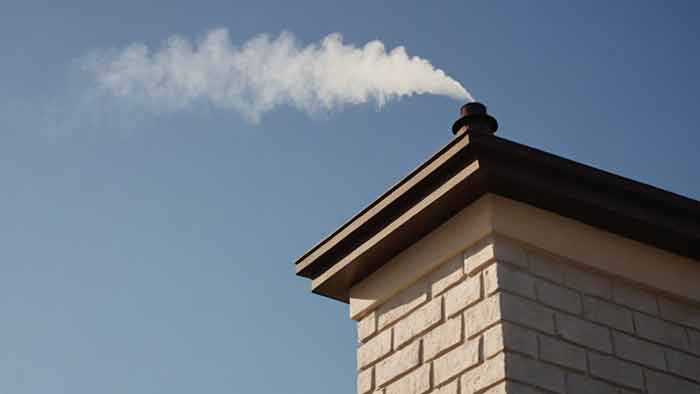
Spalling is when the face of a brick pops, flakes or crumbles off and leaves a raw, sandy crater behind. It is not dirt and it does not scrub out. Water soaked into the brick, froze, expanded, and pushed the hard outer face away from the softer body behind it. That is the whole mechanism.
How worried you should be about a spalling brick chimney comes down to three things: how deep the loss goes, how many brick are involved, and whether the crown and cap above still keep water out. A few shallow flakes on a sound stack is a watch item. A dozen brick with their faces gone, joints raked out, and a cracked crown overhead is a rebuild conversation.
One thing homeowners rarely hear until we are on the roof with them: you cannot fix spalling by troweling mortar over the damaged faces. That patch traps water behind it. Here is how we sort a few brick from a rebuild.
What Is Actually Happening Inside a Spalling Brick
A clay brick is not uniform. Out of the kiln it carries a denser, harder outer layer masons call the fire skin, over a more porous body. That skin is the brick's raincoat, and it is why good brick sits in weather for a century.
Water gets past it through the softest path available: eroded joints, hairline cracks, the unprotected top course where the crown failed, or the sawn end of a brick cut on site. Once inside the porous body, water expands as it freezes, roughly nine percent by volume, with nowhere to go. Pressure builds behind the fire skin until the clay lets go.
Then it compounds. The exposed body soaks up water far faster than the fired face did, so the next quarter inch goes in a fraction of the time.
Brick for freezing climates is graded for it. Under ASTM C216, the standard for facing brick, Grade SW is the severe weathering grade and Grade MW is the moderate one. Chimneys topped out cheaply often got whatever was on the yard.
Why the South and West Faces of a Denver Chimney Go First
Walk around almost any spalling chimney on the Front Range and the damage sits on two sides. No coincidence.
- Sun drives the melt. On a clear January afternoon the south and west faces of a dark chimney can climb above freezing at the surface while the air stays in the twenties. Snow melts, water soaks in, the sun drops, it refreezes. The north face may stay frozen all day.
- Weather arrives from the west. Front Range wind and rain come out of the west and northwest, and wind driven water gets pushed into masonry rather than falling on it.
- Monsoon rain hits fast. July and August storms dump a lot of water in minutes, and dry masonry drinks it.
- Altitude turns up the ultraviolet. A mile up, less atmosphere filters the sunlight, so repellents and coatings break down faster than the label suggests.
So when a homeowner says the chimney looks fine, we ask which side they looked at. From the north or east, a badly spalled stack can look untouched.
Spalling, Efflorescence, Soot or Honest Weathering
Four different things get called "the brick is going bad," and only one is urgent. You can sort them with a good look and a fingernail test.
Table 1. Telling spalling apart from efflorescence, staining, normal aging and joint erosion.
| Condition | What you see | Feel test | Where it shows | Verdict |
|---|---|---|---|---|
| Spalling | Missing face, craters, chips in the gutter, raw lighter color | Sandy, dusts off on your hand | Sun faces, top courses | Progressive, needs masonry work |
| Efflorescence | White powdery bloom or streaks | Brushes off, brick underneath hard | Wherever water evaporates out | Water is getting in, brick sound |
| Soot and dirt | Dark gray film near the flue | Smudges, face still there | Top courses, under the cap | Cosmetic |
| Normal weathering | Faded color, softened edges, even on all sides | Hard, nothing loose | Uniform, over decades | Age, no action |
| Joint erosion | Recessed joints, sand dropping out | Mortar crumbles, faces intact | Sun faces first | Repoint before it becomes spalling |
Sound faces with failing joints means you caught it early, and you are in tuckpointing and repointing territory. Once the faces are gone, repointing alone will not save it.
How Many Freeze Thaw Cycles the Front Range Delivers
People assume the coldest climates destroy masonry fastest. They do not. Damage tracks how many times water inside the brick crosses the freezing line in both directions. A place that drops to twenty below and stays there six weeks runs one long cycle. Denver crosses that line again and again, sometimes twice in a day.
Table 2. Approximate freeze thaw exposure by climate type. Rounded generalizations for comparison, not measurements.
| Climate | Approximate days per year the air crosses freezing | Stays frozen for | Effect on brick |
|---|---|---|---|
| Denver metro and Front Range | 120 to 160 | Hours to a day, sun thaws it | Severe, high cycle count plus sun driven melt |
| Upper Midwest | 60 to 100, inside a longer cold season | Weeks at a time | Real, but it stays frozen instead of cycling |
| Pacific Northwest lowlands | 20 to 40 | Short | Wet, few freeze events, erosion not spalling |
| Desert Southwest | Under 20 | Hours | Minimal freeze damage |
That is why we get calls in March from people who swear the chimney was fine in November. Four months of melt and refreeze takes a stack from hairline cracks to open craters.
The Four Accelerants We See Over and Over
Spalling needs water. Each of these lets water reach brick that should have stayed dry.
1. A Cracked, Flat or Undersized Crown
On most spalling stacks we climb, the crown is a thin skim of mortar laid flat, cracked and flush with the brick, so every drop off the top soaks straight into the upper courses. Spalling concentrated in the top three or four courses points here before anything else. How a crown should be built, and how it differs from the cap, is covered on our chimney crown repair page and in the cap versus crown guide.
2. A Missing or Damaged Cap
With no cap over the flue, rain and snowmelt soak the liner and the interior masonry and work outward, which is how a stack ends up shedding faces while its exterior joints still look tight. That inside out pattern is the tell, and it is why we look up the flue before blaming the weather. Sizing, material and hail resistant screen are covered on our chimney cap repair and installation page.
3. Hard Portland Mortar on Soft Brick
Repoint a soft, locally fired chimney with a hard portland heavy mix and the joint becomes stronger and less permeable than the brick, so water leaves through the face instead and every freeze cycle is taken out on the brick. On Denver stacks built before the 1930s this is the most common reason a wall starts shedding faces. Mortar types, strength matching and how to read an old mix are covered in the historic Denver chimney guide.
4. A Previous Seal With a Film Forming Product
Masonry has to breathe. A glossy waterproofer, masonry paint or acrylic sealer forms a film that blocks water going in and vapor coming out. Water still enters from the top and the joints, and now it is trapped. It freezes behind the film and takes the face off in sheets. If the brick has a shine to it, that history matters. The right product is a breathable siloxane or silane repellent that leaves no film.
Why Spalling Is Progressive and Never Stops on Its Own
There is a feedback loop here, and it runs one direction only.
- The face comes off, exposing the porous interior.
- That interior absorbs more water than the fired face did.
- More water means more ice, more pressure and deeper loss next freeze.
- Deeper loss opens the joints alongside, so neighboring brick loosen.
Nothing there self corrects. A chimney that lost a few faces last winter loses more this winter, and the brick that already failed goes deeper.
What Ignored Spalling Costs You Beyond the Brick
Homeowners file spalling under cosmetics too long. Here is what is at stake.
- Structural loss. Brick that lose half their depth leave a thinner wall than designed. Across several courses that is a stack that can lean or shed brick onto the roof.
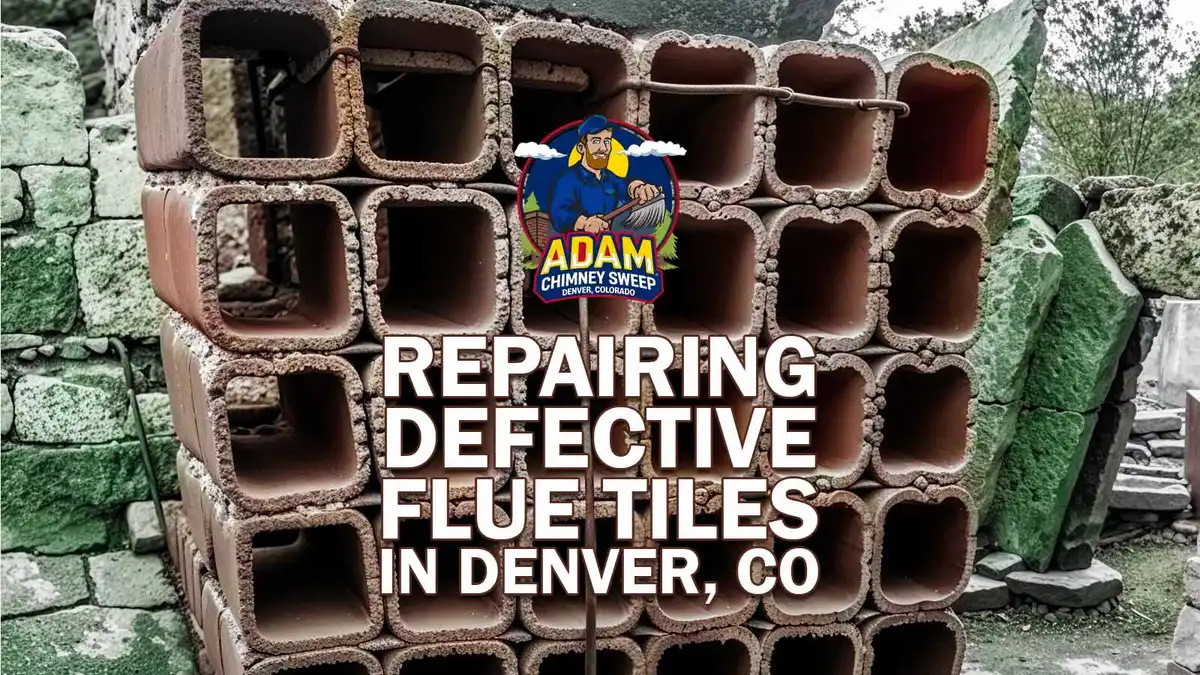
- Water at the liner. Saturated masonry puts moisture against clay flue tiles. Add acidic condensate and tiles crack, joints open, and a masonry repair turns into a relining job.
- Water at the framing. Water traveling through the chimney at the roofline reaches rafters, sheathing and drywall. Stained ceilings near a fireplace often trace back to spalled brick, as our guide on why chimneys leak explains.
- Insurance friction. Carriers treat sudden damage differently from gradual decay. A hail cracked crown may be covered where years of freeze thaw gets called maintenance, which the storm and hail damage guide covers.
Why You Cannot Patch a Spalled Face With Mortar
This comes up on nearly every estimate. The homeowner has seen someone online skim mortar across damaged faces, and it looks like a tidy weekend fix. It fails three ways.
- You are bonding to a failing surface. The face underneath is loose and sandy, so the patch is only as strong as the crumb it sticks to. It lets go in sheets and takes more brick with it.
- The patch is less permeable than the brick. Water still enters from the joints and the top, cannot leave, and freezes right behind the patch.
- It hides the problem. A parged or stuccoed chimney looks uniform from the ground while the wall behind keeps failing. We have opened parged stacks and found almost nothing left of the brick.
A parge coat is a cover, not a repair. It buys a season while the wall behind gets worse.
The Repair Ladder, From One Brick to a Full Rebuild
A good chimney repair crew tells you which rung you are on rather than jumping to the top.
- Spot brick replacement. Failed brick are cut out and a matching brick toothed in and pointed. Right when damage is scattered and the joints are still tight.
- Spot replacement plus repointing. The same work plus grinding and repacking joints across the affected faces. The more common case.
- Partial rebuild above the roofline. The stack comes down to sound masonry, then goes back up with new brick, crown and cap.
- Rebuild from the shoulder up. A larger tear down where damage runs below the roof plane, with new flashing and a liner check while the flue is open.
- Full rebuild. Down to sound masonry or the footing, for stacks that are leaning or unsound.
Table 3. The repair ladder compared, so you can see which rung a chimney belongs on.
| Rung | What calls for it | Scope | Relative investment |
|---|---|---|---|
| Spot replacement | Under a dozen scattered brick, sound joints | Cut out, tooth in, point | Lowest |
| Replacement plus repointing | Failed brick plus eroded joints | The above, plus grind and repack joints | Low to moderate |
| Partial rebuild above roofline | Top third spalled, crown cracked, cap gone | Down to sound courses, rebuild, new crown and cap | Moderate |
| Rebuild from the shoulder up | Damage below the roof plane, failed flashing | Larger tear down, new flashing, liner checked | High |
| Full rebuild | Leaning or structurally unsound | Down to sound masonry or footing | Highest |
We do not publish numbers here, because height, access, brick match and roof pitch swing them enormously. Denver metro ranges live on our pricing page.
How We Decide Which Rung Your Chimney Is On
Here is the sequence a mason works through on the roof.
- Map the damage. Ten scattered brick across four elevations is a different job from ten in a row on a corner.
- Measure the depth. An eighth inch flake is not a brick that has lost half its thickness. Depth decides whether a brick can stay.
- Test the joints. If mortar comes out under a fingernail in that same area, repointing joins the scope.
- Check for movement. Plumb the stack. A lean, open vertical cracks or separation at the corners pushes the job up a rung.
- Find the water source. Crown, cap, flashing, mortar wash. Repairing brick without fixing the source pays for the symptom.
- Evaluate the flue. If the masonry is that wet, the liner needs eyes on it before the work closes up.
- Confirm the brick can be matched. Without a close match, scattered replacement reads like a checkerboard and a partial rebuild is the better outcome.
That last one matters most on Denver's older housing stock, where the answer is often reclaimed brick or sound brick pulled off a hidden elevation.
What Keeps Repaired Brick From Spalling Again
Replacing brick without changing what soaked them is a repair with an expiration date. These pieces keep water out, roughly in the order they matter.
- A real crown with slope, overhang and a drip edge, cast rather than skimmed.
- A stainless cap sized to the flue, mechanically secured, with screen that survives hail.
- Flashing counterflashed into the masonry rather than caulked to the surface, as the chimney flashing repair guide details.
- Mortar matched to the brick you have, tooled to shed water.
- A breathable siloxane or silane repellent once repairs cure, never a film former.
- Eyes on it every year. Spalling is cheap at the flake stage, expensive at the crater stage.
How to Spot Spalling From the Ground
You do not need the roof to answer the spalling question. With binoculars, walk all four sides, give the south and west the longest look, and watch for raw lighter patches and for brick grit collecting in gutters and flower beds. Photograph what you find, date it, and repeat next spring, because the comparison tells you how fast the stack is losing face. The wider homeowner walkthrough is in our free DIY chimney checkup.
Frequently Asked Questions
Is a spalling brick chimney dangerous?
It depends on depth and location. Shallow flaking on a few brick is not an immediate hazard. Brick that have lost a third or more of their thickness across several courses thin the wall, which leads to falling masonry, a leaning stack and water reaching the liner.
Can I just seal my chimney to stop the spalling?
No, and the wrong sealer makes it worse. A repellent is preventive for sound masonry, not a repair for damaged brick. Anything film forming traps the moisture already inside. Fix the brick, crown and cap first. Then a breathable penetrating repellent earns its keep.
How fast does spalling get worse in Colorado?
Faster than in most of the country, because the freeze thaw crossing count is high and winter sun keeps driving melt on the sunny faces. We regularly see chimneys go from a few flakes to open craters across two winters. Once the fire skin is off, the rate compounds.
Does homeowners insurance cover spalling brick?
Usually not on its own. Policies tend to cover sudden accidental damage rather than gradual deterioration, and freeze thaw decay is treated as maintenance. A claim can go somewhere when a specific event started the intrusion, such as hail cracking the crown.
What is the difference between spalling and efflorescence?
Efflorescence is a white powdery salt deposit left when water moves through masonry and evaporates at the surface. It brushes off and the brick underneath is hard. Spalling is loss of the face itself, a sandy crater that cannot be cleaned away. Efflorescence is the clue, spalling is the damage.
Can spalled brick be repaired instead of replaced?
Not in the way most people mean. No filler or coating restores a fired clay face once it is gone. The damaged brick gets cut out and a sound one toothed in. Where the area is large, taking the section down and rebuilding outlasts replacing dozens of brick one at a time.
Should I rebuild the chimney or take it down?
If the fireplace, or the furnace and water heater, still vent through that flue, it stays and gets rebuilt. The venting has to go somewhere. If it is purely decorative, serves an appliance already on direct vent, and is badly deteriorated, taking it down to the roof line is sometimes the wiser spend.
Get Eyes On It Before the Next Freeze Cycle
Spalling brick is one of the few chimney problems where waiting carries a guaranteed cost. Every Front Range winter runs the same cycle through that masonry, and every cycle takes a little more. Caught at the flake stage it is often a handful of brick and a crown. Three winters later it is scaffolding and a rebuild.
If you have seen raw patches on the sunny side of your stack, or brick grit in the gutters, get a chimney inspection on the calendar and let someone put hands on the masonry, the crown and the flue at once. Our crew works throughout Aurora, Denver and the Front Range, and we will tell you which rung your chimney is on. Call (720) 207-9232 to set up a visit.