A chimney sweep visit is two jobs at once. We remove the creosote, soot, and debris built up inside the flue and inside the parts of the fireplace you cannot see from the room. While we are in there, we check the condition of every surface the smoke touches on its way out. The cleaning is what people picture. The looking is what keeps the house safe.
A standard visit on one wood burning fireplace in a Denver metro home runs about 45 to 90 minutes: setup and containment, the sweeping, a look at everything the cleaning exposes, and a written summary with photos. Nothing gets torn apart, and you should not be wiping soot off anything after we leave.
Here is that visit in order. Price lives in the Denver chimney sweep cost guide and timing lives in how often a Colorado chimney needs sweeping. This is the work itself.
What Happens Before We Arrive
Almost everything that makes a sweep go smoothly is decided before the truck pulls up.
Let the Fireplace Go Cold for 24 Hours
A firebox that burned last night still holds live coals under the ash, and masonry keeps heat longer than people expect. Brushes and a vacuum hose do not belong in a warm flue, and hot ash pulled into a canister is a fire risk. Twenty four hours cold is our minimum, forty eight after a long burn on dense hardwood. For gas logs, shut the pilot off and let the unit cool, though a gas appliance gets a different appointment altogether, described in our notes on gas fireplace service.
Clear a Work Zone
Give us six feet of open floor in front of the fireplace and a clear path from the nearest door. Move the coffee table, fire tools, log rack, and anything on the mantel worth keeping. Roll back the hearth rug and take down whatever hangs in the opening.
Pets, Parking, and Roof Access
Put dogs and cats in a back room or the yard, since a running vacuum and a stranger carrying rods is a lot of stimulus, and cover birds or move them out. We need a parking spot near the house, since ladders, rods, and vacuums come out of the truck. For roof access, unlock the side gate and mention sprinkler heads or low limbs. Snow or ice on a steep pitch pushes that part to another day.
Setup and Containment, the First Fifteen Minutes
Watch this part if you watch nothing else. Containment is the difference between a clean job and a week of gray film on the drapes, and it happens in a fixed order.
- Cloths down, door to hearth. A runner from the entry to the fireplace, with a second layer laid in front of the firebox.
- Seal the opening. A fitted cover, a taped tarp, or a panel with a port for the rod. It has to be closed off, not draped.
- Start the vacuum before the first brush goes in. A HEPA rated unit with its hose inside the sealed firebox, running the whole time rather than saved for cleanup at the end.
- Check that the filter is rated for fine dust. Soot passes straight through a standard shop vacuum filter and comes back out the exhaust.
The vacuum is doing more than collecting debris. By pulling air out of the sealed box faster than air leaks back in, it holds the fireplace below room pressure, so every particle we knock loose travels toward the hose instead of into your house. That is negative pressure containment, and skipping any step above sends soot into the living room.
How the Actual Sweeping Works
There are two mainstream methods, and a good crew uses both, depending on the liner and the deposit.
Rod and Brush, Worked by Hand
A brush sized to the flue, wire for clay tile, poly for metal liners, gets pushed up or pulled down on threaded fiberglass rods. The technician feels resistance through the rods, which is useful. A sudden catch marks an offset or a tile lip, steady drag means the deposit is thick. Slower than rotary, gentler on old tile.
Rotary Sweeping
A flexible shaft on a drill spins a whip or brush head up the flue, from soft poly whips to chain heads for glaze. Rotary is faster, works around gentle offsets, and is far more effective on the baked on, tarry creosote a plain brush only polishes. It takes a technician who knows when to stop, since an aggressive head will chew cracked tile.
Which one we reach for comes down to liner material, deposit type, and geometry. A straight clay flue with a light layer is quick work for a wire brush. A stainless liner in a 1920s bungalow with two offsets and hardened glaze needs rotary.
Table 1. Sweeping methods compared, and where each one belongs.
| Method | How it works | Best used on | Where it falls short |
|---|---|---|---|
| Wire brush on rods | Pushed through the flue by hand | Clay tile, powdery soot, straight runs | Slow on heavy buildup |
| Rotary poly whip | Flexible shaft spun by a drill | Metal liners, moderate buildup, offsets | Limited bite on true glaze |
| Rotary chain head | Same shaft, rigid cutting head | Hard glaze in sound masonry flues | Can damage cracked tile if rushed |
| Hand brush and scraper | Worked by hand inside the firebox | Smoke shelf, chamber, damper, firebox | Reaches only as far as an arm |
Everything That Gets Swept Besides the Flue
People picture the sweep as one long tube. The flue is only part of it, and not where most trouble hides. Above the firebox sits an assembly that collects the heaviest deposits, where flue gases are still turbulent.
- The smoke chamber. The funnel above the damper. Corbeled brick in older homes leaves a stair step surface that grabs creosote. Brushed and scraped by hand.
- The smoke shelf. The ledge behind the damper, where debris, rain grit, and years of soot collect. The part a rushed crew skips.
- The damper assembly. Plate, frame, hinge, and handle, cleaned so it seats and swings. A damper caked shut is a common finding.
- The firebox. Walls, floor, and refractory panels brushed and vacuumed so the joints underneath are visible.
- The cap and flue top. Where roof access is safe, the screen gets cleared, since a plugged screen chokes draft faster than a dirty flue does.
The chimney and firebox dictionary covers each of these parts in plain language.
The Inspection That Runs Alongside the Cleaning
Every sweep includes a look at the readily accessible parts of the system, the scope NFPA 211 describes as a Level 1 inspection. What makes it worth something is the timing. Brushing the flue is the one moment all year when those surfaces are genuinely visible, and the deposit that comes back out is evidence on its own, because powder, flake, and hard glaze each say something different about how the fireplace has been burned.
The full checklist, and what separates a Level 1 from the deeper scopes, belongs to our guide to inspection levels. If you want that work on its own rather than bundled with a cleaning, a chimney inspection in Denver books separately. To read the deposit yourself between visits, use the five minute creosote check.
The Camera Scan and What You See on the Screen
When a scan is part of the visit, the camera goes up after the sweeping and never before, because a dirty flue photographs like a black tube. The head rides a pole or a reel with a light ring, and the feed goes to a screen you should be invited to watch. The part worth knowing is how to read what is on it.
A healthy clay tile flue looks like a stack of clean rectangles with tight, dark joints. Problems stand out once somebody points at them.
- Cracks across a tile face, often left by a past flue fire or by freeze thaw movement.
- Washed out joints, leaving gaps where rough masonry shows through.
- Spalled tile, where the face has flaked into a pitted, crumbly surface.
- Separated seams or corrosion in a metal liner, usually a rust colored line in a smooth silver tube.
- Staining, white efflorescence, or a wet sheen, which points at the crown, cap, or flashing.
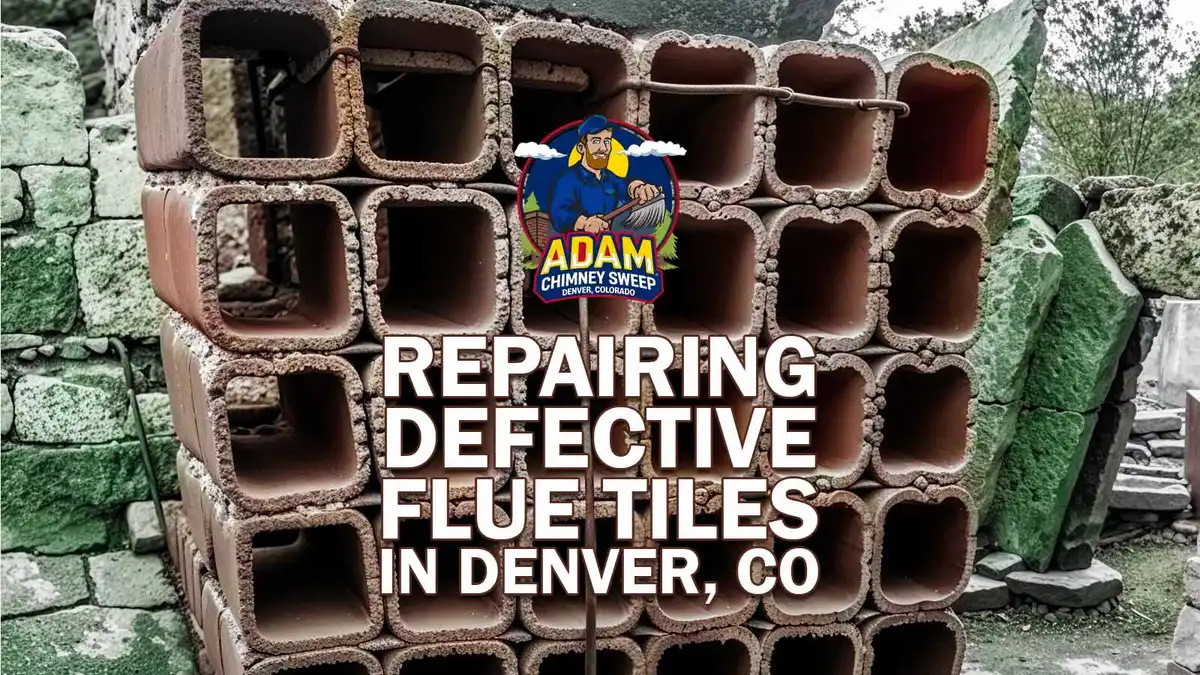
Cracked tile is not repaired on the spot. It is a scheduled job, covered in our notes on repairing defective flue tiles and on chimney lining and relining.
The Written Findings and Photos
You should never have to take a technician's word for what is happening thirty feet above your head. Before we leave you get a written record: what we cleaned, the condition of each component, photos of anything flagged, and whether the system is safe to use.
Urgency matters as much as the list. There is a real difference between a crown with hairline cracks to seal within a year or two and a smoke chamber that has to be repaired before you light another fire. If that is not stated plainly, ask.
Keep the report. When you sell, a buyer's inspector will ask, and dated reports with photos are persuasive, as our guide to inspections when buying or selling a Denver home explains.
How Long a Standard Visit Takes, and What Stretches It
Most people are surprised how much of the appointment is not brushing. The sweeping itself is often the shortest phase.
Table 2. Where the time goes on a typical single fireplace visit.
| Phase | Typical time | What is happening |
|---|---|---|
| Walkthrough and questions | 5 to 10 minutes | How you burn, smells, smoke, draft complaints |
| Containment and setup | 10 to 15 minutes | Cloths down, firebox sealed, vacuum running |
| Flue sweeping | 10 to 20 minutes | Rods or rotary through the full flue |
| Chamber, shelf, damper, firebox | 5 to 15 minutes | Hand work around the opening |
| Camera scan, when included | 5 to 10 minutes | Full flue pass with you watching |
| Exterior and roof check | 5 to 10 minutes | Crown, cap, flashing, chase cover, mortar |
| Cleanup and findings | 5 to 10 minutes | Vacuum down, cloths out, photos attached |
Those phases bracket the 45 to 90 minutes above. What pushes a visit past that is usually one of these.
- Heavy glazed creosote needing several passes with different heads.
- A second appliance, such as a basement stove or a shared furnace flue.
- Nesting material or a live animal, which stops the sweep and becomes a different job. That is why animal removal is its own service.
- A tall, steep, or icy roof, where safe access takes longer than the work.
What a Chimney Sweep Will Not Do on the Same Visit
A sweep appointment is cleaning and evaluation, not a repair appointment. The following are their own visits, with their own materials and usually their own weather window.
- Rebuilding a smoke chamber, or replacing firebox panels and firebrick, which falls under firebox repair.
- Relining a flue, whether stainless or cast in place.
- Crown repair, tuckpointing, and rebuilding a deteriorated stack, all part of chimney repair and needing temperatures Colorado does not hand out year round.
- Flashing repair and leak chasing, because finding water takes its own diagnostic time.
- Damper replacement, or fitting a new top sealing damper and cap.
What we will do is tell you what the repair involves, show you the photo that proves it, and let you decide on your own clock. For a sense of what the work runs, our pricing page is the place to start.
How to Tell a Thorough Sweep From a Rushed One
You do not need to know anything about chimneys to judge this. The questions to ask before you book are in the Denver cost guide; this list is what to watch once the truck is in the driveway, roughly in order of importance.
- Was the firebox sealed and the vacuum running throughout. Brushing into an open firebox compromises everything after it.
- Did anyone go above the damper. Ask what the smoke shelf looked like. A technician who swept it answers without hesitating.
- Did you see the inside of your own flue. If a camera scan is on the invoice, the feed should be put in front of you, not summarized for you.
- Did the exterior get looked at. Crown, cap, and flashing start most Colorado chimney problems, none of them visible from the hearth.
- Is there something in writing. Photos, condition notes, and a clear call on whether it is safe to burn.
- Was the debris removed. Soot leaves with the truck, not into your trash can while still warm.
- Did the room end up clean. A good crew wipes the hearth down on the way out.
Table 3. The same visit, done well and done fast.
| Part of the visit | Thorough | Rushed |
|---|---|---|
| Containment | Sealed opening, HEPA vacuum running first | Open firebox, vacuum used at the end |
| Scope | Flue, chamber, shelf, damper, firebox | Flue only, damper left caked |
| Verification | Camera pass after cleaning, shown to you | Verbal all clear from the hearth |
| Exterior | Crown, cap, flashing, chase cover photographed | Never left the living room |
| Documentation | Findings, photos, urgency per item | A receipt |
| Duration | 45 to 90 minutes | 20 minutes, door to door |
What Colorado Adds to the Job
The process above is the same anywhere. What changes here is what we expect to find at each step. Thin air makes combustion run cooler, so the same firewood burned the same way leaves more creosote on the flue wall than it would at sea level, and our freeze thaw swings pry open every crack the summer left behind, which is why the exterior check is never the part to skip here. Why that buildup happens and how to burn so it happens less is the whole subject of our creosote prevention guide, and what to watch from the ground between visits is in the do it yourself chimney checkup.
Frequently Asked Questions
Do I need to be home during the sweep?
Yes, someone should be. We need interior access to the firebox, and anything we find is far easier to understand with you standing there looking at it. If you have to step out, arrange for an adult to be present and expect a phone call.
Will sweeping make a mess in my house?
Done properly, no. The sealed opening and the negative pressure behind it keep soot inside the firebox, which is why the vacuum starts before the first brush goes in rather than after the last one comes out. If you have had a messy sweep before, containment was the failure, not the sweeping.
Can you sweep a chimney without going on the roof?
Often, yes. Rods and rotary systems both work from inside the firebox, which is safer in winter and on steep roofs. Even so, some part of the job needs eyes on the top. A company that never looks at the crown and cap is doing half an inspection.
What happens if you find something wrong while you are here?
We finish the sweep if it is safe to continue, photograph the problem, show you the image, and explain how quickly it matters. Repairs get scheduled separately. If the fireplace is unsafe to burn, we say so directly.
Does a gas fireplace need this too?
It needs service, just a different one. Gas units make almost no creosote, but the vent still collects debris, the burner and logs need cleaning, and the venting has to be verified. It is booked as gas fireplace service rather than as a sweep.
What happens to the soot and debris you pull out?
It leaves with us. What the vacuum collects, plus whatever falls into the firebox, goes into a sealed container and out to the truck. It should never end up in your trash can, where warm ash has started more than one house fire.
Can I just do it myself with a brush kit?
A brush kit sweeps, and that is all it does. It does not seal the opening, hold the room under negative pressure, reach the smoke shelf and chamber by hand, or put a lit camera thirty feet up the flue. Most of what this visit buys you is the work that happens around the brushing.
How soon after a sweep can I use the fireplace?
Right away, assuming the report says the system is safe to use. There is no curing time after a cleaning. If we recommended a repair before burning, that is the only thing that should hold you up.
Ready to Get It on the Schedule
If it has been more than a year, or you have never had it done and do not know what is up there, this is the service for it. Book a chimney sweep and cleaning in Denver and we will show you the inside of your own chimney and leave the hearth cleaner than we found it. Call Adam Chimney Sweep at (720) 207-9232, or use the contact page for the next open slot in your part of the metro.