A well built masonry chimney on a Denver home can stand for a century. The mortar holding it together will not. The clay tiles inside probably will not either, and the cap on top has about the life of a car. So when a homeowner asks how long a chimney lasts, the honest answer is that a chimney is not one thing with one lifespan. It is a stack of components, each aging on its own clock.
In broad strokes, treating these as typical rather than guaranteed: the brick or block structure lasts 50 to 100 years or more, mortar joints 20 to 30, a concrete crown 20 to 50, clay flue tiles 30 to 50, a stainless liner 15 to 25 or longer, a factory built (prefab) fireplace 15 to 30, and small parts like caps, flashing, dampers and blowers anywhere from 5 to 25.
Two things drive nearly every number on that list: water and heat. Keep water out and you can roughly double the life of the mortar, crown and tiles. Avoid overfiring and you can roughly double the life of the firebox, liner and prefab parts. Along the Front Range, those two habits matter more than anywhere we know of.
Why There Is No Single Number for a Chimney's Lifespan
From the outside in, a typical Colorado masonry chimney has a brick or block stack, mortar joints, a crown, flashing, a cap, a clay tile or stainless liner, a smoke chamber, a damper, a firebox with firebrick, and often a gas insert or log set with its own valve, pilot and blower. A prefab system swaps most of that for a sheet metal firebox, refractory panels, double or triple wall pipe, a chase cover and a termination cap. Our guide to how a chimney works in a Colorado home walks through each piece, and each one fails from a different cause at a different rate. So the real question is not how long the chimney lasts but which part is next, and that is exactly what an inspection answers.
Typical Lifespan of Each Chimney Component
These ranges are what we and most of the trade consider typical for the Denver metro. A chimney kept dry and swept regularly lands at the top of each range or beyond it. One that has been ignored lands at the bottom or below.
Table 1. Typical service life of chimney and fireplace components and the main causes of early failure.
| Component | Typical life | Main killers |
|---|---|---|
| Masonry structure | 50 to 100+ years | Water saturation, freeze-thaw spalling, missing crown or cap |
| Mortar joints | 20 to 30 years | Freeze-thaw, wind driven rain, wrong mortar on old brick |
| Concrete crown | 20 to 50 years | Poured too thin, no overhang, hail, sun |
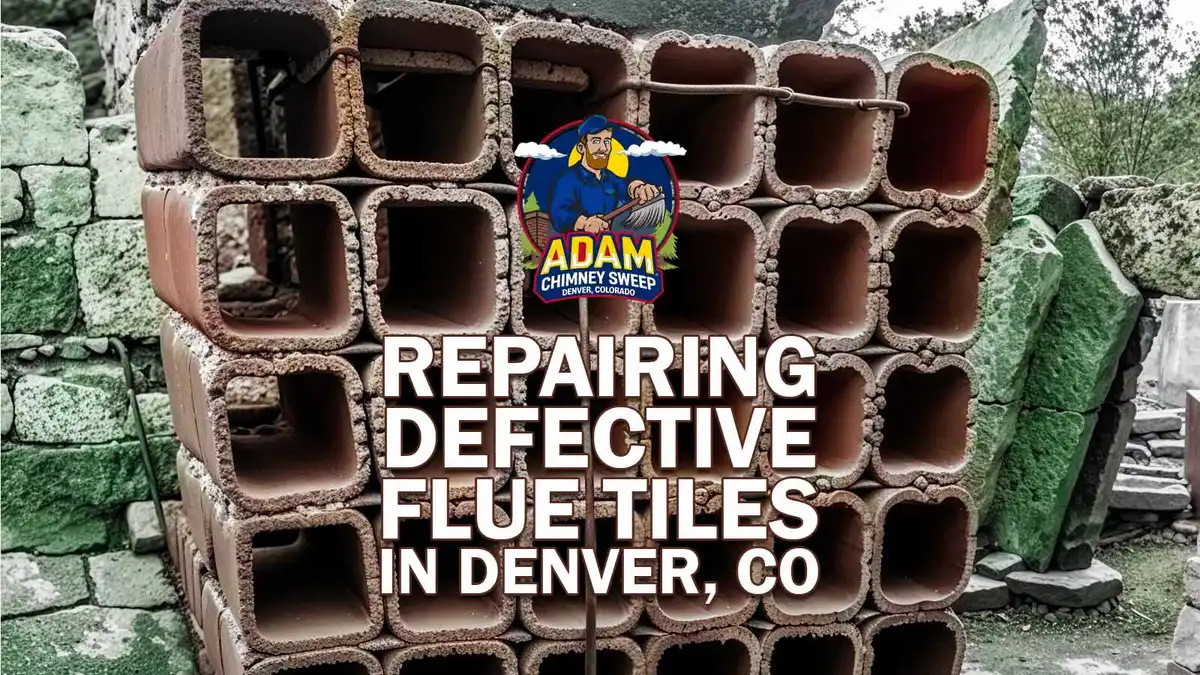
| Clay flue tiles | 30 to 50 years | Chimney fire, thermal shock, water freezing in joints |
| Stainless steel liner | 15 to 25+ years | Wrong alloy for the fuel, acidic condensate, thin wall |
| Prefab pipe and firebox | 15 to 30 years | Overfiring, rust from a leaking chase cover, discontinued parts |
| Chimney cap | 5 to 25 years | Galvanized rust, hail, wind, animals |
| Flashing | 15 to 30 years | Sealant failure, bad roof replacement, wind, ice |
| Throat damper | 15 to 30 years | Rust from rain down the flue, heat warping |
| Firebox firebrick | 15 to 30 years | Overfiring, moisture, open joints |
| Prefab refractory panels | 10 to 20 years | Overfiring, log impacts, moisture |
| Gas insert | 15 to 25 years | Valve, blower and pilot assembly failures |
| Gas logs | 10 to 15 years | Cracked ceramic, sooted burner, failed thermocouple |
| Blower or fan | 5 to 10 years | Bearing wear, dust, heat |
Notice how the stack outlives everything attached to it. That is good news for anyone with a 1920s brick chimney in Park Hill. The structure is probably fine. It is the consumable parts that decide what work it needs.
The Colorado Multipliers That Shorten Every Range
National lifespan figures assume a mild climate. The Front Range is not that.
Freeze-Thaw on Masonry and Crowns
Denver swings above freezing by afternoon and well below it by midnight, sometimes for weeks. Every cycle, water in brick, mortar or a hairline crown crack expands as it freezes and pries the material apart. A crown that lasts 40 years in a coastal city may need work at 20 here. If brick faces are flaking off, our guide to spalling brick and how it is repaired explains what is happening.
Hail on Caps, Chase Covers and Crowns
The metro sits in one of the most active hail corridors in the country. A galvanized cap or thin chase cover takes dents that pool water and rust through in a few seasons. Crowns pick up surface fractures that feed the freeze-thaw cycle.
Wildfire Embers on Screens
Spark arrestor mesh is a sacrificial part. It takes heat from inside and embers from outside, and along the foothills it clogs and corrodes faster than in town.
Altitude on Gas Components
At 5,000 to 8,000 feet, gas appliances run leaner than their sea level ratings. Marginal pilots become unreliable, thermocouples work harder, and burners that were never derated soot up. Gas inserts reach the bottom of their range in mountain towns more often, and the fix is usually proper setup rather than replacement.
Sun, Wind and Monsoon Rain
Colorado sun chalks and splits crown sealant, flashing caulk and gaskets years sooner than the label suggests. Downslope wind drives rain sideways into joints, and July and August monsoon storms dump an inch in an hour onto a crown that may already be cracked.
The Single Biggest Life Extender: Keeping Water Out
If you remember one thing from this article, make it this. Almost every masonry failure we repair traces back to water. It gets in through a cracked crown, a missing cap, failed flashing or porous brick, soaks the mortar, freezes, rusts the damper, pops the firebrick and carries salts to the surface as the white staining called efflorescence, which is the masonry telling you it is wet inside.
Four parts keep a chimney dry: a properly cast crown with an overhang and drip edge, a full coverage cap, metal step and counter flashing that does not rely on caulk, and a breathable water repellent on the brick. Our guide on waterproofing a Colorado chimney covers the repellent side, and our chimney crown repair and chimney cap installation pages describe the mechanical parts. A crown, cap and repellent together cost a fraction of a partial rebuild and add decades to the structure. For ballpark figures, see our pricing page.
The Second Biggest: Not Overfiring
Heat is the other clock. Pile a fire higher than the box was designed for, burn construction scraps or pallets, or run a roaring fire for hours, and the flue temperature climbs past what clay, stainless and refractory were listed for. Tiles crack, liner seams open, prefab fireboxes buckle.
The worst case is a chimney fire, which can take a 40 year flue to zero in twenty minutes. Our guide to chimney fire causes and warning signs covers how to recognize one. Seasoned wood, moderate fires and a grate sized to the box are the whole prescription. Regular sweeping keeps creosote from turning a normal fire into an overfire, and the chimney sweeping we do is as much about protecting the liner as it is about safety.
How a Chimney Ages in Stages
Chimneys move through recognizable stages, and knowing which one yours is in tells you what to expect next.
- New to about 15 years. Everything is within design life. Failures here are almost always construction defects: a crown poured flush with the brick, flashing sealed with caulk, a liner sized wrong. A Level 2 inspection early catches these while a builder may still be responsible.
- 15 to 30 years. Small parts start going: caps rust, dampers stick, blowers die, crown sealant fails, pilots need attention. This is the cheapest stage to intervene in and the one most people skip.
- 30 to 50 years. Mortar joints have receded, tiles have cracked at the joints, the crown is due for replacement, the firebox has open joints. Repointing, a new crown and often a stainless reline happen here and reset the clock for decades.
- 50 to 80 years. If the previous stage was skipped, water has been in the structure for years. Spalled brick, a leaning stack above the roofline and a smoke chamber with parging falling off are common. Partial rebuilds above the roof are typical.
- 80 years and up. The structure was either maintained and is in good shape, or it was not and the top several feet need rebuilding. Historic brick is softer and needs lime based mortar, covered in our guide to chimneys on historic Denver homes.
What Stage Your Chimney Is Probably In, by Construction Era
Denver's housing stock clusters into a few eras. This table is a starting guess, not a diagnosis.
Table 2. Common chimney construction by Denver area building era and the issues each era tends to show today.
| Home built | Typical system | Likely stage | What we usually find |
|---|---|---|---|
| Before 1930 | Soft brick, lime mortar, often unlined, flues that once served coal stoves | 4 or 5 | Unlined or broken flues, abandoned flues, deteriorated mortar, prior rebuilds above the roof |
| 1930 to 1960 | Harder brick, cement mortar, clay tile, thin mortar wash crown | 4 | Cracked tiles, receded joints, failing crown, rusted dampers |
| 1960 to 1985 | Brick or block with clay tile, first prefab fireplaces | 3 or 4 | Tile cracking, crown due, prefab units past end of life |
| 1985 to 2005 | Mostly prefab metal fireplaces in framed chases | 2 or 3 | Rusted chase covers, cracked panels, separated pipe, makers out of business |
| 2005 to today | Direct vent gas, some EPA wood inserts, few masonry | 1 or 2 | Construction defects, failing blowers and pilots, chase covers already leaking |
Notice that a 1920s masonry chimney and a 1995 prefab are often in the same practical condition. The masonry aged slowly for a long time while the prefab aged quickly for a short time.
Prefab Fireplaces Are Appliances, Not Structures
A factory built fireplace in a framed chase is a listed appliance with a finite service life, typically 15 to 30 years, and many units from the 1990s building boom are at or past that now. Once the maker discontinues its specific panels or pipe, or a leaking chase cover rusts the firebox, the practical path is replacement rather than repair. Our guide to prefab fireplace repair and replacement covers what can and cannot be fixed and the replacement options. When clay tiles in a masonry flue crack, the usual repair is a stainless liner sized to the appliance, which our chimney relining service page explains.
What You Can Do Each Year to Add Years
None of this requires a tall ladder. The goal is to catch small failures while they are still small.
- Walk the yard after every hail storm and wind event. Look for pieces of cap, screen or crown on the ground and check the cap with binoculars.
- Check the attic or ceiling around the chimney each spring. Water stains near the chimney mean flashing or crown trouble that is still cheap to fix.
- Look at the exterior brick from the ground twice a year. White staining, flaking faces or damp patches that outlast a rain point to water inside.
- Open the damper and look up with a flashlight before the first fire. Rust flakes, chunks of tile on the smoke shelf, or daylight where there should be none are worth a call.
- Burn only seasoned wood and keep fires moderate. This one habit protects the liner, firebox and smoke chamber all season.
- Have the flue swept when it needs it. Our guide on how often to sweep a chimney in Colorado gives a practical rule.
- Get an inspection every year, and a Level 2 whenever something changes. New appliance, house sale, chimney fire, hail claim or roof replacement all warrant a camera down the flue.
- Renew sealants on schedule. Crown sealant and water repellent every five to ten years, sooner on a south or west facing chimney.
For a room by room checklist, see our DIY chimney checkup.
End of Life Versus Repairable
Because a chimney is a stack of parts, it is rarely all at end of life at once. Cracked tiles, a failed crown, receded joints and even spalled brick are repairable; what tips a chimney into a rebuild is the structure itself losing integrity, and even then the work is usually a partial rebuild from the roofline up. How that call gets made, and what each scope involves, is covered in our guide to chimney rebuild versus repair in Denver, and our chimney repair service page covers the work in between.
Frequently Asked Questions
How long does a brick chimney last?
The brick structure commonly lasts 50 to 100 years or more when it stays dry. The mortar lasts 20 to 30 years before repointing, and the crown, cap and liner each have shorter lives. Most tired looking brick chimneys in Denver need water kept out and worn parts replaced, not a rebuild.
Does a chimney liner need to be replaced?
Clay tile liners often last 30 to 50 years but cannot survive a chimney fire or repeated water damage, so many older Denver flues have cracked tiles. A stainless liner typically lasts 15 to 25 years or more when the alloy suits the fuel. A Level 2 camera inspection shows whether the liner is sound.
How long does a prefab or factory built fireplace last?
Typically 15 to 30 years. A prefab fireplace is a listed appliance rather than a structure, and once the manufacturer stops making its specific parts, or a leaking chase cover rusts through the firebox, replacement is the only compliant option.
Why do chimneys wear out faster in Colorado?
Freeze-thaw cycles pry apart wet masonry and crowns, hail dents caps and chase covers so they rust, embers and heat clog spark screens, thin air at altitude stresses gas pilots and burners, and intense sun breaks down sealants years early. Each pushes components toward the short end of their typical range.
What is the single best thing I can do to make my chimney last longer?
Keep water out. A properly built crown, a full coverage cap, metal flashing and a breathable water repellent protect the mortar, tiles, damper and firebox all at once. The second best is to burn moderate fires with seasoned wood so the hot side components are never overfired.
How can I tell what condition my chimney is in without climbing on the roof?
Look for white staining or flaking brick from the ground, water stains near the chimney in the attic or on ceilings, debris on the smoke shelf when you open the damper, and pieces of cap or crown in the yard after storms. Any of those warrants an inspection.
Is a 100 year old chimney safe to use?
It can be, but only after an inspection. Many pre 1930 Denver chimneys are unlined or once served coal stoves, and the soft brick needs lime based mortar for repairs. Age alone does not condemn a chimney, but it does mean a Level 2 inspection before the first fire is not optional.
When is a chimney beyond repair?
When the structure itself has failed rather than its parts: a leaning stack, brick spalled deep across many courses, mortar turned to sand throughout, or separation from the house. Even then a partial rebuild from the roofline up is usually enough. Cracked tiles, a bad crown or receded joints alone are all repairable.
Find Out Which Part of Your Chimney Is Next
The age of your house tells you roughly where your chimney is in its life. An inspection tells you exactly. If it has been more than a year since anyone put a camera down your flue, or your home went through this summer's hail without a look at the cap and crown, we can tell you what is worn, what is fine, and what order to address it in. Call Adam Chimney Sweep at (720) 207-9232 or request an inspection online, and we will come out anywhere in the Denver metro and Front Range.